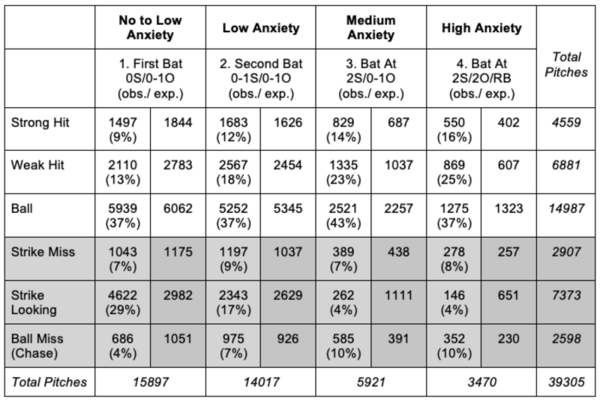
This study examined whether findings from laboratory studies of baseball cognition also apply during real games. Using 2024 MLB data from 30 players, researchers analyzed batting performance under different levels of feedback and anxiety.
Here, beginning from an initial interest in the possibility to use a computer to automatically solve a geometry diagram parser, the authors developed their own Fast Geometry Diagram Parser (FastGDP) that uses clustering and corner information. They compared their own methods to a more widely available, method, GeoSolver, finding their own to be an order of magnitude faster in most cases that they considered.
In this experiment, the authors used C. elegans as a simple model organism to observe the impact of probiotics on the human digestive system. The results of the experiments showed that the C. elegans were, on average, most present in Chobani cultures over other tested yogurts. While not statistically significant, these results still demonstrated that C. elegans might prefer Chobani cultures over other probiotic yogurts, which may also indicate greater gut benefits from Chobani over the other yogurt brands tested.
About 25% of the food grown never reaches consumers due to spoilage, and 11.5 billion pounds of produce from gardens are wasted every year. Current solutions involve farmers manually looking for and treating diseased crops. These methods of tending crops are neither time-efficient nor feasible. I used a convolutional neural network to identify signs of plant disease on leaves for garden owners and farmers.
Here, seeking to understand the effects of emotion on memory recall, the authors used a study of 30 teenagers, comparing their ability to recall details from information or narrative writing. They found improved recall of narrative writing, suggesting emotional response can contribute to improved memory recall.
The main goal of this study is to determine what demographics are related to tuberculosis incidence in the United States populations, particularly if changing demographics are related to differences in tuberculosis risk over two discrete time periods. The major finding is that in the two studied time periods, tuberculosis risk factors were somewhat consistent and may be influenced by things such as immigration, healthcare access, and race or ethnicity, although the top predictor did change.
The authors employ computational protein design to identify a mini-protein with the potential to enhance binding of the tight junction protein, claudin-5, at the blood-blood barrier with therapeutic potential for neurodegenerative diseases.