Browse Articles

Trust in the use of artificial intelligence technology for treatment planning

Srivastava et al. | Sep 18, 2024

Trust in the use of artificial intelligence technology for treatment planning

As AI becomes more integrated into healthcare, public trust in AI-developed treatment plans remains a concern, especially for emotionally charged health decisions. In a study of 81 community college students, AI-created treatment plans received lower trust ratings compared to physician-developed plans, supporting the hypothesis. The study found no significant differences in AI trust levels across demographic factors, suggesting overall skepticism toward AI-driven healthcare.

Read More...

Developing novel plant waste-based hydrogels for skin regeneration and infection detection in diabetic wounds

Mathew et al. | Aug 10, 2023

Developing novel plant waste-based hydrogels for skin regeneration and infection detection in diabetic wounds

The purpose of this investigation is to develop a hydrogel to aid skin regeneration by creating an extracellular matrix for fibroblast growth with antibacterial and infection-detection properties. Authors developed two natural hydrogels based on pectin and potato peels and characterized the gels for fibroblast compatibility through rheology, scanning electron microscopy, swelling, degradation, and cell cytotoxicity assays. Overall, this experiment fabricated various hydrogels capable of acting as skin substitutes and counteracting infections to facilitate wound healing. Following further testing and validation, these hydrogels could help alleviate the 13-billion-dollar financial burden of foot ulcer treatment.

Read More...

Modeling and optimization of epidemiological control policies through reinforcement learning

Rao et al. | May 23, 2023

Modeling and optimization of epidemiological control policies through reinforcement learning

Pandemics involve the high transmission of a disease that impacts global and local health and economic patterns. Epidemiological models help propose pandemic control strategies based on non-pharmaceutical interventions such as social distancing, curfews, and lockdowns, reducing the economic impact of these restrictions. In this research, we utilized an epidemiological Susceptible, Exposed, Infected, Recovered, Deceased (SEIRD) model – a compartmental model for virtually simulating a pandemic day by day.

Read More...

How Ya Doin'? with COVID-19

Kung et al. | Dec 02, 2021

How Ya Doin'? with COVID-19

In this study, the authors survey students and adults about how the COVID-19 pandemic has impacted their sleep patterns, eating habits, mood, physical activity, and screen time.

Read More...

Detection and Control of Spoilage Fungi in Refrigerated Vegetables and Fruits

Chari et al. | May 16, 2021

Detection and Control of Spoilage Fungi in Refrigerated Vegetables and Fruits

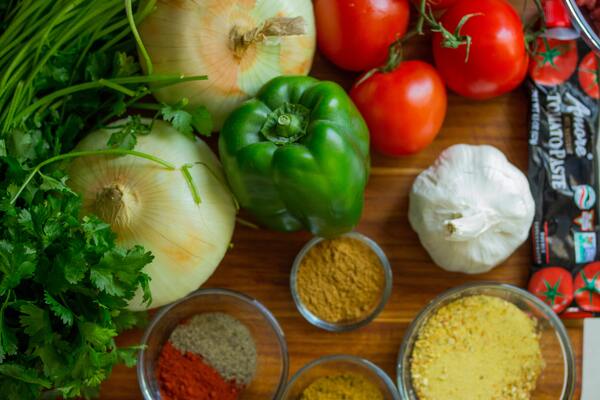
Food spoilage leads to a significant loss in agricultural produce each year. Here, the authors investigate whether certain essential oils can protect against fungus-mediated spoilage of fruits and vegetables. Their results suggest that the compounds they tested might indeed inhibit fungal growth, at various temperatures, a promising result that could reduce food wasting.

Read More...

Comparative singlet oxygen photosensitizer efficiency of berberine, rose bengal, and methylene blue by time course nuclear magnetic resonance (NMR) monitoring of a photochemical 4+2 cycloaddition endoperoxide formation

Su et al. | May 14, 2021

Comparative singlet oxygen photosensitizer efficiency of berberine, rose bengal, and methylene blue by time course nuclear magnetic resonance (NMR) monitoring of a photochemical 4+2 cycloaddition endoperoxide formation

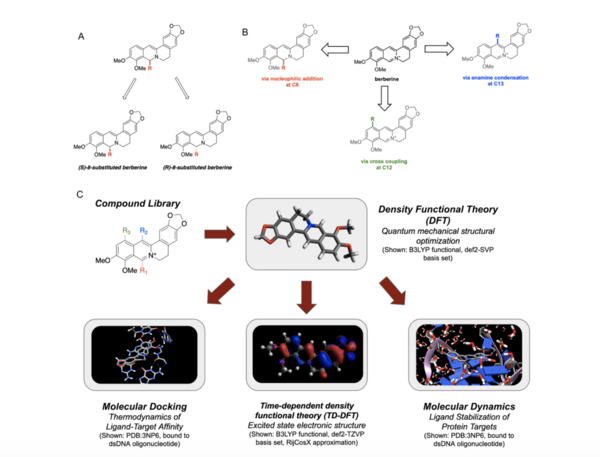
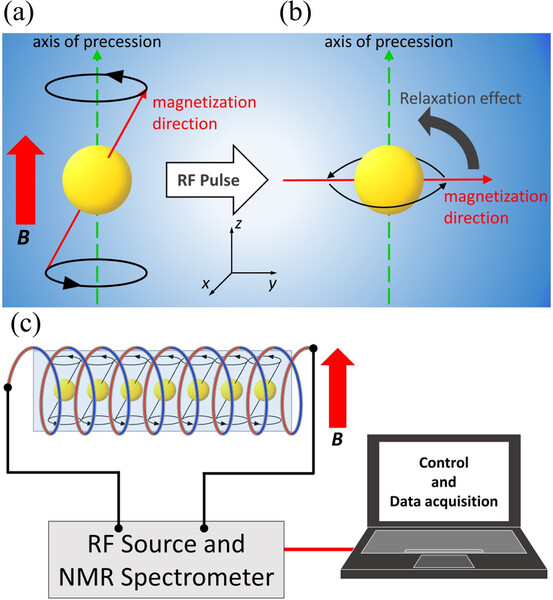
Berberine, a natural product alkaloid, has been shown to exert biological activity via in situ production of singlet oxygen when photo irradiated. Berberine utilizes singlet oxygen in its putative mechanism of action, wherein it forms an activated complex with DNA and photosensitizes triplet oxygen to singlet oxygen to specifically oxidize guanine residues, thereby halting cell replication and leading to cell death. This has potential application in photodynamic therapy, alongside other such compounds which also act as photosensitizers and produce singlet oxygen in situ. The quantification of singlet oxygen in various photosensitizers, including berberine, is essential for determining their photosensitizer efficiencies. We postulated that the singlet oxygen produced by photoirradiation of berberine would be superior in terms of singlet oxygen production to the aforementioned photosensitizers when irradiated with UV light, but inferior under visible light conditions, due to its strong absorbance of UV wavelengths.

Read More...