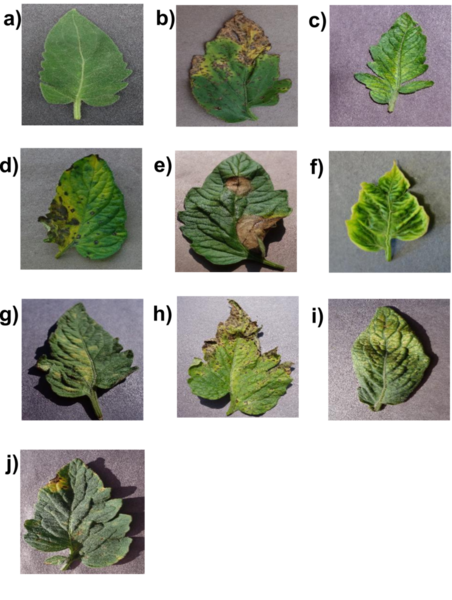
Plant diseases can cause up to 50% crop yield loss for the popular tomato plant. A mobile device-based method to identify diseases from photos of symptomatic leaves via computer vision can be more effective due to its convenience and accessibility. To enable a practical mobile solution, a “shallow” convolutional neural networks (CNNs) with few layers, and thus low computational requirement but with high accuracy similar to the deep CNNs is needed. In this work, we explored if such a model was possible.
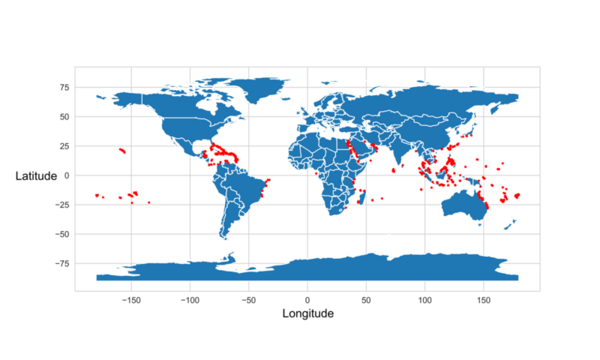
Coral bleaching is a fatal process that reduces coral diversity, leads to habitat loss for marine organisms, and is a symptom of climate change. This process occurs when corals expel their symbiotic dinoflagellates, algae that photosynthesize within coral tissue providing corals with glucose. Restoration efforts have attempted to repair damaged reefs; however, there are over 360,000 square miles of coral reefs worldwide, making it challenging to target conservation efforts. Thus, predicting the likelihood of bleaching in a certain region would make it easier to allocate resources for conservation efforts. We developed a machine learning model to predict global locations at risk for coral bleaching. Data obtained from the Biological and Chemical Oceanography Data Management Office consisted of various coral bleaching events and the parameters under which the bleaching occurred. Sea surface temperature, sea surface temperature anomalies, longitude, latitude, and coral depth below the surface were the features found to be most correlated to coral bleaching. Thirty-nine machine learning models were tested to determine which one most accurately used the parameters of interest to predict the percentage of corals that would be bleached. A random forest regressor model with an R-squared value of 0.25 and a root mean squared error value of 7.91 was determined to be the best model for predicting coral bleaching. In the end, the random model had a 96% accuracy in predicting the percentage of corals that would be bleached. This prediction system can make it easier for researchers and conservationists to identify coral bleaching hotspots and properly allocate resources to prevent or mitigate bleaching events.
Economic disruptions and housing instabilities have for long propelled a homelessness epidemic among adults and youth in the United States. The COVID-19 pandemic has accelerated this phenomenon with a 2.2% increase in the number of homeless individuals and more than 70% of Americans fearing this outcome for themselves. This study aimed to analyze the perception of homelessness in two groups: Those who have previously experienced and overcome homelessness and those who are at-risk for experiencing the same. The study analyzed publicly available Reddit posts by people in both groups and found that at-risk individuals tended to associate primarily fearful emotions with the event, and those who had overcome homelessness tended to view the event in a negative context. These results may encourage the establishment of resources to support the currently homeless and help them transition into society, and services to help them cope with negative emotions, as negative attitudes have been shown to decrease life expectancy.
Here, recognizing the widespread use of hand sanitizers, the authors investigated their effectiveness in relation to storage temperature. They applied hand sanitizer before and after touching a cell phone and used LB-agar plates to monitor the growth of bacteria following this process. They found that 70% ethyl-alcohol-based sanitizers are least effective at temperatures above 107.27 °F and most effective at 96.17 °F.
Seeking to investigate eco-friendly biological methods to control weeds and enhance food crop yields, here the authors considered the effects of three essential oils on seed germination and radicle length of both a weed and a common crop. They found that treatment with turmeric oil had phytotoxic potential, leading to a reduction in both seed germination and radicle length of the weed. In contrast, ginger oil possessed allelopathic properties towards both. The authors suggest that essential oils could be used as eco-friendly bio-herbicides.
In the field of ecology, little is known about how plant communities originate. Through the process of characterizing dunes, mounds of sand formed by the wind, and their plant communities we can get to know the physiognomy and floristic composition of the territory. Based on the hypothesis that dune flora can emerge from seed islands: holes in the sand 6 cm deep containing a mixture of seeds, broken branches of shrubbery, and rabbit feces, during spring, the authors determined the composition of 20 seed islands in the sand dunes of Concon, Chile and measured how many seeds germinated in each one.
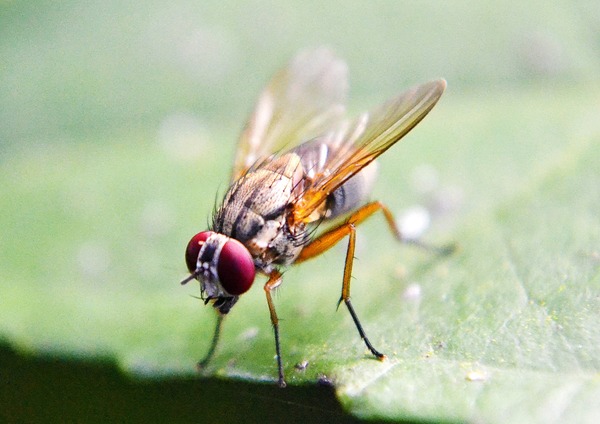
In this study, the authors observe if the symptoms of Rett Syndrome, a neurodegenerative disease in humans, are reflected in Drosophila melanogaster. This was achieved by differentiating the behavior and physical aspects of wild-type flies from flies expressing the full-length MeCP2 gene and the mutated MeCP2 gene (R106W). After conducting these experiments, some of the Rett Syndrome symptoms were recapitulated in Drosophila, and a subset of those were partially ameliorated by the introduction of pifithrin-alpha.
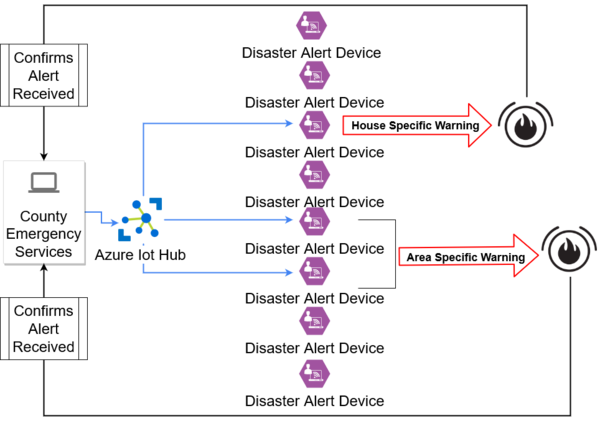
The traditional alert system in California consists of Wireless Emergency Alerts (WEAs), which lack location specificity, and sign-up-based technology which is limited by the number of sign ups. Those who do not have phones or have a silence option on their devices are most at risk from the current alert system. Here the authors developed cloud-enabled crisis connection for disaster alerts (CRISIS-CONNECT) to mitigate problems associated with the current alert system.
Understanding how bacteria respond to other bacteria could facilitate their ability to initiate and maintain their infectiousness. The phenomenon by which bacteria signal to each other via chemical signals is called quorum sensing, which could be targeted to deter bacterial infection in some cases if better understood. In this article, the authors study how a bacterium called V. fischeri uses quorum sensing to change bioluminescence, an easy readout that facilitates studying quorum sensing in this strain.
Lithium-ion batteries, a breakthrough in chemistry that enabled the electronic revolution we live today have become an essential part of our day-to-day life. A phone battery running out after a heavy day of use with limited opportunities for recharging is a well-known and resented experience by almost everyone. How then can we make batteries more efficient? This paper proposes the use of a different type of separator, that improves the charging and discharging capacities of lithium ions compared to the classical separator. This and similar attempts to improve Lithium-ion battery function could facilitate the development of higher-performance batteries that work longer and withstand harsher use.