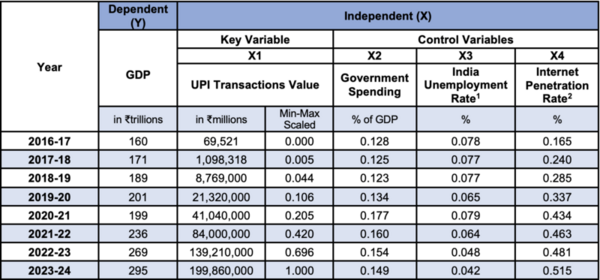
India’s Digital Public Infrastructure (DPI)—including the Unified Payments Interface (UPI) and Aadhaar—has been globally recognized for advancing financial inclusion and efficient governance. This study analyzes data from 2016–17 to 2023–24 the impact of these services on India's GDP.
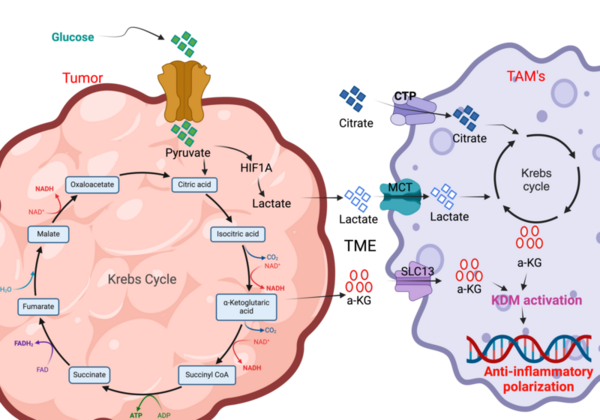
The authors looked at the impact of citrate and lactate on glioblastoma progression. Their results provide important insights for future immunotherapies aimed at treating glioblastoma.
The purpose of this study was to investigate the relationship between colorism and police killings of unarmed African American suspects. The authors collected data from the Washington Post database, which reports unarmed African American victims from 2015–2021, and found that the victims who were killed by police were darker on average than a control population of African Americans that had not encountered the police.
In this study, the authors determine optimal pH levels for maximizing isopropanol degradation in water. This has important applications for cleaning up polluted wastewater in the environment.
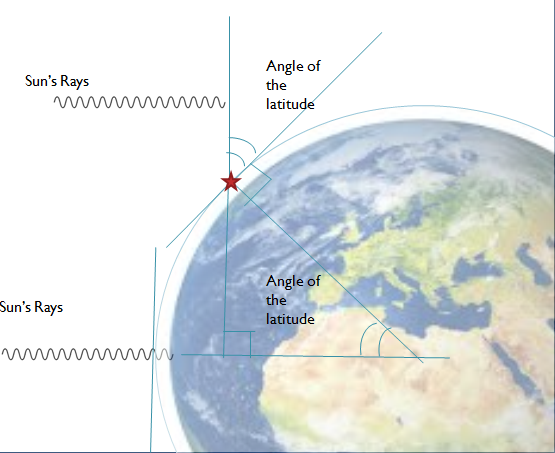
In this study, the authors test the effect that the tilt angle of a solar panel has on the amount of energy it generates. This investigation highlights a simple way that people can harvest renewable energy more efficiently and effectively.
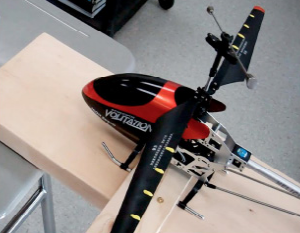
Biomimicry is the practice of applying models and systems found in nature to improve the efficiency and usefulness of human technologies. In this study, the authors designed helicopter blades with tubercle structures similar to those found on the tails of humpback whales. The authors found that certain arrangements of these tubercle structures improved the windspeed and efficiency of a model helicopter.
This study explores the interaction between precocene II and trichocethecene 3-O-acetyltransferase using molecular docking simulations. Computational analysis identified several potential binding sites on the enzyme surface and predicted favorable ligand-protein interactions involving key residues. These findings provide insight into how precocene II may interact with this enzyme and demonstrate the use of computational approaches to explore potential antifungal mechanisms.
Textile waste from the fashion industry is a major environmental pollutant, but recycling waste into novel building material is a strategy to reduce the negative effects. This manuscript characterized five different binders that can be used to repurpose textile waste into bricks for construction purposes. Water-based glue, cement, white cement, plaster of Paris, and epoxy resin were mixed with shredded textile waste, and the mechanical characteristics and thermal insulation of each brick type were measured. Bricks with increased mechanical strength had the poorest thermal resistance, and the contrasting properties would suit different building purposes. This work provides a first step in generating recycled textile bricks for construction in a circular economy framework.