Browse Articles

Quantitative analysis and development of alopecia areata classification frameworks

Dubey et al. | Jun 03, 2024

Quantitative analysis and development of alopecia areata classification frameworks

This article discusses Alopecia areata, an autoimmune disorder causing sudden hair loss due to the immune system mistakenly attacking hair follicles. The article introduces the use of deep learning (DL) techniques, particularly convolutional neural networks (CNN), for classifying images of healthy and alopecia-affected hair. The study presents a comparative analysis of newly optimized CNN models with existing ones, trained on datasets containing images of healthy and alopecia-affected hair. The Inception-Resnet-v2 model emerged as the most effective for classifying Alopecia Areata.

Read More...

Effects of material advantage and space advantage on the Komodo and Stockfish chess engines

Kaushikan et al. | May 14, 2024

Effects of material advantage and space advantage on the Komodo and Stockfish chess engines
Image credit: The authors

Chess engines, or computer programs built to play chess, outperform even the best human players. Kaushikan and Park investigate the inner workings of these chess engines by studying popular chess engines' evaluations of which side of a chess match is most likely to win, and how this is affected by the number of pieces and controlled squares on each side.

Read More...

Comparison of three large language models as middle school math tutoring assistants

Ramanathan et al. | May 02, 2024

Comparison of three large language models as middle school math tutoring assistants
Image credit: Thirdman

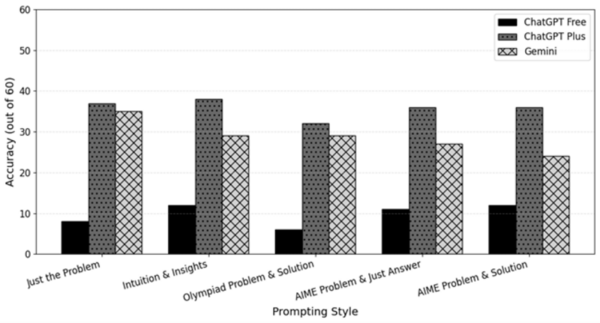
Middle school math forms the basis for advanced mathematical courses leading up to the university level. Large language models (LLMs) have the potential to power next-generation educational technologies, acting as digital tutors to students. The main objective of this study was to determine whether LLMs like ChatGPT, Bard, and Llama 2 can serve as reliable middle school math tutoring assistants on three tutoring tasks: hint generation, comprehensive solution, and exercise creation.

Read More...

Collaboration beats heterogeneity: Improving federated learning-based waste classification

Chong et al. | Jul 18, 2023

Collaboration beats heterogeneity: Improving federated learning-based waste classification

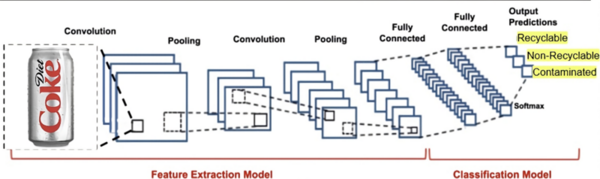
Based on the success of deep learning, recent works have attempted to develop a waste classification model using deep neural networks. This work presents federated learning (FL) for a solution, as it allows participants to aid in training the model using their own data. Results showed that with less clients, having a higher participation ratio resulted in less accuracy degradation by the data heterogeneity.

Read More...

Time-Efficient and Low-Cost Neural Network to detect plant disease on leaves and reduce food loss and waste

Singh et al. | Apr 24, 2023

Time-Efficient and Low-Cost Neural Network to detect plant disease on leaves and reduce food loss and waste

About 25% of the food grown never reaches consumers due to spoilage, and 11.5 billion pounds of produce from gardens are wasted every year. Current solutions involve farmers manually looking for and treating diseased crops. These methods of tending crops are neither time-efficient nor feasible. I used a convolutional neural network to identify signs of plant disease on leaves for garden owners and farmers.

Read More...