Improper storage of sunscreen might decrease effectiveness
(1) Brentwood School, (2) Duke Clinical Research Institute, Duke University
https://doi.org/10.59720/25-191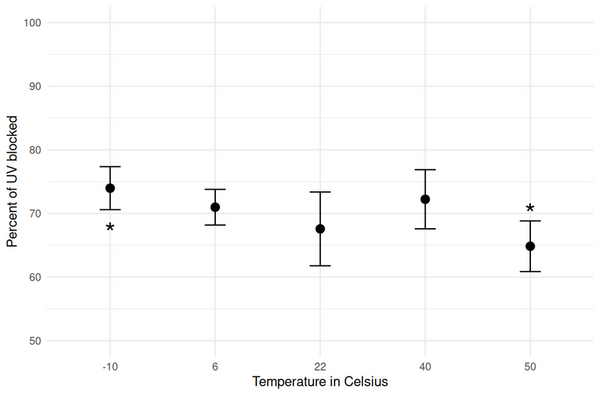
One of the leading causes of melanoma is overexposure to ultraviolet (UV), and each year over 100,000 cases of melanoma are diagnosed. Sunscreen, when used correctly, can reduce the risk of skin cancer. This study evaluated sunscreen efficacy under different storage temperatures. The FDA recommends that sunscreen be stored in a place away from excessive heat, but many consumers are unaware of this. We hypothesized that exposure to extreme temperatures can compromise sunscreen effectiveness, potentially increasing the risk of sunburn or sun damage. We tested 22 sunscreens by spreading sunscreen on plastic wrap placed on a UV light. The UV light that penetrated through the sunscreen was measured by a UV meter. Before adding to plastic wrap, sunscreens were stored at -10°C, 6°C, 22°C, 40°C, and 50°C for 18-24 hours before measuring UV absorption. We used repeated measures ANOVA to detect mean differences in the percentage of UV blocked between the different storage temperatures. Sunscreens stored at -10°C blocked 74% of UV light. Sunscreens stored at 50°C blocked only 64.8% of UV light. We also studied characteristics of sunscreen to see if specific qualities were associated with better temperature performance. Ten characteristics of sunscreen were studied, and none had statistically different effects on temperature partial inactivation. This study demonstrated sunscreen inefficiency when stored at 50°C to raise sunscreen users' awareness of proper storage temperature.
This article has been tagged with: