The authors looked at the ability to use audio clips to analyze the progression of Parkinson's disease.
Read More...Using advanced machine learning and voice analysis features for Parkinson’s disease progression prediction
The authors looked at the ability to use audio clips to analyze the progression of Parkinson's disease.
Read More...Phytochemical analysis of Annona Reticulata extract and an in-vitro study on its anti-proliferative effects
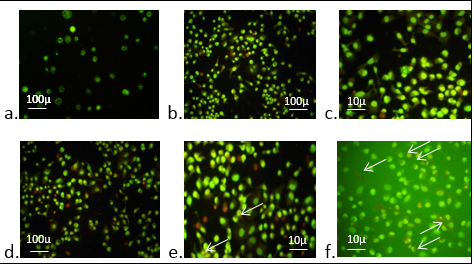
In this study, the authors investigate the anti-cancer effects of Annona Reticulata (Ramphal or custard apple) by testing whether its extract could inhibit HeLa cell viability.
Read More...The Effect of Common Cations on DNA Degradation
Heating of DNA-containing solutions is a part of many experiment protocols, but it can also cause damage and degradation of the DNA molecules, potentially leading to error in the experimental results. The authors of this paper investigate whether the presence of certain cations during heating can stabilize the DNA polymer and aid the preservation of the molecule.
Read More...A comparative analysis of machine learning approaches to predict brain tumors using MRI
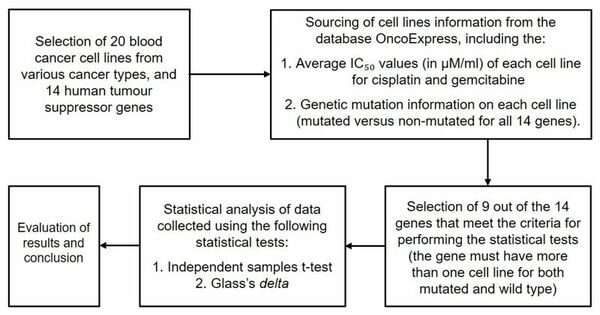
The authors use machine learning on MRI images of brain tissue to predict tumor onset as an avenue for early detection of brain cancer.
Read More...Depression detection in social media text: leveraging machine learning for effective screening
Depression affects millions globally, yet identifying symptoms remains challenging. This study explored detecting depression-related patterns in social media texts using natural language processing and machine learning algorithms, including decision trees and random forests. Our findings suggest that analyzing online text activity can serve as a viable method for screening mental disorders, potentially improving diagnosis accuracy by incorporating both physical and psychological indicators.
Read More...Identifying 5-hydroxymethylcytosine as a potential cancer biomarker using FFPE DNA samples
This study used an improved CMS-seq method to profile 5hmC in ormalin-fixed and paraffin-embedded (FFPE) samples from HNC tumors and adjacent normal tissues, identifying three genes (PRKD2, HADHA, and AIPL1) with promising potential as biomarkers for Head and neck cancer (HNC) diagnosis.
Read More...Risk factors contributing to Pennsylvania childhood asthma
Asthma is one of the most prevalent chronic conditions in the United States. But not all people experience asthma equally, with factors like healthcare access and environmental pollution impacting whether children are likely to be hospitalized for asthma's effects. Li, Li, and Ruffolo investigate what demographic and environmental factors are predictive of childhood asthma hospitalization rates across Pennsylvania.
Read More...Unveiling the wound healing potential of umbilical cord derived conditioned medium: an in vitro study
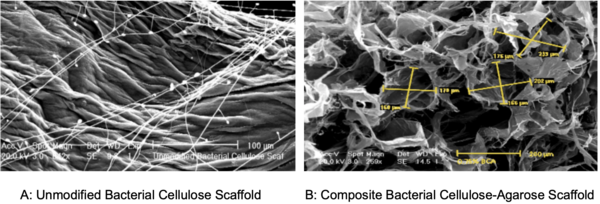
Chronic wounds pose a serious threat to an individual’s health and quality of life. However, due to the severity and morbidity of such wounds, many pre-existing treatments are inefficient or costly. While the use of skin grafts and other such biological constructs in chronic wound healing has already been characterized, the use of umbilical cord tissue has only recently garnered interest, despite the cytokine-rich composition of Wharton’s jelly (cord component). Our current study aimed to characterize the use of an umbilical cord derived conditioned medium (UC-CM) to treat chronic wounds.
Read More...Antibacterial activity by Dombeya wallichii plant extracts obtained by ultrasound-assisted extraction
Medicinal plants could be a good source of medication to combat antibiotic resistance. Dombeya wallichii, which is commonly called Pink Ball Tree in the family Sterculiaceae, has been documented to have medicinal potential. We observed the highest antibacterial activity in the stem extracts, followed by leaf and bark extracts. The extracts were more effective against tested Gram-positive bacteria when compared with Gram-negative strains.
Read More...The effect of Omega-3 on bovine blood cells as a potential remedy for Cerebral Cavernous Malformations
Here, the authors investigated if dietary Omega-3 fatty acids could reduce the potential for cerebral cavernous malformations, which are brain lesions that occur due to a genetic mutation where high membrane permeability occurs between endothelial cell junctions. In a bovine-based study where some cows were fed an Omega-3 diet, the authors found the membranes of bovine blood cells increased in thickness with Omega-3 supplementation. As a result, they suggest that dietary Omega-3 could be considered as a possible preventative measure for cerebral cavernous malformations.
Read More...