Drosophila melanogaster: A model to observe behavioral effects of mutated Foxp
(1) Evergreen Valley High School, (2) Schmahl Science Workshops
https://doi.org/10.59720/24-255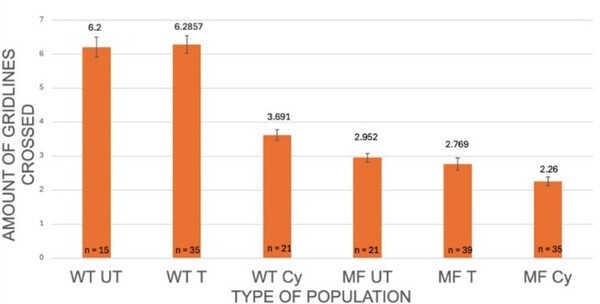
FOXP syndrome is a neurodevelopmental disorder that can cause movement deficiencies and abnormal behavioral traits. Defects in FOXP production can cause defects in motor skills and daily behaviors in Drosophila. In common movement disorders, such as Huntington’s disease and Chorea, tetrabenazine has been used as a possible drug, as it is a common drug used to help alleviate such symptoms. Cyrene was used to dissolve the drug, tetrabenazine, rather than DMSO because it is a much safer and greener option. Additionally, Cyrene was used as a possible control group for the Drosophila to determine if Cyrene itself had effects on the Drosophila’s behavior. We hypothesized that the tetrabenazine treatment would lead to an improvement in the motor skill assays compared to the untreated group. We performed three different assays to assess motor skills: larval crawling, negative geotaxis, and courting behaviors. In the larval crawling assay, the tetrabenazine treated mutant larvae crossed fewer gridlines than the untreated larvae. In the negative geotaxis assay, both the treated mutant and wild-type populations saw an increase in the time to reach the top of the vials, meaning they got slower. In the courtship assay, when treated, the amount of time to exhibit the mating behaviors decreased or stayed the same for both treated mutant and wild-type populations. Overall, we saw that the treatment did work for some assays but not for others. Further research is needed to solidify the significance of the varying results.
This article has been tagged with: