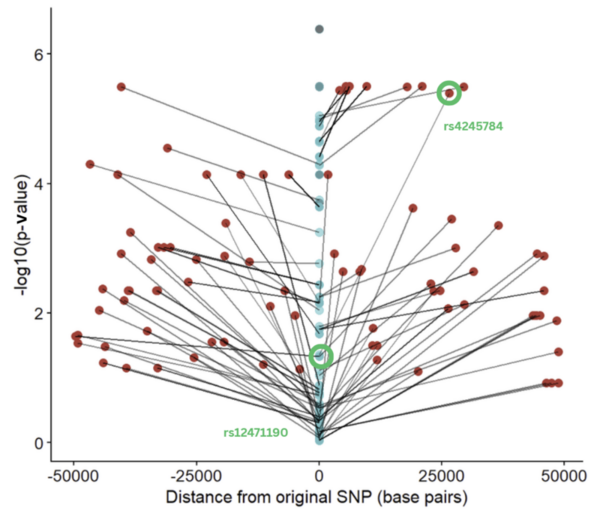
This project investigated whether previously identified genetic risk factors in non-Korean populations were associated with high gastric cancer incidence rates in Koreans.
Read More...Investigating the contribution of genetic risk factors to gastric cancer in Korean-ancestry populations
This project investigated whether previously identified genetic risk factors in non-Korean populations were associated with high gastric cancer incidence rates in Koreans.
Read More...Economic and social drivers of school shootings: Analyzing recent trends

Content warning: This article discusses the frequency and impact of mass violence incidents, particularly school shootings. Gun violence, threats of gun violence, firearm supply, fatalities among minors, and bullying are discussed but not graphically described.
Read More...Protein kinases in phagocytosis (phagocytotic kinome): A promising biomarker set in cancer therapeutics
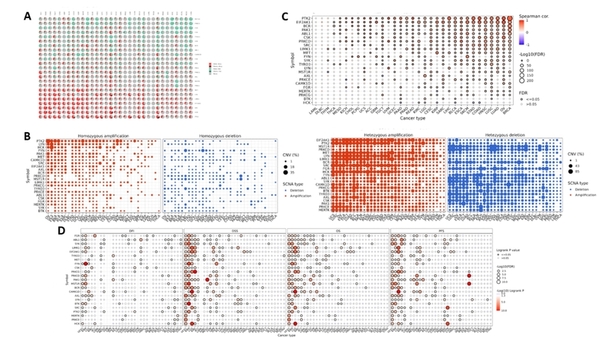
This study analyzes genetic alterations and expression patterns of protein kinases involved in phagocytosis across multiple cancers using TCGA data.
Read More...Investigating intertidal sediment sorting and median particle diameter variation on an eroding beach face
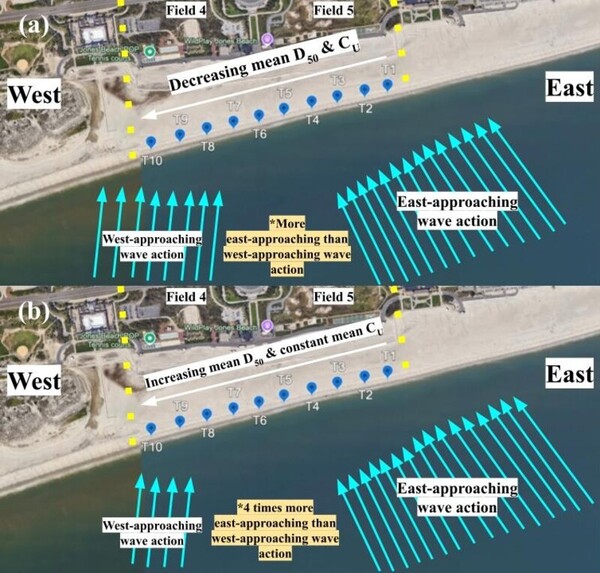
The authors looked at beach nourishment (a way to combat erosion on coasts) and resulting grain size distribution. Their work is important to understand the dynamics of erosion and it's relation to wave action and the implications this has for efforts to mitigate coastal erosion.
Read More...Impact of environmental stressors on ultrasonic acoustic emissions in different species of plants
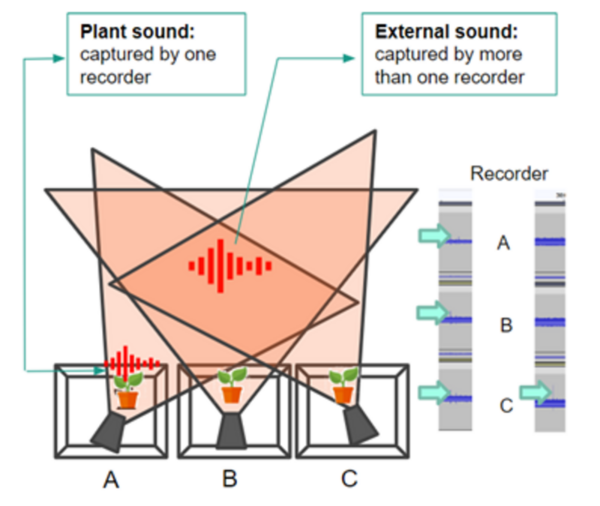
Current horticulture practices often rely on pesticides, causing environmental harm. To address this, authors explore the use of ultrasonic sound emissions to detect plant stress at an individual level.
Read More...The effect of patient perception of physician on patient compliance
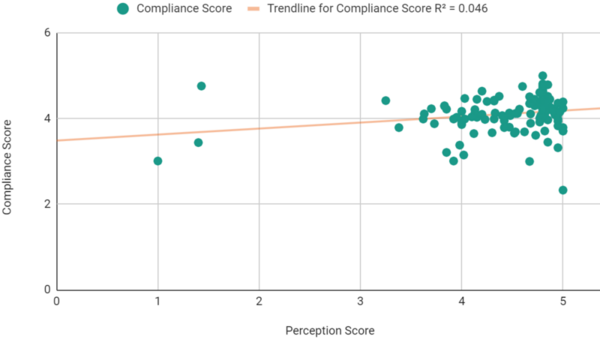
The authors investigated whether the physician-patient relationship affected patient perceptions and treatment adherence.
Read More...Enhancing the quantum efficiency of a silicon solar cell using one dimensional thin film interferometry
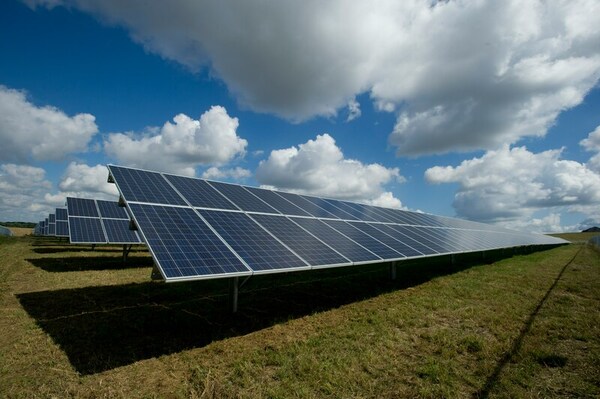
Here, recognizing the need to improve the efficiency of the conversion of solar energy to electrical energy, the authors used MATLAB to mathematically simulate a multi-layered thin film with an without an antireflective coating. They found that the use of alternating ZnO-SiO2 multilayers enhanced the transmission of light into the solar cell, increasing its efficiency and reducing the reflectivity of the Si-Air interface.
Read More...Locating sources of a high energy cosmic ray extensive air shower using HiSPARC data
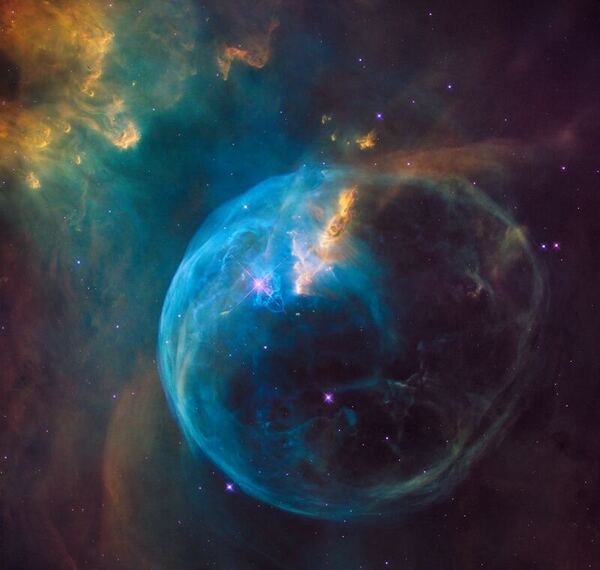
Using the data provided by the University of Twente High School Project on Astrophysics Research with Cosmics (HiSPARC), an analysis of locations for possible high-energy cosmic ray air showers was conducted. An example includes an analysis conducted of the high-energy rain shower recorded in January 2014 and the use of Stellarium™ to discern its location.
Read More...Fractals: Exploring Mandelbrot Coordinates and qualitative characteristics of the corresponding Julia Set

Here based on an interest in fractals, the authors used a Julia Set Generator to consider a specific point on the Mandelbrot set with an associated coordinate. In this manner, they found that the complexity of the Mandelbrot and Julia Sets are governed by relatively simple rules, revealing that the intricate patterns of fractals can be defined by defined by simple rules and patterns.
Read More...The Effects of Atmospheric Attenuation on Cosmic Ray Muons: How is Surface Level Cosmic Ray Muon Flux Affected by Atmospheric Attenuation?

Cosmic rays are high-energy astronomical particles originating from various sources across the universe. Here, The authors sought to understand how surface-level cosmic-ray muon flux is affected by atmospheric attenuation by measuring the variation in relative muon-flux rate relative to zenith angle, testing the hypothesis that muons follow an exponential attenuation model. The attenuation model predicts an attenuation length of 6.3 km. This result implies that only a maximum of 24% of muons can reach the Earth’s surface, due to both decay and atmospheric interactions.
Read More...