The authors looked at the ability of different deep learning models to predict the presence of lung cancer from chest CT scans. They found that a pre-trained CNN model performed better than an autoencoder model.
Read More...How artificial intelligence deep learning models can be used to accurately determine lung cancers
The authors looked at the ability of different deep learning models to predict the presence of lung cancer from chest CT scans. They found that a pre-trained CNN model performed better than an autoencoder model.
Read More...Depression detection in social media text: leveraging machine learning for effective screening
Depression affects millions globally, yet identifying symptoms remains challenging. This study explored detecting depression-related patterns in social media texts using natural language processing and machine learning algorithms, including decision trees and random forests. Our findings suggest that analyzing online text activity can serve as a viable method for screening mental disorders, potentially improving diagnosis accuracy by incorporating both physical and psychological indicators.
Read More...The impact of environmental noise on the cognitive functions and mental workload of high school students
Authors examine the impact of environmental noise on cognitive processes in teenagers, focusing on five different noise conditions: two types of noise (aircraft and construction) at two different decibel levels (30 dBA and 60 dBA) and a quiet condition.
Read More...Distribution of prophages in the Streptococcus bacteria genus and their role in increasing host pathogenicity
The authors investigated prophages present in Streptococcus bacteria that may increase their survival in different environments.
Read More...Effect of hypervitaminosis A in regenerating planaria: A potential model for teratogenicity testing
This unique research study evaluated the potential use of the flatworm, brown planaria (Dugesia tigrine), as an alternative model for teratogenicity testing. In this study, we exposed amputated planaria to varying concentrations of a known teratogen, vitamin A (retinol), for approximately 2 weeks, and evaluated multiple parameters including the formation of blastema and eyes. The results from this study demonstrated that high concentrations of retinol caused defects in head and eye formation in regenerating planaria, with similarities to vitamin A related teratogenicity findings in mammals. Based on these results, regenerating brown planaria are a promising alternative model for teratogenicity testing, which can potentially be paradigm shifting as it can reduce cost, time, and pregnant animal use in research.
Read More...More efficient sources of water distribution for agricultural and general usage
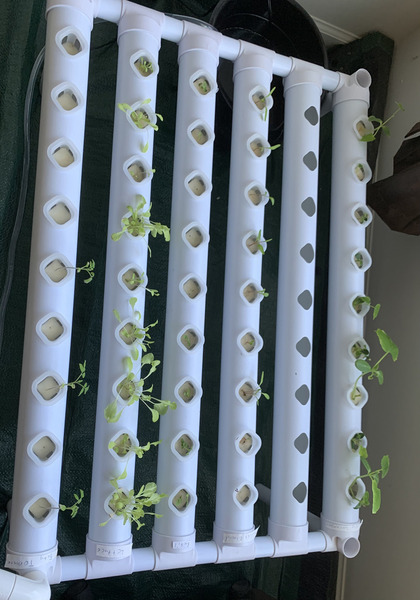
Here, the authors investigated alternative methods to irrigate plants based on the their identification that current irrigation systems waste a large amount of fresh water. They compared three different delivery methods for water: conventional sprinkler, underground cloth, and a perforated pipe embedded in the soil. They found the cloth method to save the most water, although plant growth was slightly less in comparison to plants watered with the sprinkler method or pipe method.
Read More...Studying habitability of the exoplanents Kepler-504 b, Kepler-315 b, and Kepler-315 c
The authors explore how similar exoplanets are to Earth and whether they could be inhabited by humans and other living organisms.
Read More...Computational development of aryl sulfone compounds as potential NNRTIs
Non-nucleoside reverse transcriptase inhibitors (NNRTIs) are allosteric inhibitors that bind to the HIV reverse transcriptase and prevent replication. Indolyl aryl sulfones (IAS) and IAS derivatives have been found to be highly effective against mutant strains of HIV-1 reverse transcriptase. Here, we analyzed molecules designed using aryl sulfone scaffolds paired to cyclic compounds as potential NNRTIs through the computational design and docking of 100 novel NNRTI candidates. Moreover, we explored the specific combinations of functional groups and aryl sulfones that resulted in the NNRTI candidates with the strongest binding affinity while testing all compounds for carcinogenicity. We hypothesized that the combination of an IAS scaffold and pyrimidine would produce the compounds with the best binding affinity. Our hypothesis was correct as the series of molecules with an IAS scaffold and pyrimidine exhibited the best average binding affinity. Additionally, this study found 32 molecules designed in this procedure with higher or equal binding affinities to the previously successful IAS derivative 5-bromo-3-[(3,5-dimethylphenyl)sulfonyl]indole-2-carboxyamide when docked to HIV-1 reverse transcriptase.
Read More...Characterization and Phylogenetic Analysis of the Cytochrome B Gene (cytb) in Salvelinus fontinalis, Salmo trutta and Salvelinus fontinalis X Salmo trutta Within the Lake Champlain Basin
Recent declines in the brook trout population of the Lake Champlain Basin have made the genetic screening of this and other trout species of utmost importance. In this study, the authors collected and analyzed 21 DNA samples from Lake Champlain Basin trout populations and performed a phylogenetic analysis on these samples using the cytochrome b gene. The findings presented in this study may influence future habitat decisions in this region.
Read More...Revisiting the Belmont Report: an analysis of the bioethical values of Generation Z
The authors studied the bioethical values of Generation Z.
Read More...