Browse Articles

Antimicrobial properties of common household spices on microbes cultured from two kitchen locations

Carroll et al. | May 12, 2022

Antimicrobial properties of common household spices on microbes cultured from two kitchen locations

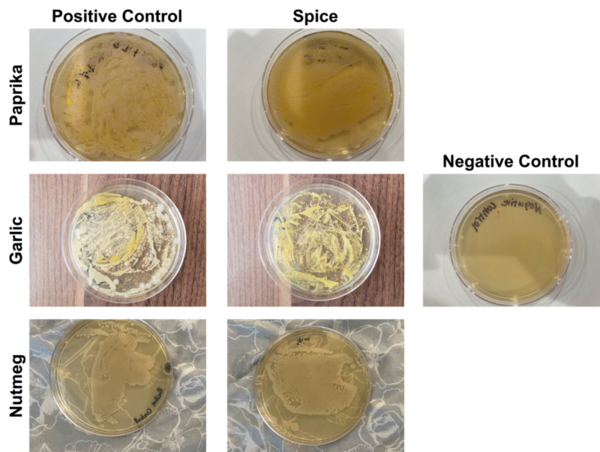
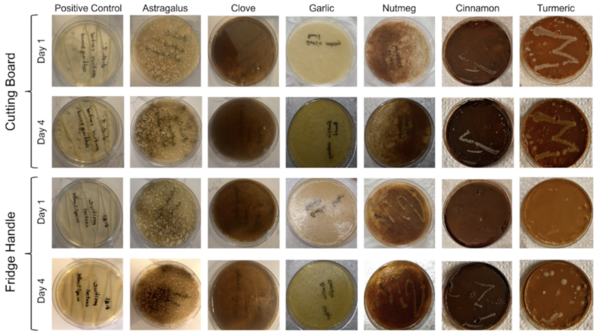
The number of bacterial infections in humans is rising, and a major contributor is foodborne illnesses, which affect a large portion of the population and result in many hospitalizations and deaths. Common household cleaners are an effective strategy to combat foodborne illness, but they are often costly and contain harmful chemicals. Thus, the authors sought to test the antimicrobial effectiveness of spices (clove, nutmeg, astragalus, cinnamon, turmeric, and garlic) on microbes cultured from refrigerator handles and cutting boards. Results from this study demonstrate long-lasting, antimicrobial effects of multiple spices that support their use as alternatives to common household cleaners.

Read More...
The growth of bacteria on everyday objects and the antimicrobial effects of household spices

Daehan Yi et al. | Apr 29, 2026

The growth of bacteria on everyday objects and the antimicrobial effects of household spices
Image credit: Daehan Yi, Boughaleb Hassani and Ribeiro

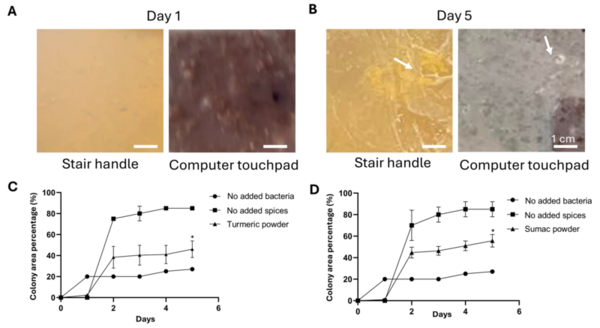
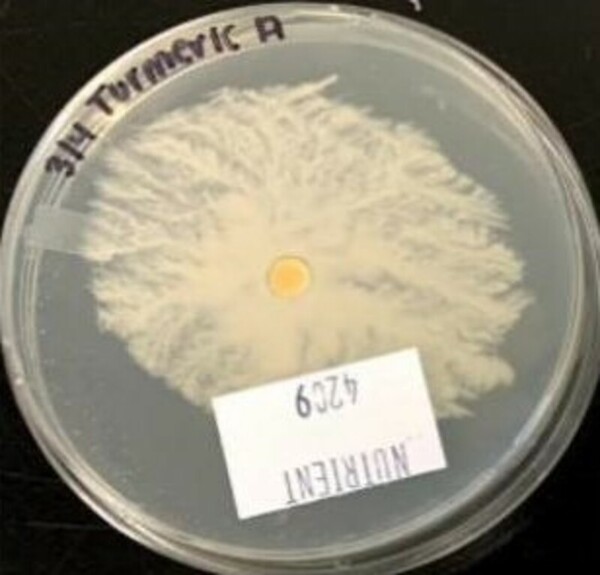
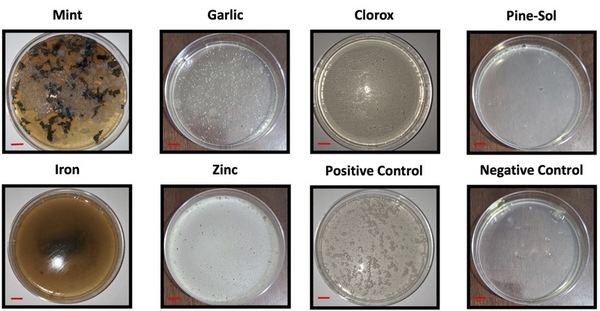
The study investigates the antibacterial properties of household spices on bacteria isolated from everyday objects, aiming to address the limited understanding of bacterial resilience on surfaces and the potential of spices as antibacterial agents. Researchers hypothesized that bacteria would grow faster on some surfaces than others and that spices like honey, chili powder, turmeric, and sumac would inhibit bacterial growth at varying rates. The findings suggest that household spices possess significant antibacterial properties and could be used as emergency disinfectants, particularly in under-resourced settings. However, they cannot replace medical treatments but offer insights into alternative health solutions using common ingredients.

Read More...

Antibacterial properties of household spices and toothpaste against oral bacteria

Toliver et al. | Apr 24, 2023

Antibacterial properties of household spices and toothpaste against oral bacteria

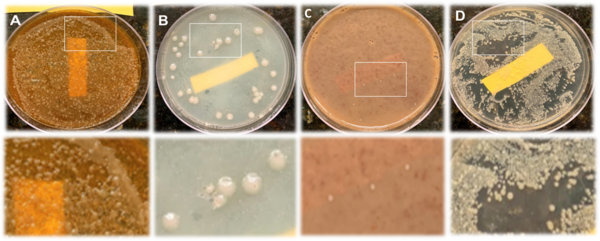
Bacteria cause tooth decay, plaque, bad breath, and other diseases. Despite being cleaned with water and toothpaste, oral bacteria live on our toothbrushes. Bacterial growth has been shown to be inhibited by different toothpastes and common household spices. This study tested how different toothpastes and common household spices, including cinnamon, cumin, nutmeg, and ground white pepper, can inhibit bacteria from growing on toothbrushes

Read More...

Antibacterial effectiveness of turmeric against gram-positive Staphylococcus epidermidis

Cox et al. | Jan 10, 2022

Antibacterial effectiveness of turmeric against gram-positive <i>Staphylococcus epidermidis</i>

Infections caused by antibiotic resistance are a leading issue faced by the medical field. The authors studied the antibacterial effectiveness of turmeric against gram-positive Staphylococcus epidermidis using antibiotic sensitivity disks. They infused blank antibiotic sensitivity disks with a 5% concentrated solution of turmeric and placed them on agar plates inoculated with bacteria. Overall, there was no measurable ZOI surrounding the turmeric disk so the measurements for all trials were 0 cm, suggesting that turmeric at a 5% concentration is not an effective antibacterial against S. epidermidis.

Read More...

Antibacterial activity of homemade Indian tomato tamarind soup (rasam) against common pathogens

Eswaran et al. | Oct 04, 2024

Antibacterial activity of homemade Indian tomato tamarind soup (rasam) against common pathogens

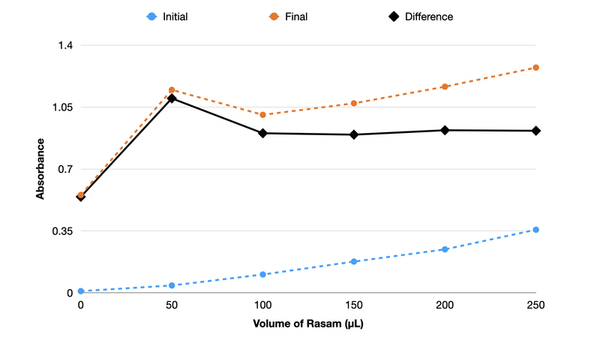
Systematic consumption of traditional foods is a popular way of treating diseases in India. Rasam, a soup of spices and tomato with a tamarind base, is a home remedy for viral infections such as the common cold. Here, we investigate if rasam, prepared under household conditions, exhibits antibacterial activity against Escherichia coli and Staphylococcus aureus, two common pathogenic bacteria. Our results show rasam prepared under household conditions lacks antibacterial activity despite its ingredients possessing such properties.

Read More...

Testing filtration capabilities of household fabrics for protection against airborne contaminants

Shah et al. | May 31, 2025

Testing filtration capabilities of household fabrics for protection against airborne contaminants

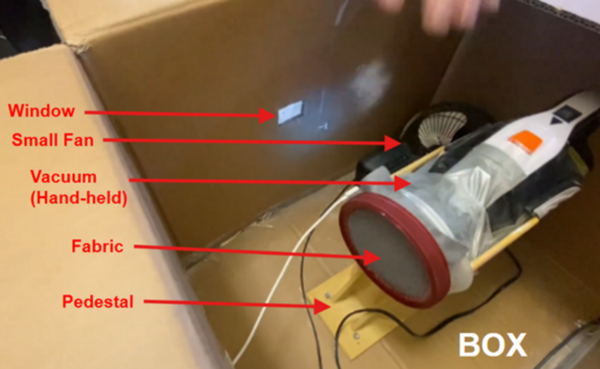
Toxic particulates in the atmosphere pose significant health risks, and while modern masks can help reduce inhalation of these pollutants, their availability may be limited during health crises. This study evaluated the effectiveness of household fabrics (cotton, fleece, wool, and rayon) as particulate filters, finding that cotton outperformed the others in filtration efficiency, while rayon was the least effective. The findings suggest that cotton is a preferable alternative for filtration purposes, while rayon should be avoided.

Read More...

Use of yogurt bacteria as a model surrogate to compare household cleaning solutions

Shukla et al. | May 07, 2023

Use of yogurt bacteria as a model surrogate to compare household cleaning solutions
Image credit: CDC

While resources on the safety of household cleaning products are plentiful, measures of efficacy of these cleaning chemicals against bacteria and viruses remain without standardization in the consumer market. The COVID pandemic has exasperated this knowledge gap, stoking the growth of misinformation and misuse surrounding household cleaning chemicals. Arriving at a time dire for sanitization standardization, the authors of this paper have created a quantifying framework for consumers by comparing a wide range of household cleaning products in their efficacy against bacteria generated by a safe and easily replicable yogurt model.

Read More...

Repulsion of Ants Using Non-Toxic Household Products

Ambati et al. | Sep 10, 2019

Repulsion of Ants Using Non-Toxic Household Products

Ant invasion causes damage exceeding $5 billion annually in North America. In this study, Ambati and Duvvuri aim to identify natural products with ant-repelling properties using a custom ring apparatus designed to quantify ant-repellence. They report that cinnamon and lemon were the most effective ant repellents of the tested products. These data suggest that compounds found in non-toxic household products, such as cinnamon oil and lemon juice, could be used in low-dose combinations as potent, effective, eco-friendly, and safe ant repellents.

Read More...