
The authors describe the design and testing of new guide RNAs targeting the DMPK gene, which is responsible for myotonic dystrophy.
Read More...Designing gRNAs to reduce the expression of the DMPK gene in patients with classic myotonic dystrophy
The authors describe the design and testing of new guide RNAs targeting the DMPK gene, which is responsible for myotonic dystrophy.
Read More...Effects of urban traffic noise on the early growth and transcription of Arabidopsis thaliana
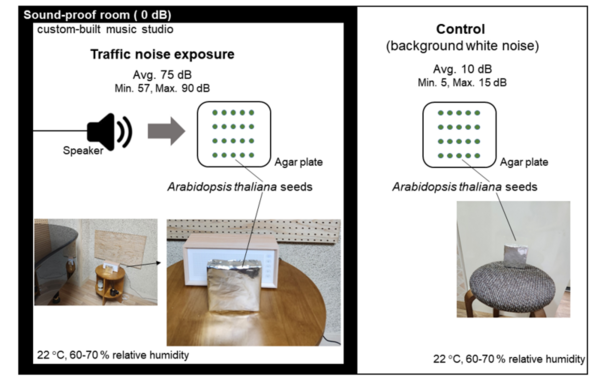
This article explores the largely unstudied impact of noise pollution on plant life. By exposing Arabidopsis thaliana seedlings to urban traffic noise, the study found a significant increase in seedling growth, alongside substantial changes in gene expression. This research reveals critical insights into how noise pollution affects plant physiology and contributes to a broader understanding of its ecological impacts, helping to guide future efforts in ecosystem conservation.
Read More...Transcriptomic profiling identifies differential gene expression associated with childhood abuse

Childhood abuse has severe and lasting effects throughout an individual's life, and may even have long-term biological effects on individuals who suffer it. To learn more about the effects of abuse in childhood, Li and Yearwood analyze gene expression data to look for genes differentially expressed genes in individuals with a history of childhood abuse.
Read More...Advancing pediatric cancer predictions through generative artificial intelligence and machine learning
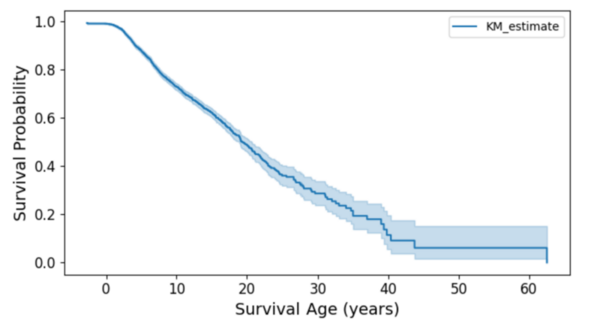
Pediatric cancers pose unique challenges due to their rarity and distinct biological factors, emphasizing the need for accurate survival prediction to guide treatment. This study integrated generative AI and machine learning, including synthetic data, to analyze 9,184 pediatric cancer patients, identifying age at diagnosis, cancer types, and anatomical sites as significant survival predictors. The findings highlight the potential of AI-driven approaches to improve survival prediction and inform personalized treatment strategies, with broader implications for innovative healthcare applications.
Read More...How planarians are affected by mouthwash and cough syrup

Since cough syrup and mouthwash are commonly used items and often end up flushed down the drain or toilet, they can eventually find their way into into freshwater waterways which can be harmful to many marine organisms, such as planarians (aquatic flatworms). To investigate the effects of these substances on planarians, the authors considered different concentrations of Listerine mouthwash and Robitussin syrup along with their active ingredients. By using a behavioral assay, they identified that the active ingredients of cough syrup detrimentally affect planarian behavior. They suggest that these findings could be used to guide disposal methods to lessen detrimental effects on aquatic life.
Read More...The Effect of Anubias barteri Plant Species on Limiting Freshwater Acidification
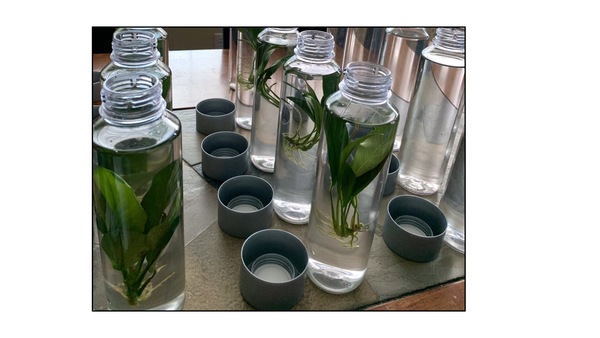
Research relating to freshwater acidification is minimal, so the impact of aquatic plants, Anubias barteri var. congensis and Anubias barteri var. nana, on minimizing changes in pH was explored in an ecosystem in Northern California. Creek water samples, with and without the aquatic plants, were exposed to dry ice to simulate carbon emissions and the pH was monitored over an eight-hour period. There was a 25% difference in the observed pH based on molar hydrogen ion concentration between the water samples with plants and those without plants, suggesting that aquatic plants have the potential to limit acidification to some extent. These findings can guide future research to explore the viable partial solution of aquatic plants in combating freshwater acidification.
Read More...Investigating KNOX Gene Expression in Aquilegia Petal Spur Development
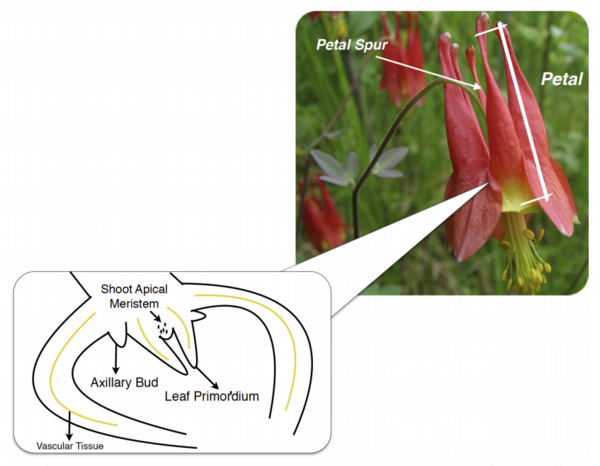
Plants, and all other multi-cellular organisms, develop through the coordinated action of many sets of genes. The authors here investigate the genes, in a class named KNOX, potentially responsible for organizing a certain part of Aquilegia (columbine) flowers called petal spurs. Through the technique Reverse Transcription-Polymerase Chain Reaction (RT-PCR), they find that certain KNOX genes are expressed non-uniformly in petal spurs, suggesting that they may be involved, perhaps in a cell-specific manner. This research will help guide future efforts toward understanding how many beautiful flowers develop their unique shapes.
Read More...Correlation between trihalomethane concentrations and various cancers in Massachusetts counties
.png)
The authors assess incidence and mortality rates of two cancer types in relation to trihalomethane pollutant concentrations in drinking water.
Read More...Evaluating the impact of prompting styles on LLM accuracy for AIME math questions
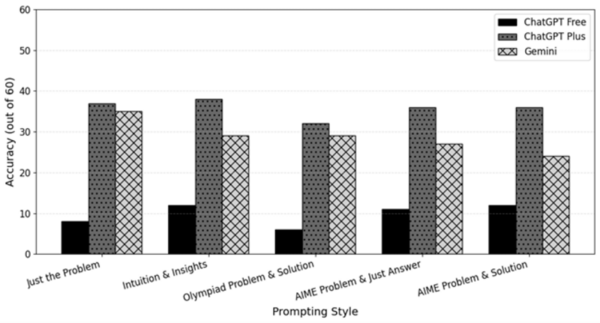
Large language models are increasingly used to solve math problems, but their ability to handle multi-step reasoning remains uncertain. In this study, students tested whether different prompting styles could improve LLM accuracy on challenging AIME math questions and found that detailed step-by-step solutions did not significantly outperform simpler prompts. These results suggest that improving LLM mathematical reasoning may require deeper model-level advances rather than changes in prompting style alone.
Read More...Analysis of antibiotic resistance genes in publicly accessible Staphylococcus aureus genomes
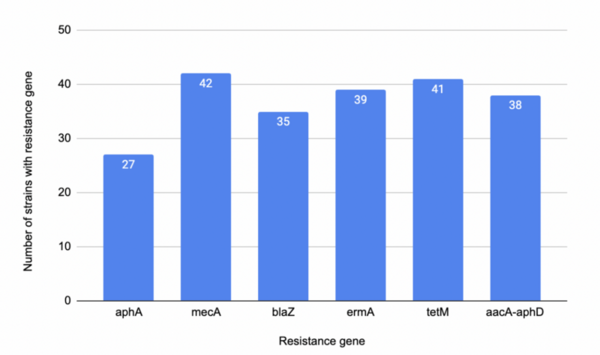
The authors looked at how the presence of difference antibiotic resistance genes would influence antibiotic resistance in Staphylococcus aureus.
Read More...