Browse Articles

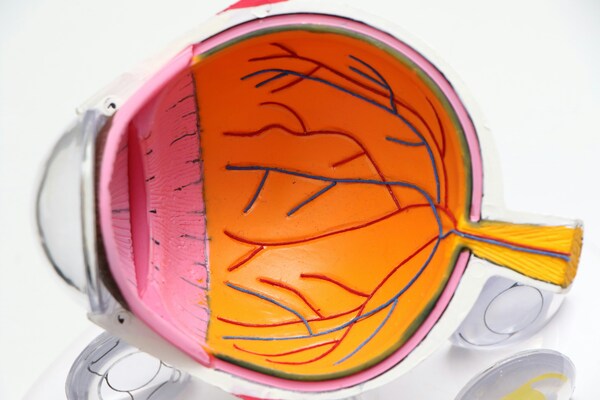
Eye color, visual acuity and photophobia: How eye color affects light sensitivity

Spencer et al. | May 20, 2026

Eye color, visual acuity and photophobia: How eye color affects light sensitivity

This study examined whether eye color affects photophobia and vision in elementary school students and staff, finding no significant relationship between eye color, light sensitivity, or visual acuity. However, photophobia was common across age groups, highlighting the need for greater awareness of light sensitivity in learning environments.

Read More...
What Can You See in the Dark? The Effects of Contrast, Light, and Age on Contrast Sensitivity in Low Light

Virostek et al. | Apr 25, 2014

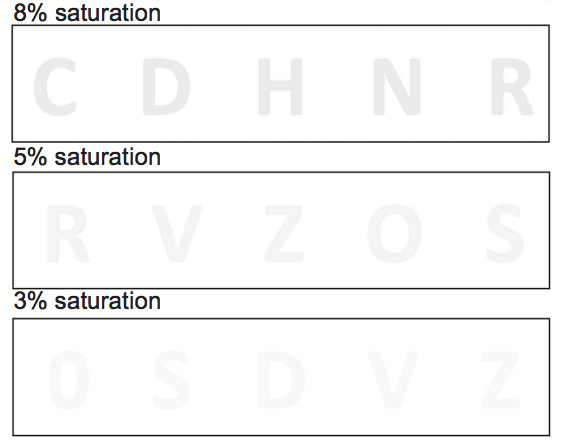
What Can You See in the Dark? The Effects of Contrast, Light, and Age on Contrast Sensitivity in Low Light

Many of us take our vision for granted, but rarely do we measure how well we can see. In this study, the authors investigate the ability of people of different ages to read progressively fainter letters in dark light. They find that the ability to see in dim light drops drastically after age 30. The ability to read fainter letters worsens after age 30 as well. These findings should help inform lighting decisions everywhere from restaurants to road signs.

Read More...

Measuring the effect of early universe dark matter on the primordial values of helium-4 and deuterium

Pal et al. | Apr 29, 2026

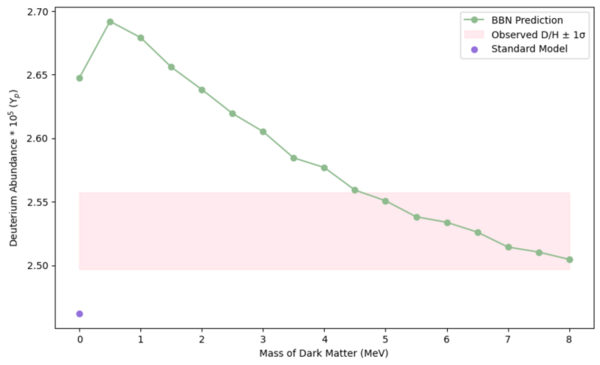
Measuring the effect of early universe dark matter on the primordial values of helium-4 and deuterium

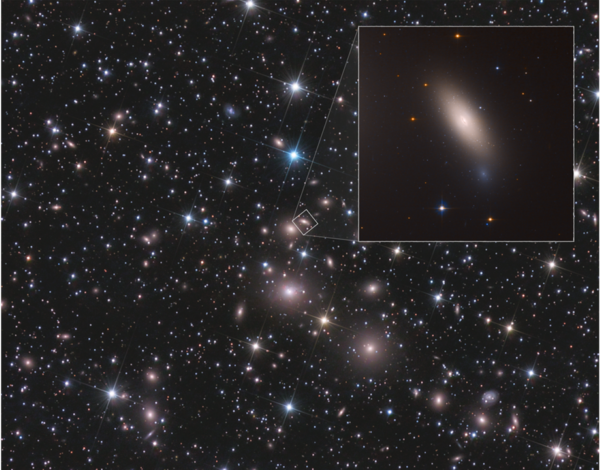
Recent observations by the “Extremely Metal-Poor Representatives Explored by the Subaru Survey” (EMPRESS) collaboration found normal deuterium levels but unexpectedly low helium-4, challenging current cosmological theories. This study used simulations with the PRyMordial package to test whether dark matter particles interacting with neutrinos in the early universe could explain the discrepancy.

Read More...

Using Gravitational Waves to Determine if Primordial Black Holes are Sources of Dark Matter

Sivakumar et al. | Jul 15, 2024

Using Gravitational Waves to Determine if Primordial Black Holes are Sources of Dark Matter

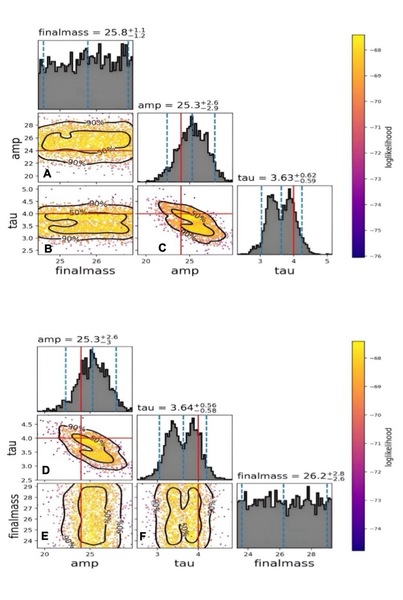
In the quest to understand dark matter, scientists face a profound mystery. Two compelling candidates, Massive Compact Halo Objects (MACHOs) and Weakly Interacting Massive Particles (WIMPs), have emerged as potential sources. By analyzing gravitational waves from binary mergers involving these black holes, authors sought to determine if MACHOs could be the elusive dark matter.

Read More...

Digestion products of bread and cheese cause addictive behavior in a planaria model

Cochin et al. | Sep 26, 2024

Digestion products of bread and cheese cause addictive behavior in a planaria model

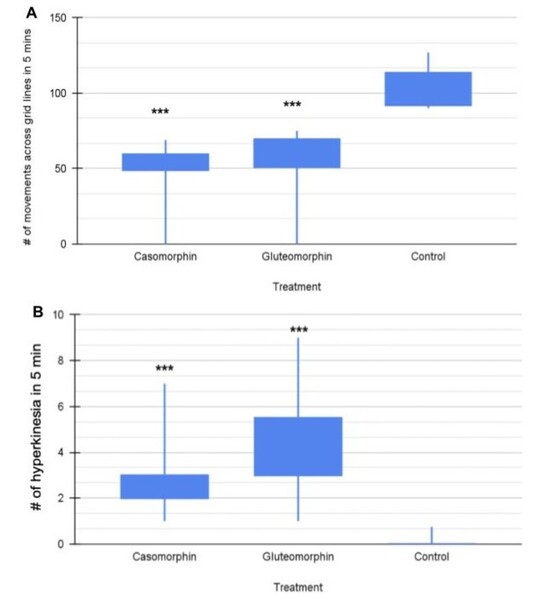
The authors looked at two peptides, gluteomorphin and casomorphin, that are present after the digestion of bread and cheese. As these peptides can bind opioid receptors the authors want to know if they could be addictive in the same way as conventional opioids (i.e., morphine) are known to be. Their results in a planaria model suggest that both of these peptides are addictive.

Read More...

Colorism and the killing of unarmed African Americans by police

Hempfield et al. | Nov 08, 2021

Colorism and the killing of unarmed African Americans by police

The purpose of this study was to investigate the relationship between colorism and police killings of unarmed African American suspects. The authors collected data from the Washington Post database, which reports unarmed African American victims from 2015–2021, and found that the victims who were killed by police were darker on average than a control population of African Americans that had not encountered the police.

Read More...