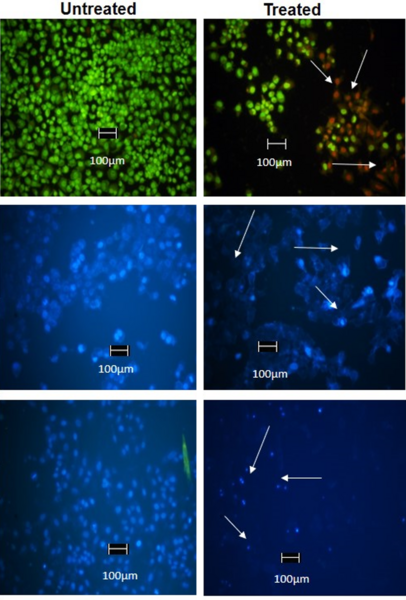
The authors test the antiproliferative and apoptosis-inducing properties of an extract created from a traditional Indian medicinal plant of the Amaranthus genus.
Read More...Cytotoxicity evaluation of Amaranthus extracts compared with AS20 on MCF-7 cancer cells
The authors test the antiproliferative and apoptosis-inducing properties of an extract created from a traditional Indian medicinal plant of the Amaranthus genus.
Read More...Cell cytotoxicity and pro-apoptosis on MCF-7 cells using polyherbal formulation, MAT20
.jpeg)
The purpose of this study was to test the anti-cancer properties and pro-apoptotic effects of the polyherbal formulation MAT20 as a complementary treatment. Moringa oleifera (Moringa), Phyllanthus emblica (Amla) and Ocimum sanctum (Tulsi), these 3 herbs were used to formulate MAT20, which contain phytochemicals that are known to display anti-cancer properties. In this study, we hypothesized that MCF-7 breast cancer cells treated with MAT20 would show increased cytotoxicity compared to its individual plant extracts.
Read More...Mechanism and cytotoxicity of A1874 proteolysis targeting chimera on CT26 colon carcinoma cell line
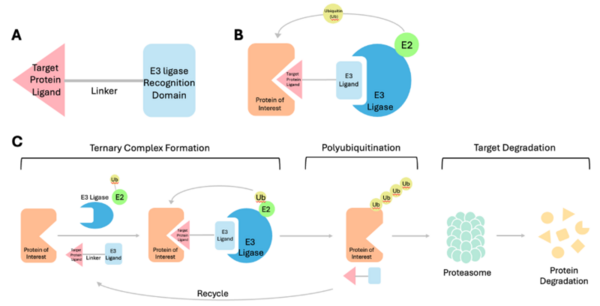
This study investigates the effects of the PROTAC compound A1874 on CT26 colon carcinoma cells, focusing on its ability to degrade the protein BRD4 and reduce cell viability. While A1874 had previously shown effectiveness in other colon cancer cell lines, its impact on CT26 cells was unknown.
Read More...Modeling stearoyl-coenzyme A desaturase 1 inhibitors to ameliorate α-Syn cytotoxicity in Parkinson's disease
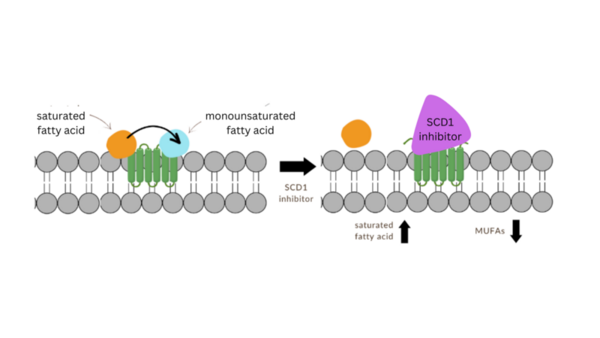
The authors use molecular modeling to test analogs of the stearoyl-coenzyme A desaturase 1 (SCD1) inhibitor MF-438 with implications for future development of Parkinson's disease therapeutics.
Read More...Developing novel plant waste-based hydrogels for skin regeneration and infection detection in diabetic wounds
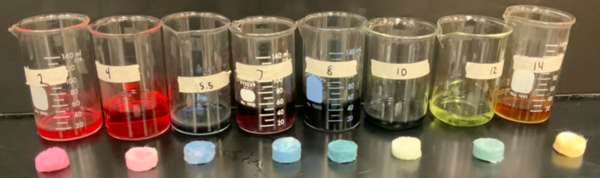
The purpose of this investigation is to develop a hydrogel to aid skin regeneration by creating an extracellular matrix for fibroblast growth with antibacterial and infection-detection properties. Authors developed two natural hydrogels based on pectin and potato peels and characterized the gels for fibroblast compatibility through rheology, scanning electron microscopy, swelling, degradation, and cell cytotoxicity assays. Overall, this experiment fabricated various hydrogels capable of acting as skin substitutes and counteracting infections to facilitate wound healing. Following further testing and validation, these hydrogels could help alleviate the 13-billion-dollar financial burden of foot ulcer treatment.
Read More...Effect of heme vs. non-heme iron supplements on gut microbiome fitness

Here, based on identification of iron deficiencies of a majority of people around the world, the authors sought to understand how the two main forms of dietary iron, heme and non-heme, affect the bacteria found in the human gut. by using a cell plate study, they found that bacterial growth increased with increasing concentration os either form of iron, up until the point where the high iron content resulted in cytotoxicity. They suggest this evidence points to the potential dangers of overconsumption of iron.
Read More...Anticancer, anti-inflammatory, and apoptotic activities of MAT20, a poly-herbal formulation.
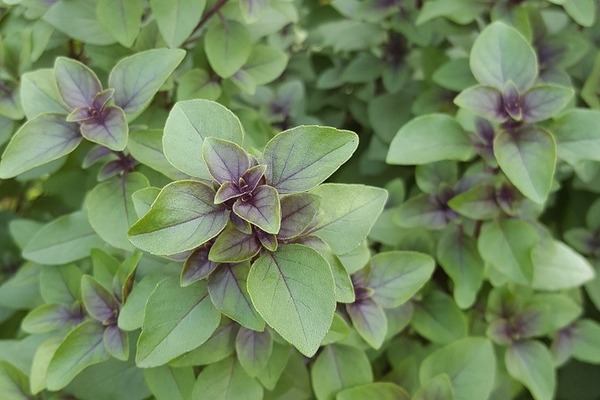
Kashyap Jha et al. look at the formulation of MAT20, a crude extract of the moringa, amla, and tulsi leaves, as a potential complementary and alternative medicine. Using HeLa cells, they find MAT20 up-regulates expression of inflammation and cell cytotoxicity markers. Their data is important for understanding the anti-cancer and anti-inflammatory properties of MAT20.
Read More...In silico screening of DEAB analogues as ALDH1 isoenzymes inhibitors in cancer treatment
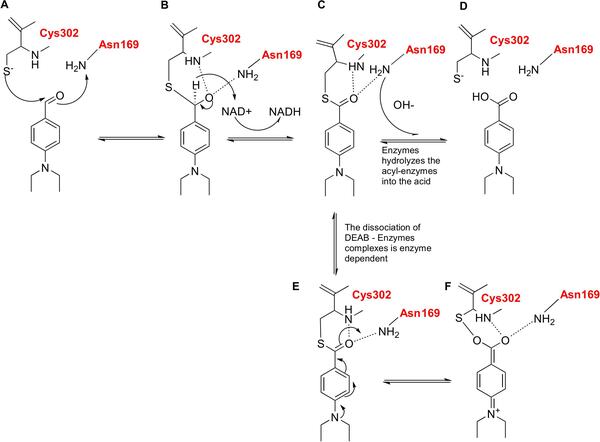
The authors computationally screened potential ALDH1 inhibitors, for use as potential cancer therapeutics.
Read More...Reactivity-informed design, synthesis, and Michael addition kinetics of C-ring andrographolide analogs
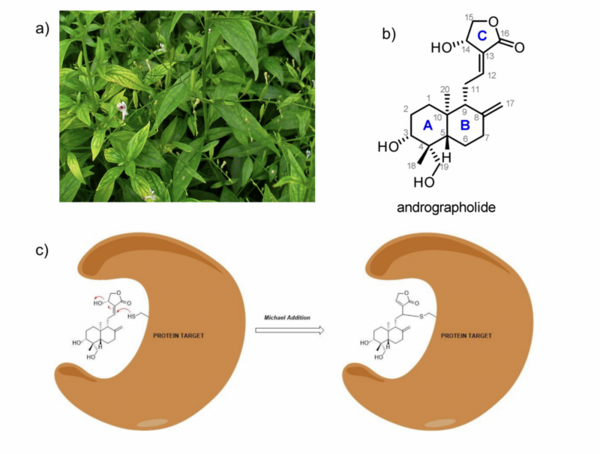
Here, based on the identification of androgapholide as a potential therapeutic treatment against cancer, Alzheimer's disease, diabetes, and multiple sclerosis, due to its ability to inhibit a signaling pathway in immune system function, the authors sought ways to optimize the natural product human systems by manipulating its chemical structure. Through the semisynthesis of a natural product along with computational studies, the authors developed an understanding of the kinetic mechanisms of andrographolide and semisynthetic analogs in the context of Michael additions.
Read More...Luteolin's positive inhibition of melanoma cell lines.

Luteolin (3′,4′,5,7-tetrahydroxyflavone) is a flavonoid that occurs in fruits, vegetables, and herbs. Research suggests that luteolin is effective against various forms of cancer by triggering apoptosis pathways. This experiment analyzes the effects of luteolin on the cell viability of malignant melanoma cells using an in vitro experiment to research alternative melanoma treatments and hopefully to help further cancer research as a whole.
Read More...