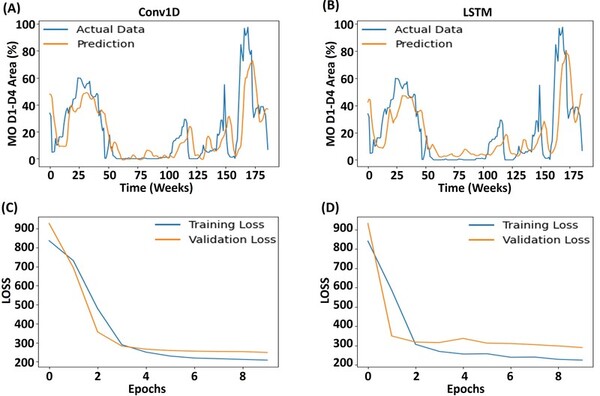
Did the COVID-19 pandemic and travel restrictions improve air quality? The authors investigate this question in New York City using existing pollution data and forecasting trends.
Read More...COVID-19 and air pollution in New York City
Did the COVID-19 pandemic and travel restrictions improve air quality? The authors investigate this question in New York City using existing pollution data and forecasting trends.
Read More...The Role of Race in the Stereotyping of a Speaker’s Accent as Native or Non-native
In the modern world, communication and mobility are no longer obstacles. A natural consequence is that people from all over the world are mixing like never before and national identity can no longer be determined simply by a person's appearance or manner of speech. In this article, the authors study how a person's accent interferes with the perception of a their national identity and proposes ways to eliminate such biases.
Read More...Investigating Teen Audism: The Development and Use of a Survey Scale to Measure Misconceptions of the Deaf Community in a Hearing High School
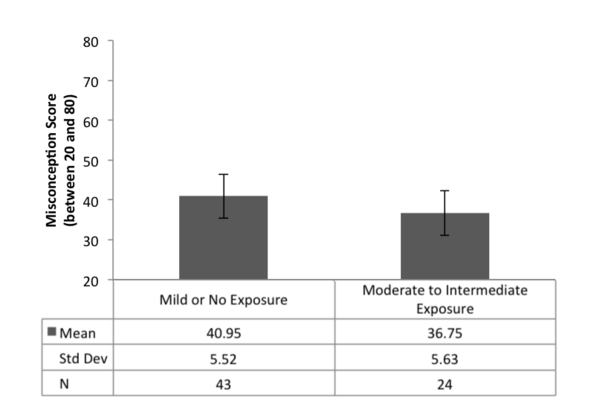
The authors explore hearing students' misconceptions about the Deaf and Hard of Hearing (HoH) community. Results indicate that some misconceptions are more common than others, and that personal experience with individuals in the Deaf and HoH community reduces the frequency of such misconceptions.
Read More...Exploring differences in men’s marijuana consumption and cigarette smoking by race and citizenship status
This study examined the relationship between citizenship status, racial background, and the use of marijuana and cigarettes among males in California using data from the 2017–2018 California Health Interview Survey. Findings indicated that non-citizens and naturalized citizens were less likely to use marijuana compared to US-born citizens, while Asian and Latino males were less likely to consume marijuana than White males. Additionally, various racial groups were more likely to smoke cigarettes compared to White males, suggesting that targeted health interventions based on citizenship status and race could be beneficial.
Read More...Predicting voting and union support in certification elections: Evidence from Starbucks workers, 2021-2024
The authors looked at unionization petitions from Starbucks workers between August 2021 and July 2024 to determine what factors influence votes for or against unionization.
Read More...Understanding the battleground of identity fraud
The authors looked at variables associated with identity fraud in the US. They found that national unemployment rate and online banking usage are among significant variables that explain identity fraud.
Read More...Genetic algorithm based features selection for predicting the unemployment rate of India
The authors looked at using genetic algorithms to look at the Indian labor market and what features might best explain any variation seen. They found that features such as economic growth and household consumption, among others, best explained variation.
Read More...Income mobility and government spending in the United States
Recent research suggests that the "American Dream" of income mobility may be becoming increasingly hard to obtain. Datta and Schmitz explore the role of government spending in socioeconomic opportunity by determining which state government spending components are associated with increased income mobility.
Read More...Association between nonpharmacological interventions and dementia: A retrospective cohort study
Here, the authors investigated the role of nonpharmacological interventions in preventing or delaying cognitive impairment in individuals with and without dementia. By using a retrospective case-control study of 22 participants across two senior centers in San Diego, they found no significant differences in self-reported activities. However, they found that their results reflected activity rather than the activity itself, suggesting the need for an alternative type of study.
Read More...Impacts of COVID-19 on daily water use: Have people started using more water?
In this study, the authors investigated whether water usage changed in São Paulo during the COVID-19 quarantine and explored reasons why.
Read More...