Browse Articles

Firearm-purchase laws that limit the number of guns on the market reduce gun homicides in the South Side of Chicago

Krishnan et al. | Jan 24, 2022

Firearm-purchase laws that limit the number of guns on the market reduce gun homicides in the South Side of Chicago

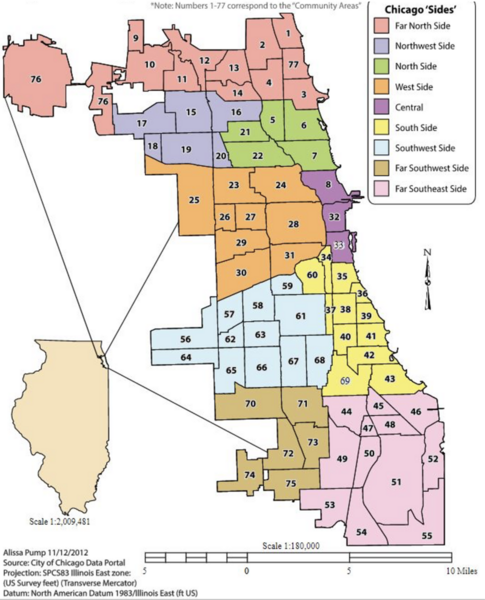
Gun violence has been a serious issue in the South Side of Chicago for a long time. To intervene, regulators have passed legislation they hoped to curb -if not completely eradicate- the issue. However, there is little analysis done on how effective the various laws have been at reducing gun violence. Here the authors explore the association between firearm purchase laws passed between 1993-2018 and the incidence of gun homicide in Chicago's South Side. Their analysis suggests that some laws have been more effective than others, while some might have exacerbated the issue. However, they do not consider other contributing factors, which makes it difficult to prove causation without further investigation.

Read More...

Artificial Intelligence-Based Smart Solution to Reduce Respiratory Problems Caused by Air Pollution

Bhardwaj et al. | Dec 14, 2021

Artificial Intelligence-Based Smart Solution to Reduce Respiratory Problems Caused by Air Pollution

In this report, Bhardwaj and Sharma tested whether placing specific plants indoors can reduce levels of indoor air pollution that can lead to lung-related illnesses. Using machine learning, they show that plants improved overall indoor air quality and reduced levels of particulate matter. They suggest that plant-based interventions coupled with sensors may be a useful long-term solution to reducing and maintaining indoor air pollution.

Read More...

Effects of an Informational Waste Management App on a User’s Waste Disposal Habits

Rao et al. | Apr 28, 2021

Effects of an Informational Waste Management App on a User’s Waste Disposal Habits

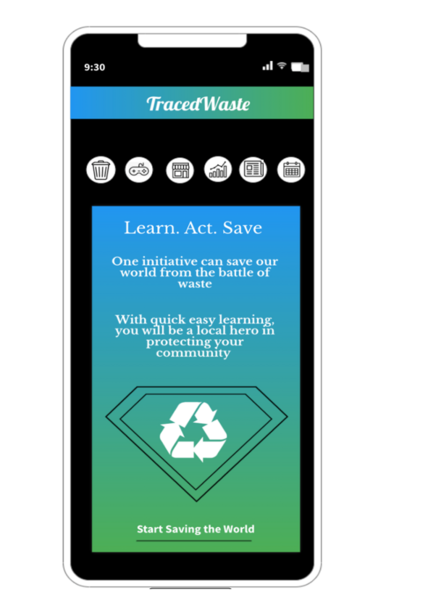
While 75% of waste in the United States is stated to be recyclable, only about 34% truly is. This project takes a stance to combat the pillars of mismanaged waste through a modern means of convenience: the TracedWaste app. The purpose of this study was to identify how individuals' waste disposal habits improved and knowledge increased (i.e. correctly disposing of waste, understanding negative incorrect waste disposal) due to their use of an informational waste management app as measured by a survey using a 1-5 Likert Scale. The results showed that the TracedWaste app helped conserve abundant resources such as energy and wood, decrease carbon emissions, and minimize financial toll all through reducing individual impact.

Read More...

The Effect of Wind Mitigation Devices on Gabled Roofs

Kaufman et al. | Feb 20, 2021

The Effect of Wind Mitigation Devices on Gabled Roofs

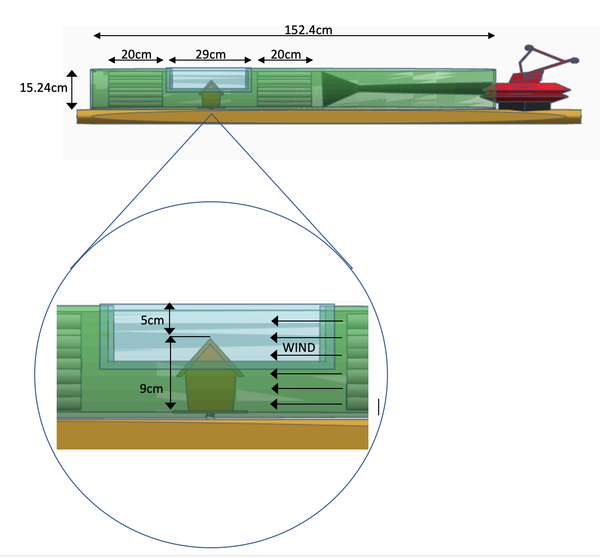
The purpose of this study was to test devices installed on a gabled roof to see which reduced the actual uplift forces best. Three gabled birdhouse roofs were each modified with different mitigation devices: a rounded edge, a barrier shape, or an airfoil. The barrier edge had no significant effect on the time for the roof to blow off. The addition of airfoil devices on roofs, specifically in areas that are prone to hurricanes such as Florida, could keep roofs in place during hurricanes, thus reducing insurance bills, overall damage costs, and the loss of lives.

Read More...

A Statistical Comparison of the Simultaneous Attack/ Persistent Pursuit Theory Against Current Methods in Counterterrorism Using a Stochastic Model

Tara et al. | Dec 01, 2020

A Statistical Comparison of the Simultaneous Attack/ Persistent Pursuit Theory Against Current Methods in Counterterrorism Using a Stochastic Model

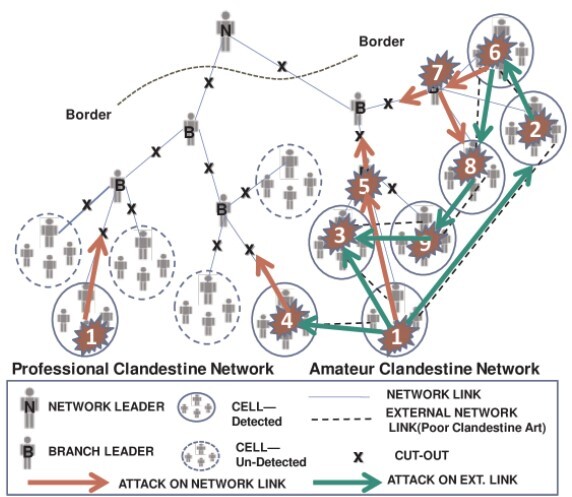
Though current strategies in counterterrorism are somewhat effective, the Simultaneous Attack/Persistent Pursuit (SAPP) Theory may be superior alternative to current methods. The authors simulated five attack strategies (1 SAPP and 4 non-SAPP), and concluded that the SAPP model was significantly more effective in reducing the final number of terrorist attacks. This demonstrates the comparative advantage of utilizing the SAPP model, which may prove to be critical in future efforts in counterterrorism.

Read More...

3D Printed Polymer Scaffolds for Bone Tissue Regeneration

Jayatissa et al. | Apr 26, 2019

3D Printed Polymer Scaffolds for Bone Tissue Regeneration

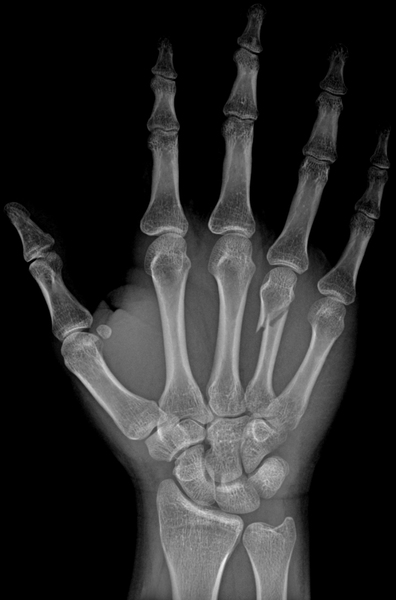
Scientists are always on the quest to improve the body's healing abilities and broken bones are no exception. In this article, the authors investigate properties of 3D-printed biocompatible polymers used to improve bone healing. With such efforts, we can hope to, one day, improve bone scaffolding materials in ways that make the natural healing processes more efficient, reducing the time needed for recovery from bone fractures.

Read More...

Overcoming The Uncanny Valley Through Shared Stressful Experience with a Humanoid Robot

Bing et al. | Jun 12, 2018

Overcoming The Uncanny Valley Through Shared Stressful Experience with a Humanoid Robot

The "Uncanny Valley" is a phenomenon in which humans feel discomfort in the presence of objects that are almost, but not quite, human-like. In this study, the authors tested whether this phenomenon could be overcome by sharing a stressful experience with a humanoid robot. They found that human subjects more readily accepted a robot partner that they had previously shared a stressful experience with, suggesting a potential method for increasing the effectiveness of beneficial human-robot interactions by reducing the Uncanny Valley effect.

Read More...

Kinetic Monitoring and Fourier-Transform Infrared (FTIR) Spectroscopy of the Green Oxidation of (-)-Menthol to (-)-Menthone

Surapaneni et al. | Aug 06, 2020

Kinetic Monitoring and Fourier-Transform Infrared (FTIR) Spectroscopy of the Green Oxidation of (-)-Menthol to (-)-Menthone

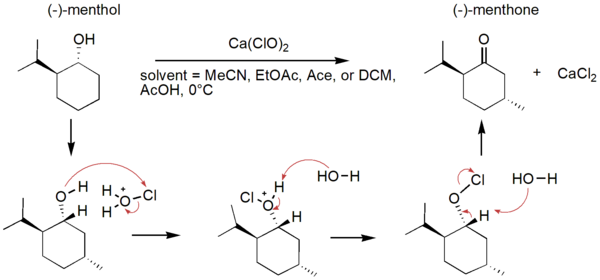
In an effort to reduce the production of hazardous substances, green chemistry aims to make chemical processes more sustainable. One way to do so is changing solvents in chemical reactions. Here, authors assessed different “green” solvents on the oxidation of (-)-menthol to (-)-menthone using Fourier-transform infrared (FTIR) spectroscopy, optimizing the solvent system for this reaction.

Read More...

Pressing filtration for extraction of cabbage dietary fiber and soluble components

Xie et al. | Nov 16, 2025

Pressing filtration for extraction of cabbage dietary fiber and soluble components
Image credit: Shelley Pauls

Here the authors introduce pressing filtration as a novel, efficient, and low-energy method for extracting dietary fiber from cabbage, which successfully retains heat-sensitive nutrients and achieves a high fiber yield. The study demonstrates the scalability and economic viability of this technique for commercial use, highlighting that the resulting high-fiber cabbage powder can be incorporated into familiar foods like hamburger buns and beef patties without compromising taste or sensory quality.

Read More...