Browse Articles

The Effects of Atmospheric Attenuation on Cosmic Ray Muons: How is Surface Level Cosmic Ray Muon Flux Affected by Atmospheric Attenuation?

Sun et al. | Sep 11, 2021

The Effects of Atmospheric Attenuation on Cosmic Ray Muons: How is Surface Level Cosmic Ray Muon Flux Affected by Atmospheric Attenuation?

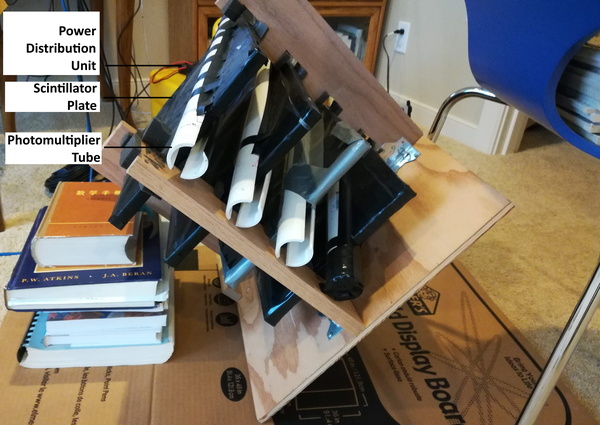
Cosmic rays are high-energy astronomical particles originating from various sources across the universe. Here, The authors sought to understand how surface-level cosmic-ray muon flux is affected by atmospheric attenuation by measuring the variation in relative muon-flux rate relative to zenith angle, testing the hypothesis that muons follow an exponential attenuation model. The attenuation model predicts an attenuation length of 6.3 km. This result implies that only a maximum of 24% of muons can reach the Earth’s surface, due to both decay and atmospheric interactions.

Read More...

High-throughput virtual screening of novel dihydropyrimidine monastrol analogs reveals robust structure-activity relationship to kinesin Eg5 binding thermodynamics

Shern et al. | Jan 20, 2021

High-throughput virtual screening of novel dihydropyrimidine monastrol analogs reveals robust structure-activity relationship to kinesin Eg5 binding thermodynamics

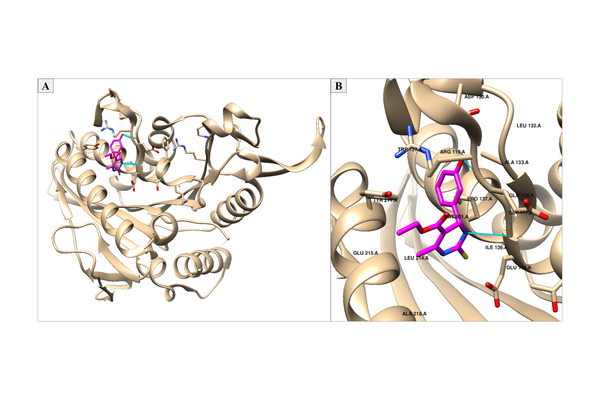
As cancer continues to take millions of lives worldwide, the need to create effective therapeutics for the disease persists. The kinesin Eg5 assembly motor protein is a promising target for cancer therapeutics as inhibition of this protein leads to cell cycle arrest. Monastrol, a small dihydropyrimidine-based molecule capable of inhibiting the kinesin Eg5 function, has attracted the attention of medicinal chemists with its potency, affinity, and specificity to the highly targeted loop5/α2/α3 allosteric binding pocket. In this work, we employed high-throughput virtual screening (HTVS) to identify potential small molecule Eg5 inhibitors from a designed set of novel dihydropyrimidine analogs structurally similar to monastrol.

Read More...

Ladder Fuel Treatments Effect Burn Area of Forest Fires in Semi-Arid High Elevation Climates

Schwartz et al. | Oct 05, 2020

Ladder Fuel Treatments Effect Burn Area of Forest Fires in Semi-Arid High Elevation Climates

In this study, the authors investigate a timely and important topic: forest fires. More specifically, they use a wildfire simulator to test how ladder fuels effect the burn area of a forest fire. Ladder fuels are fuels that cause a forest fire to rise up from the forest floor to the canopy, which may affect the overall spread. They simulated fire spread with different levels of ladder fuel treatment and found that the spread of a burn area would indeed decrease with increased ladder fuel treatment. These findings have important implications for forest and forest fire management.

Read More...

Testing Epoxy Strength: The High Strength Claims of Selleys’s Araldite Epoxy Glues

Nguyen et al. | Jul 14, 2020

Testing Epoxy Strength: The High Strength Claims of Selleys’s Araldite Epoxy Glues

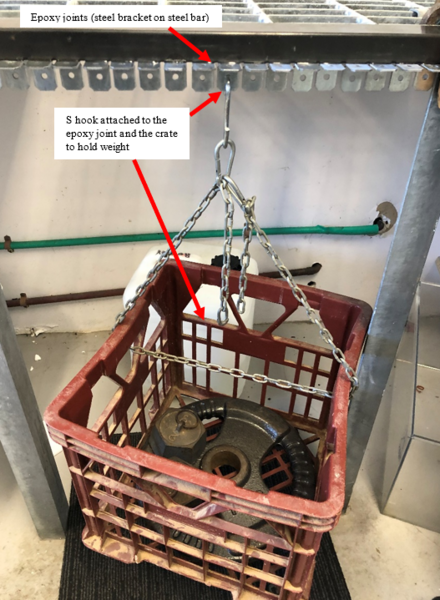
Understanding the techniques used to improve the adhesion strength of the epoxy resin is important especially for consumer applications such as repairing car parts, bonding aluminum sheeting, and repairing furniture or applications within the aviation or civil industry. Selleys Araldite epoxy makes specific strength claims emphasizing that the load or weight that can be supported by the adhesive is 72 kg/cm2. Nguyen and Clarke aimed to test the strength claims of Selley’s Araldite Epoxy by gluing two steel adhesion surfaces: a steel tube and bracket. Results showed that there is a lack of consideration by Selleys for adhesion loss mechanisms and environmental factors when accounting for consumer use of the product leading to disputable claims.

Read More...

Effects of Coolant Temperature on the Characteristics of Soil Cooling Curve

Wang et al. | Jan 16, 2020

Effects of Coolant Temperature on the Characteristics of Soil Cooling Curve

In this article, the authors investigate whether coolant temperature affects soil cooling curves of soil with otherwise identical properties. The coolant temperature is representative of environmental temperature, and the authors hypothesized that differences in this temperature would not affect the freezing temperature of soil. Their findings validated their hypothesis providing helpful information relevant to understanding how frost heaves happen and how to predict their occurrence more accurately.

Read More...

The Effects of Post-Consumer Waste Polystyrene on the Rate of Mealworm Consumption

Green et al. | Nov 29, 2018

The Effects of Post-Consumer Waste Polystyrene on the Rate of Mealworm Consumption

In a world where plastic waste accumulation is threatening both land and sea life, Green et al. investigate the ability of mealworms to breakdown polystyrene, a non-recyclable form of petrochemical-based polymer we use in our daily lives. They confirm that these organisms, can degrade various forms of polystyrene, even after it has been put to use in our daily lives. Although the efficiency of the degradation process still requires improvement, the good news is, the worms are tiny and themselves are biodegradable, so we can use plenty of them without worrying about space and how to get rid of them. This is very promising and certainly good news for the planet.

Read More...

Differentiation of Waste Plastic Pyrolysis Fuels to Conventional Diesel Fuel

Jewison et al. | May 25, 2018

Differentiation of Waste Plastic Pyrolysis Fuels to Conventional Diesel Fuel

Plastic pollution and energy shortages are pressing issues in today’s world. The authors examined whether waste plastic pyrolysis fuels are similar to conventional diesel and, thus, a plausible alternative fuel. Results showed that waste plastic pyrolysis fuels did not match up to diesel overall, though several fuels came close in calorific value.

Read More...

Mechanistic deconvolution of autoreduction in tetrazolium-based cell viability assays

Tran et al. | Jul 12, 2024

Mechanistic deconvolution of autoreduction in tetrazolium-based cell viability assays

Optical reporters like tetrazolium dyes, exemplified by 5-diphenyl tetrazolium bromide (MTT), are effective tools for quantifying cellular responses under experimental conditions. These dyes assess cell viability by producing brightly-colored formazan dyes when reduced inside active cells. However, certain small molecules, including reducing agents like ascorbic acid, cysteine, and glutathione (GSH), can interfere with MTT assays, potentially compromising accuracy.

Read More...

Rhizosphere metagenome analysis and wet-lab approach to derive optimal strategy for lead remediation in situ

Bhat et al. | Jul 18, 2023

Rhizosphere metagenome analysis and wet-lab approach to derive optimal strategy for lead remediation <i>in situ</i>
Image credit: Karolina Grabowska

The Environmental Protection Agency (EPA) reports a significant number of heavy metal-contaminated sites across the United States. To address this public health concern, rhizoremediation using microbes has emerged as a promising solution. Here, a combination of soil microbes were inoculated in the rhizosphere in soil contaminated with 500 parts per million (ppm) of lead. Results showed rhizoremediation is an effective bioremediation strategy and may increase crop productivity by converting nonarable lands into arable lands.

Read More...