Browse Articles

Exploring Interactions between PFAS (Per- and Polyfluoroalkyl Substances) and proteins

Lu-Yang et al. | May 16, 2026

Exploring Interactions between PFAS (Per- and Polyfluoroalkyl Substances) and proteins
Image credit: Authors

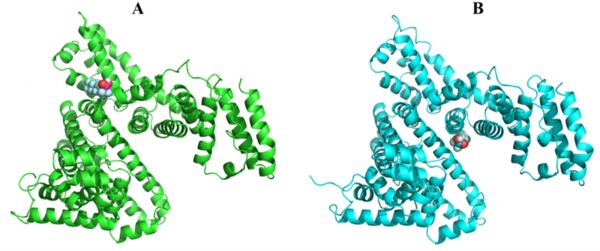
Here the authors investigated how the "forever chemical" perfluorooctanoic acid binds to bovine serum albumin (BSA) using computational software to simulate its potential impact on essential human plasma proteins. They identify a possible, high-energy binding configuration that could persistently impair protein functions, underscoring the critical need for further research into the long-term health risks of per- and poly-fluoroalkyl substances exposure.

Read More...

Converting SiO2 wafers to hydrophobic using chlorotrimethylsilane

Lee et al. | Aug 20, 2024

Converting SiO<sub>2</sub> wafers to hydrophobic using chlorotrimethylsilane

Semiconductors are the center of the fourth industrial revolution as they are key components for all electronics. Exposed wafers made of silicon (Si), which can easily oxidize, convert to silicon dioxide (SiO2). The surface of SiO2 wafers consists of many Si-OH bonds, allowing them to easily bond with water, resulting in a “wet” or hydrophilic condition. We sought to determine a way to modify the surface of SiO2 wafers to become hydrophobic to ensure safe wet cleaning.

Read More...

The effect of activation function choice on the performance of convolutional neural networks

Wang et al. | Sep 15, 2023

The effect of activation function choice on the performance of convolutional neural networks
Image credit: Tara Winstead

With the advance of technology, artificial intelligence (AI) is now applied widely in society. In the study of AI, machine learning (ML) is a subfield in which a machine learns to be better at performing certain tasks through experience. This work focuses on the convolutional neural network (CNN), a framework of ML, applied to an image classification task. Specifically, we analyzed the performance of the CNN as the type of neural activation function changes.

Read More...

Impact of gadodiamide (Omniscan) on a beef liver catalase ex vivo model

Hirsch et al. | Mar 10, 2023

Impact of gadodiamide (Omniscan) on a beef liver catalase <em>ex vivo</em> model
Image credit: Marcelo Leal

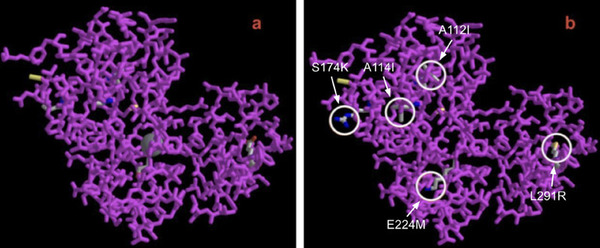
Here, seeking to better understand the effects of gadolinium-based contrast agents, dyes typically used for MRI scans, the authors evaluated the activity of catalase found in beef liver both with and without gadodiamide when exposed to hydrogen peroxide. They found that gadioamide did not significantly inhibit catalase's activity, attributing this lack of effects to the chelating agent found in gadodiamide.

Read More...

Anticancer, anti-inflammatory, and apoptotic activities of MAT20, a poly-herbal formulation.

Kashyap Jha et al. | Mar 29, 2022

Anticancer, anti-inflammatory, and apoptotic activities of MAT20, a poly-herbal formulation.

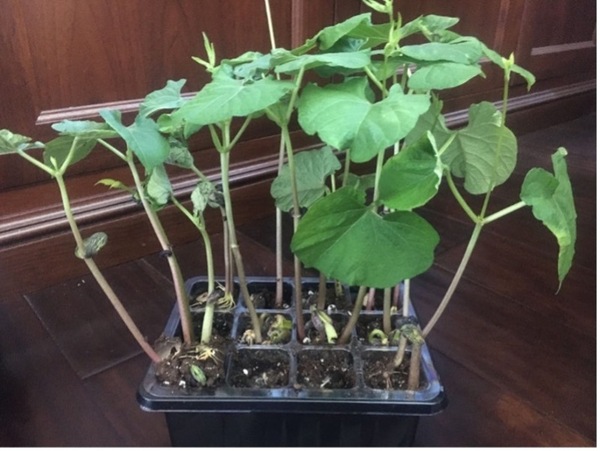
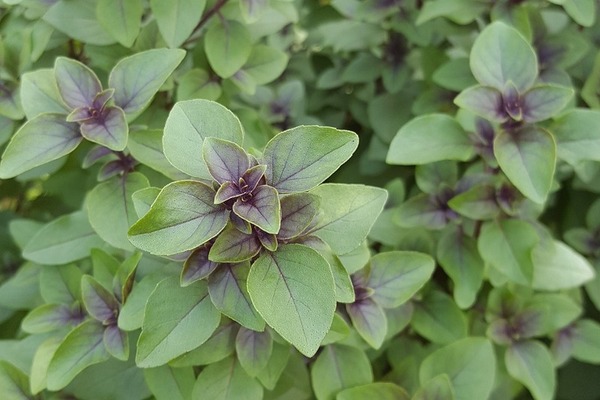
Kashyap Jha et al. look at the formulation of MAT20, a crude extract of the moringa, amla, and tulsi leaves, as a potential complementary and alternative medicine. Using HeLa cells, they find MAT20 up-regulates expression of inflammation and cell cytotoxicity markers. Their data is important for understanding the anti-cancer and anti-inflammatory properties of MAT20.

Read More...

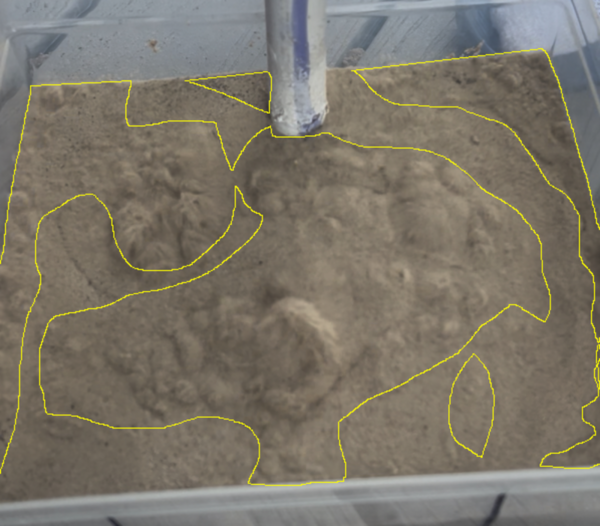
Effect of sub-layer water saturation on two-layer sand fluidization

Doan et al. | Oct 27, 2026

Effect of sub-layer water saturation on two-layer sand fluidization
Image credit: Doan, Damm, and Doan

This study investigates the effect of water saturation in a two-layer fluidization behavior of an overlying dry sand bed. Building on prior work showing that moisture inhibits fluidization in granular media, the authors address an underexplored configuration involving layered dry and wet sand. The experiments demonstrate that even minimal water saturation in the sub-layer prevents uniform fluidization of the dry upper layer, leading to the conclusion that two-layer fluidized beds with moisture are not viable under the conditions tested.

Read More...

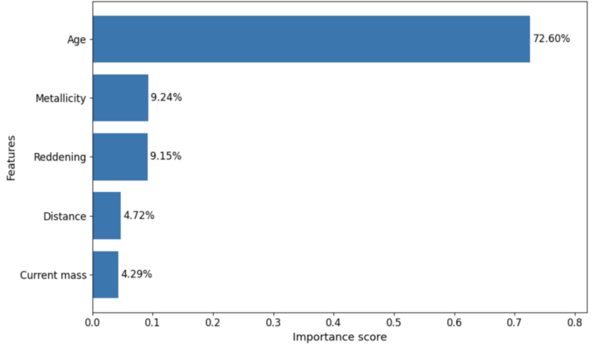
Using machine learning to detect outliers of red clump stars

Meng et al. | Oct 10, 2026

Using machine learning to detect outliers of red clump stars

Machine learning offers a powerful way to analyze large astronomical datasets and identify stars with unusual properties. In this study, students used Extreme Gradient Boosting and Isolation Forest models to investigate why some red clump stars deviate from their expected luminosities. Their results show that stellar age plays a much stronger role than metallicity in driving luminosity variation, and the models successfully detected outlier stars that may affect distance measurements in galactic studies.

Read More...