Browse Articles

Therapy dogs effectively reduce stress in college preparatory students

Ikeda et al. | Nov 27, 2023

Therapy dogs effectively reduce stress in college preparatory students
Image credit: Ryan Stone

In this article the authors looked at the effect of spending time with a therapy dog before and after stressful events. They found that interacting with a therapy before a stressful event showed more significant reduction in signs of stress compared to interacting with a therapy dog after stressful events have already occurred.

Read More...

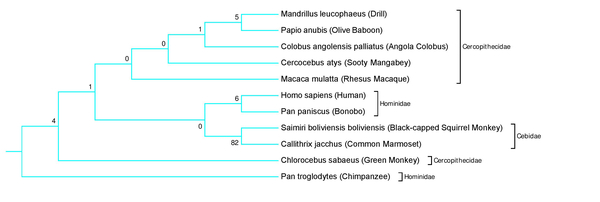
Applying centrality analysis on a protein interaction network to predict colorectal cancer driver genes

Saha et al. | Nov 18, 2023

Applying centrality analysis on a protein interaction network to predict colorectal cancer driver genes

In this article the authors created an interaction map of proteins involved in colorectal cancer to look for driver vs. non-driver genes. That is they wanted to see if they could determine what genes are more likely to drive the development and progression in colorectal cancer and which are present in altered states but not necessarily driving disease progression.

Read More...

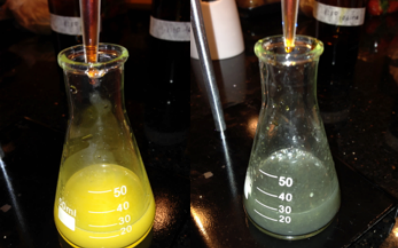
Spectrophotometric comparison of 4-Nitrophenyl carbonates & carbamates as base-labile protecting groups

Kocalar et al. | Dec 12, 2022

Spectrophotometric comparison of 4-Nitrophenyl carbonates & carbamates as base-labile protecting groups

In organic synthesis, protecting groups are derivatives of reactive functionalities that play a key role in ensuring chemoselectivity of chemical transformations. To protect alcohols and amines, acid-labile tert-butyloxycarbonyl protecting groups are often employed but are avoided when the substrate is acid-sensitive. Thus, orthogonal base-labile protecting groups have been in demand to enable selective deprotection and to preserve the reactivity of acid-sensitive substrates. To meet this demand, we present 4-nitrophenyl carbonates and carbamates as orthogonal base-labile protecting group strategies.

Read More...