Browse Articles

Leveraging E-Waste to Enhance Water Condensation by Effective Use of Solid-state Thermoelectric Cooling

Joshi et al. | Dec 02, 2020

Leveraging E-Waste to Enhance Water Condensation by Effective Use of Solid-state Thermoelectric Cooling

Water scarcity affects upwards of a billion people worldwide today. This project leverages the potential of capturing humidity to build a high-efficiency water condensation device that can generate water and be used for personal and commercial purposes. This compact environment-friendly device would have low power requirements, which would potentially allow it to utilize renewable energy sources and collect water at the most needed location.

Read More...

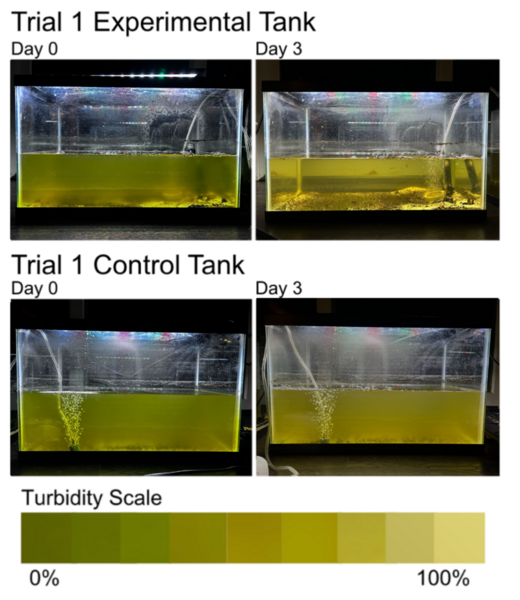
The effect of floating plant on water purification: Comparison of the water purification capability of Water Hyacinth, Duckweed, and Azolla

Park et al. | Nov 21, 2020

The effect of floating plant on water purification: Comparison of the water purification capability of Water Hyacinth, Duckweed, and Azolla

Clean water is a necessity for every household, yet water pollution is a serious problem in many parts of the world and plays a major role in compromising water security in the 21st century. In this paper, the authors address the utility of several plants as natural water purifiers. They estimate the effectiveness of duckweed, hyacinth, and azolla in improving the quality of water from the Mithi river in India by measuring several metrics. They conclude that all three plants are effective in improving water quality, suggesting that these plants as eco-friendly options for water treatment.

Read More...

Do Attractants Bias the Results of Malaise Trap Research?

Martinez et al. | Jan 22, 2020

Do Attractants Bias the Results of Malaise Trap Research?

Malaise traps are commonly used to collect flying insects for a variety of research. In this study, researchers hypothesized the attractants used in these traps may create bias in insect studies that could lead to misinterpreted data. To test this hypothesis two different kinds of attractant were used in malaise traps, and insect diversity was assessed. Attractants were found to alter the dispersion of insects caught in traps. These findings can inform future malaise traps studies on insect diversity.

Read More...

Anonymity Reduces Generosity in High School Students

Vargas-Guerrero et al. | Nov 25, 2019

Anonymity Reduces Generosity in High School Students

The disinterested willingness a person has for helping others is known as altruism. But is this willingness to help others dependent on external factors that make you more or less inclined to be generous? We hypothesized that generosity in adolescents would depend on external factors and that these factors would change the amount of help given. To evaluate altruism and generosity, we conducted non-anonymous and anonymous variations of the dictator game and ultimatum game experiments and explored the role of anonymity, fairness, and reciprocity in high school students.

Read More...

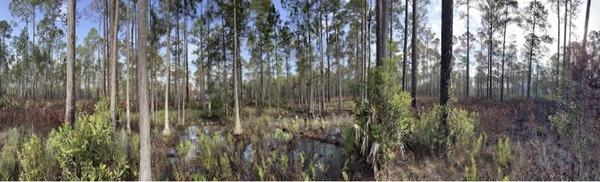
An Analysis of Soil Microhabitats in Revolutionary War, Civil War, and Modern Graveyards on Long Island, NY

Caputo et al. | May 05, 2019

An Analysis of Soil Microhabitats in Revolutionary War, Civil War, and Modern Graveyards on Long Island, NY

Previously established data indicate that cemeteries have contributed to groundwater and soil pollution, as embalming fluids can impact the microbiomes that exist in decomposing remains. In this study, Caputo et al hypothesized that microbial variation would be high between cemeteries from different eras due to dissimilarities between embalming techniques employed, and furthermore, that specific microbes would act as an indication for certain contaminants. Overall, they found that there is a variation in the microbiomes of the different eras’ cemeteries according to the concentrations of the phyla and their more specific taxa.

Read More...

Evaluation of Tea Extract as an Inhibitor of Oxidative Stress in Prostate Cells

Zhang et al. | Jan 22, 2019

Evaluation of Tea Extract as an Inhibitor of Oxidative Stress in Prostate Cells

One important factor that contributes to human cancers is accumulated damage to cells' DNA due to the oxidative stress caused by free radicals. In this study, the authors investigate the effects of several different tea leaf extracts on oxidative stress in cultured human prostate cells to see if antioxidants in the tea leaves could help protect cells from this type of DNA damage. They found that all four types of tea extract (as well as direct application of the antioxidant EGCG) improved the outcomes for the cultured cells, with white tea extract having the strongest effect. This research suggests that tea extracts and the antioxidants that they contain may have applications in the treatment of the many diseases associated with cellular DNA damage, including cancer.

Read More...

Efficacy of Rotten and Fresh Fruit Extracts as the Photosensitive Dye for Dye-Sensitized Solar Cells

Jayasankar et al. | Jan 16, 2019

Efficacy of Rotten and Fresh Fruit Extracts as the Photosensitive Dye for Dye-Sensitized Solar Cells

Dye-sensitized solar cells (DSSC) use dye as the photoactive material, which capture the incoming photon of light and use the energy to excite electrons. Research in DSSCs has centered around improving the efficacy of photosensitive dyes. A fruit's color is defined by a unique set of molecules, known as a pigment profile, which changes as a fruit progresses from ripe to rotten. This project investigates the use of fresh and rotten fruit extracts as the photoactive dye in a DSSC.

Read More...