Browse Articles

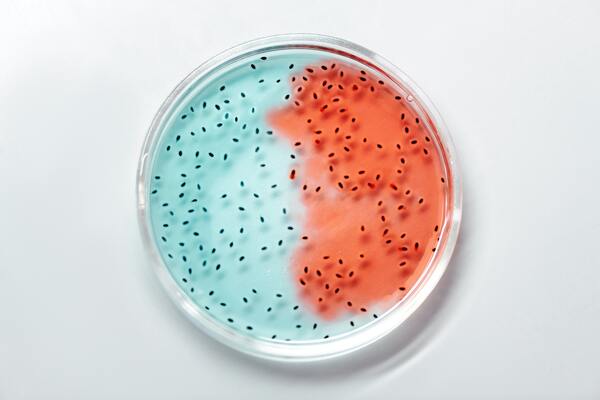
Development and Implementation of Enzymatic and Volatile Compound-based Approaches for Instantaneous Detection of Pathogenic Staphylococcus aureus

Nori et al. | Feb 20, 2021

Development and Implementation of Enzymatic and Volatile Compound-based Approaches for Instantaneous Detection of Pathogenic <i>Staphylococcus aureus</i>

Staphylococcus aureus (S. aureus) has a mortality rate of up to 30% in developing countries. The purpose of this experiment was to determine if enzymatic and volatile compound-based approaches would perform more quickly in comparison to existing S. aureus diagnostic methods and to evaluate these novel methods on accuracy. Ultimately, this device provided results in less than 30 seconds, which is much quicker than existing methods that take anywhere from 10 minutes to 48 hours based on approach. Statistical analysis of accuracy provides preliminary confirmation that the device based on enzymatic and volatile compound-based approaches can be an accurate and time-efficient tool to detect pathogenic S. aureus.

Read More...

Development of a pH-sensing hydrogel wound dressing for early infection monitoring for all skin color types

L. Chong et al. | Sep 07, 2026

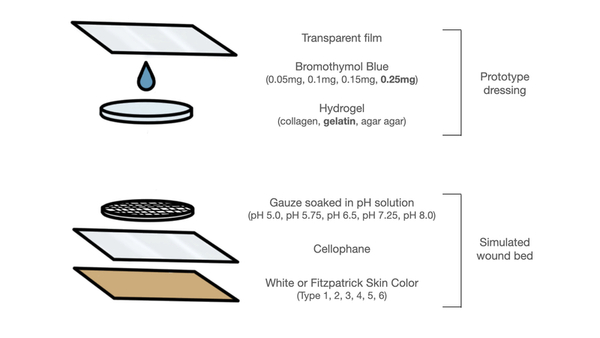
Development of a pH-sensing hydrogel wound dressing for early infection monitoring for all skin color types

This paper develops a gelatin-based hydrogel dressing infused with bromothymol blue dye that visibly changes from yellow to blue as wound pH rises from 5.0 to 8.0, signaling possible infection. The color shift was visually detectable and statistically significant across all six Fitzpatrick skin tones, suggesting a low-cost ($0.40/dressing) tool for early infection monitoring in settings with limited access to care.

Read More...

Mining social media posts: An alternative approach to understanding home health care workers’ experiences

Tang et al. | Jun 15, 2026

Mining social media posts: An alternative approach to understanding home health care workers’ experiences
Image credit: Markus Winkler

This study developed an effective method for extracting valuable information from social media data and employed computer-assisted human coding alongside the AI-powered tool to analyze social media posts. The findings provide a deep understanding of the major challenges that home health care workers are experiencing and offer important implications regarding how to improve home healthcare workers' well-being, and provide suggestions on optimizing the home health care service experience.

Read More...

Utilizing meteorological data and machine learning to predict and reduce the spread of California wildfires

Bilwar et al. | Jan 15, 2024

Utilizing meteorological data and machine learning to predict and reduce the spread of California wildfires
Image credit: Pixabay

This study hypothesized that a machine learning model could accurately predict the severity of California wildfires and determine the most influential meteorological factors. It utilized a custom dataset with information from the World Weather Online API and a Kaggle dataset of wildfires in California from 2013-2020. The developed algorithms classified fires into seven categories with promising accuracy (around 55 percent). They found that higher temperatures, lower humidity, lower dew point, higher wind gusts, and higher wind speeds are the most significant contributors to the spread of a wildfire. This tool could vastly improve the efficiency and preparedness of firefighters as they deal with wildfires.

Read More...

Phages Can Be More Effective and Specific Than Antibiotics in Combating Bacteria

Wu et al. | Feb 17, 2019

Phages Can Be More Effective and Specific Than Antibiotics in Combating Bacteria

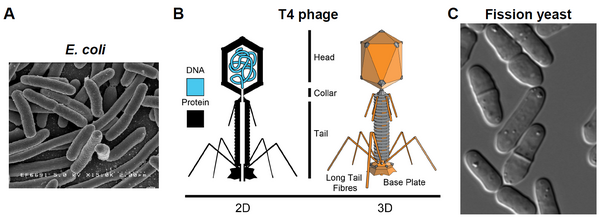
Phage therapy has been suggested as an alternative to antibiotics because bacteria resistant to antibiotics may still be susceptible to phages. However, phages may have limited effectiveness in combating bacteria since bacteria possess several antiviral defense mechanisms and can quickly develop resistance to phages. In this study, Wu and Pinta compare the effectiveness and specificity of antibiotics and phages in combating bacteria. They found that T4 phages are more specific and effective in fighting or inhibiting both antibiotic-resistant and sensitive bacteria than antibiotics, suggesting that phage therapy can be developed as an efficient tool to combat antibiotic-resistant bacteria.

Read More...

Spectroscopic Kinetic Monitoring and Molecular Dynamics Simulations of Biocatalytic Ester Hydrolysis in Non-Aqueous Solvent

Chen et al. | Dec 20, 2020

Spectroscopic Kinetic Monitoring and Molecular Dynamics Simulations of Biocatalytic Ester Hydrolysis in Non-Aqueous Solvent

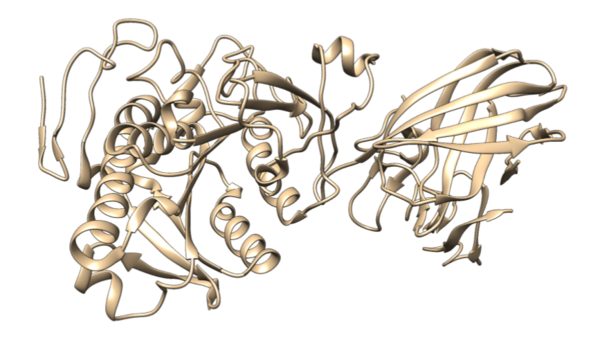
Lipases are a common class of enzymes that catalyze the breakdown of lipids. Here the authors characterize the the activity of pancreatic lipase in different organic solvents using a choloremetric assay, as well as using molecular dynamic simulations. They report that the activity of pancreatic lipase in 5% methanol is more than 25% higher than in water, despite enzyme stability being comparable in both solvents. This suggests that, for industrial applications, using pancreatic lipase in 5% methanol solution might increase yield, compared to just water.

Read More...

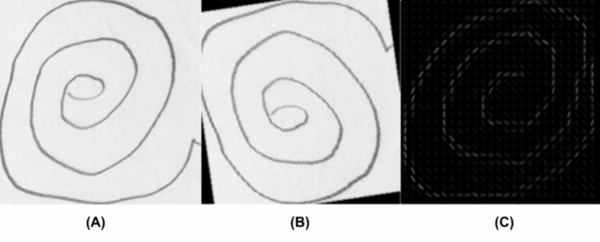
A HOG feature extraction and CNN approach to Parkinson’s spiral drawing diagnosis

Tripathi et al. | Aug 09, 2024

A HOG feature extraction and CNN approach to Parkinson’s spiral drawing diagnosis

Parkinson’s disease (PD) is a prevalent neurodegenerative disorder in the U.S., second only to Alzheimer’s disease. Current diagnostic methods are often inefficient and dependent on clinical exams. This study explored using machine and deep learning to enhance PD diagnosis by analyzing spiral drawings affected by hand tremors, a common PD symptom.

Read More...