Browse Articles

The Effect of Different Concentrations of Iron on the Growth of Egeria (Elodea) Densa

Hu et al. | Jan 08, 2015

The Effect of Different Concentrations of Iron on the Growth of <em>Egeria (Elodea) Densa</em>

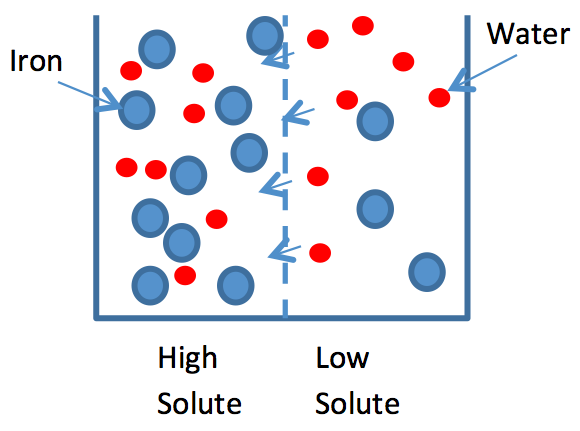
Minerals such as iron are essential for life, but too much of a good thing can be poisonous. Here the authors investigate the effect of iron concentrations on the growth of an aquatic plant and find that supplementing small amounts of iron can help, but adding too much can be bad for the plant. These results should help inform decisions on allowable iron concentrations in the environment, aquatic farming, and even home aquariums.

Read More...

Temperature and Precipitation Responses to a Stratospheric Aerosol Geoengineering Experiment Using the Community Climate System Model 4

Anderson et al. | Aug 19, 2014

Temperature and Precipitation Responses to a Stratospheric Aerosol Geoengineering Experiment Using the Community Climate System Model 4

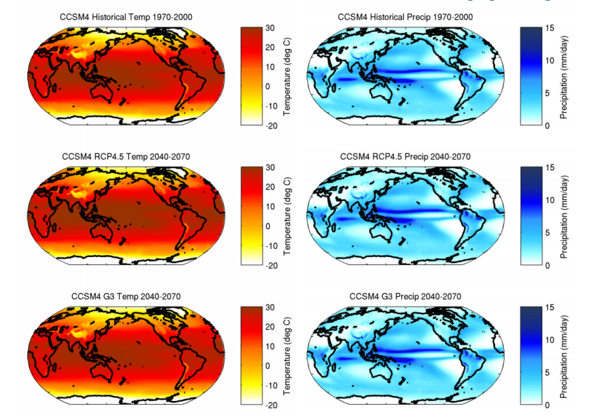
We are changing our environment with steadily increasing carbon dioxide emissions, but we might be able to help. The authors here use a computer program called Community Climate System Model 4 to predict the effects of spraying small particles into the atmosphere to reflect away some of the sun's rays. The software predicts that this could reduce the amount of energy the Earth's atmosphere absorbs and may limit but will not completely counteract our carbon dioxide production.

Read More...

Mechanistic deconvolution of autoreduction in tetrazolium-based cell viability assays

Tran et al. | Jul 12, 2024

Mechanistic deconvolution of autoreduction in tetrazolium-based cell viability assays

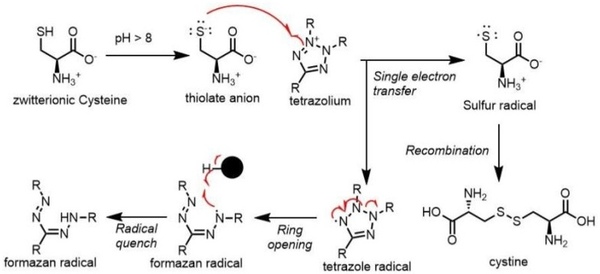
Optical reporters like tetrazolium dyes, exemplified by 5-diphenyl tetrazolium bromide (MTT), are effective tools for quantifying cellular responses under experimental conditions. These dyes assess cell viability by producing brightly-colored formazan dyes when reduced inside active cells. However, certain small molecules, including reducing agents like ascorbic acid, cysteine, and glutathione (GSH), can interfere with MTT assays, potentially compromising accuracy.

Read More...

Investigation of the correlation between trihalomethane concentrations and socioeconomic factors in NY State

Lee et al. | Aug 19, 2023

Investigation of the correlation between trihalomethane concentrations and socioeconomic factors in NY State

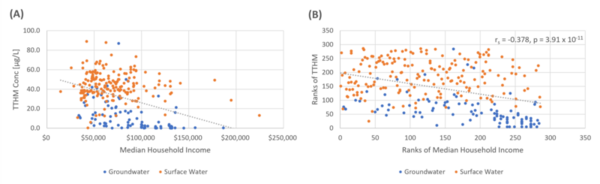
Trihalomethanes, probable human carcinogens, are commonly found disinfection by-products (DBPs) in public water systems (PWS). The authors investigated the correlation between trihalomethane concentrations and socioeconomic factors in New York State, finding a negative correlation between median household income and trihalomethane concentrations. The inverse association between trihalomethanes and household income may indicate socioeconomic disparity regarding drinking water quality and the need for improved efforts to assist small- and medium-sized community water systems to lower DBP levels in New York State.

Read More...

The knowledge and perception of opioid abuse and its long-term effects among high schoolers

Shroff et al. | Nov 27, 2021

The knowledge and perception of opioid abuse and its long-term effects among high schoolers

Due to the susceptibility of adolescent age groups to opioid misuse, here the authors sought to determine if there was a difference in the perception and knowledge between 9th and 12th graders regarding the opioid crisis. An educational intervention trial was done with the 9th graders and surveys were used to identify its effects. Although the authors acknowledge a small sample size, their results suggest that their are gaps within the knowledge of adolescents in regards to opioid misuse and its long-term effects that could be addressed with further education.

Read More...

Propagation of representation bias in machine learning

Dass-Vattam et al. | Jun 10, 2021

Propagation of representation bias in machine learning

Using facial recognition as a use-case scenario, we attempt to identify sources of bias in a model developed using transfer learning. To achieve this task, we developed a model based on a pre-trained facial recognition model, and scrutinized the accuracy of the model’s image classification against factors such as age, gender, and race to observe whether or not the model performed better on some demographic groups than others. By identifying the bias and finding potential sources of bias, his work contributes a unique technical perspective from the view of a small scale developer to emerging discussions of accountability and transparency in AI.

Read More...

High-throughput virtual screening of novel dihydropyrimidine monastrol analogs reveals robust structure-activity relationship to kinesin Eg5 binding thermodynamics

Shern et al. | Jan 20, 2021

High-throughput virtual screening of novel dihydropyrimidine monastrol analogs reveals robust structure-activity relationship to kinesin Eg5 binding thermodynamics

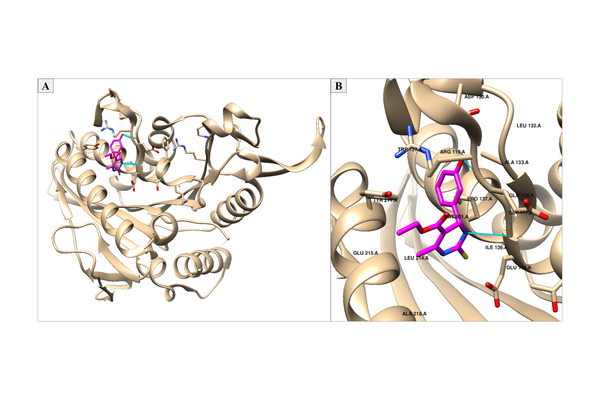
As cancer continues to take millions of lives worldwide, the need to create effective therapeutics for the disease persists. The kinesin Eg5 assembly motor protein is a promising target for cancer therapeutics as inhibition of this protein leads to cell cycle arrest. Monastrol, a small dihydropyrimidine-based molecule capable of inhibiting the kinesin Eg5 function, has attracted the attention of medicinal chemists with its potency, affinity, and specificity to the highly targeted loop5/α2/α3 allosteric binding pocket. In this work, we employed high-throughput virtual screening (HTVS) to identify potential small molecule Eg5 inhibitors from a designed set of novel dihydropyrimidine analogs structurally similar to monastrol.

Read More...

Fingerprint patterns through genetics

O'Brien et al. | Dec 02, 2020

Fingerprint patterns through genetics

This study explores the link between fingerprints and genetics by analyzing familial fingerprints to show how the fingerprints between family members, and in particular siblings, could be very similar. The hypothesis was that the fingerprints between siblings would be very similar and the dominant fingerprint features within the family would be the same throughout the generations. Fingerprints between the siblings showed a trend of similarity, with only very small differences which makes these fingerprints unique. This work helps to support the link between fingerprints and genetics while providing a modern technological application.

Read More...

Testing the Effects of Salep Derived From the Tubers of Orchis mascula, Aloe vera, and Alpha-chymotrypsin on Wound Healing in Drosophila melanogaster Larvae

Halder et al. | Sep 09, 2019

Testing the Effects of Salep Derived From the Tubers of <em>Orchis mascula</em>, <em>Aloe vera</em>, and Alpha-chymotrypsin on Wound Healing in <em>Drosophila melanogaster</em> Larvae

Aloe vera and alpha-chymotrypsin have been used in are known for their various wound healing properties. Halder et al hypothesized that these treatments would enhance wound healing in Drosophila melanogaster larvae over 2 weeks by decreasing wound size more effectively compared to controls. The results of two of the treatment groups, Salep and Aloe vera, yielded wound sizes small enough to present a significant percent decrease when compared with the wound sizes of the control group. Their results show support that both Salep and Aloe vera were effective for enhancing wound healing in epithelial cells in D. melanogaster larvae.

Read More...

Discovery of the Heart in Mathematics: Modeling the Chaotic Behaviors of Quantized Periods in the Mandelbrot Set

Golla et al. | Dec 14, 2020

Discovery of the Heart in Mathematics: Modeling the Chaotic Behaviors of Quantized Periods in the Mandelbrot Set

This study aimed to predict and explain chaotic behavior in the Mandelbrot Set, one of the world’s most popular models of fractals and exhibitors of Chaos Theory. The authors hypothesized that repeatedly iterating the Mandelbrot Set’s characteristic function would give rise to a more intricate layout of the fractal and elliptical models that predict and highlight “hotspots” of chaos through their overlaps. The positive and negative results from this study may provide a new perspective on fractals and their chaotic nature, helping to solve problems involving chaotic phenomena.

Read More...