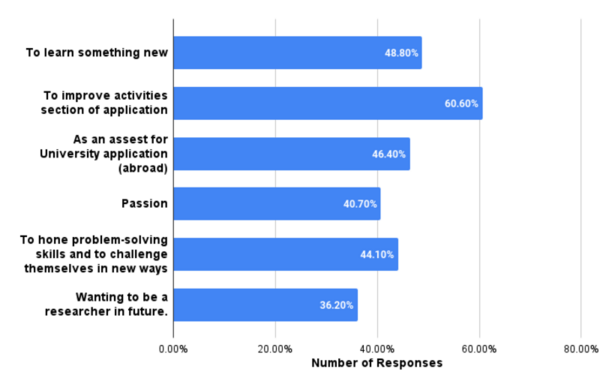
High school and university students have various motivations for participating in research, ranging from strengthening their applications for university to building skills for a research career. Jubair and Islam survey Bangladeshi high school and university students to uncover their motivations and inspirations for participating in research.
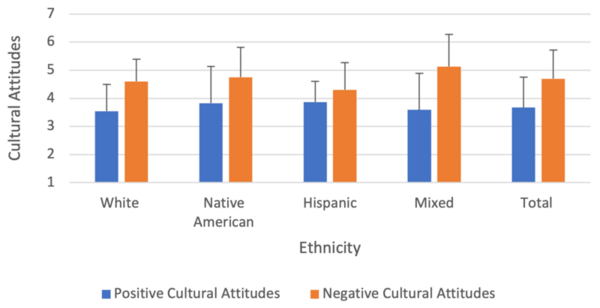
The authors looked at how a student's own background influence their attitude towards integration of diverse cultures and ethnicities. While overall students viewed other groups positively, the authors found that groups still indicated they felt judged by their peers.
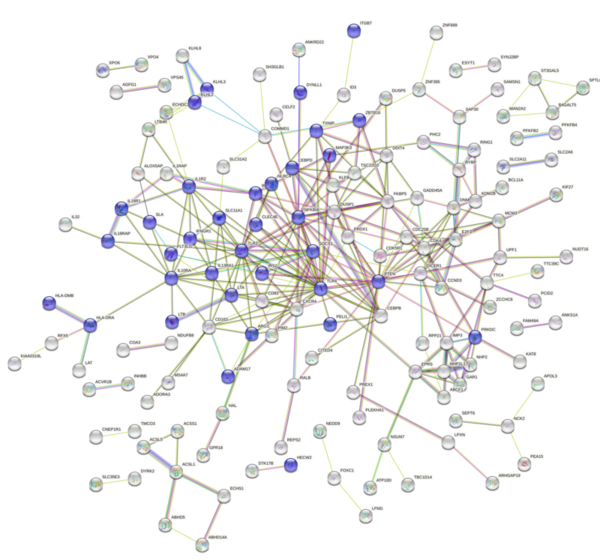
Major depressive disorder (MDD) is a prevalent mood disorder. The direct causes and biological mechanisms of depression still elude understanding, though genetic factors have been implicated. This study looked to identify the mechanism behind the aberrant response to the dexamethasone suppression test (DST) displayed by MDD patients, in which they display a lack of cortisol suppression. Analysis revealed several pro-inflammatory genes that were significant and differentially expressed between affected and non-affected groups in response to the DST. Looking at ways to decrease the inflammatory response could have implications for treatment and may explain why some people treated for depression still display symptoms or may lead researchers to different classes of drugs for treatment.
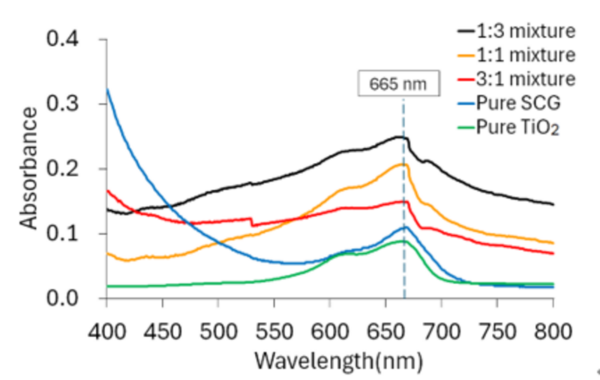
This paper looks at using spent coffee grounds as a partial substitute for titanium dioxide (TiO2) as a catalyst for chemical reactions. Using UV-Vis spectrophotometry, they found that adding the coffee grounds to TiO2 in a 3:1 ratio, there is still meaningful catalytic activity. This offers a cheaper solution than just using pure TiO2.
Social media is widely used and easily accessible for adolescents, it has the potential to increase STEM (Science, Technology, Engineering, and Math) identity in girls. We aimed to investigate the effects of exposure to counter-stereotypical portrayals of women in STEM on social media on the STEM identity of adolescent girls. The study concluded that social media alone may not be an effective tool to increase STEM identity in girls. Social media can still be used as a complementary tool to support and encourage women in STEM, but it should not be relied upon solely to address the gender disparity in STEM fields.
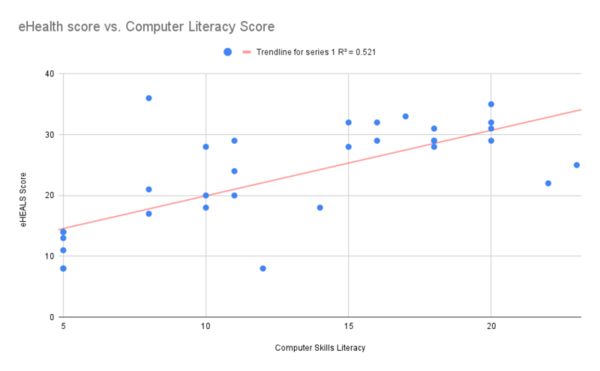
As digital tools become more prevalent in medicine, the ability for individuals to understand and take actions based on what they read on the internet is crucial. eHealth literacy is defined as as the ability to seek, find, understand, and evaluate health information from electronic sources and apply the knowledge gained to addressing or solving a health problem. In general, Americans have low eHealth literacy rates. However, limited research has been conducted to understand the eHealth literacy level among older Chinese adult immigrants in the U.S. To determine the eHealth literacy of elderly Chinese immigrants, we sent out an eHealth survey and relevant computer skills survey using a modified version of the eHEALS (eHealth Literacy Scale) health literacy test. We hypothesized that elders who consumed more electronic health content would have a higher eHealth literacy score. The results of this survey showed that there was a positive correlation between the frequency of electronic health information consumption and the participant's eHealth literacy rate. In addition, the results of our computer literacy test show that the frequency of consumption and computer literacy are positively correlated as well. There is a strong positive correlation between the level of computer skills and eHealth literacy of participants. These results reveal possible steps individuals can take to reduce health misinformation and improve their own health by attaining, understanding, and taking action on health material on the internet.
The objective of this experiment is to determine if the medication albuterol has a positive impact on the lifespan of C. elegans. We hypothesize that if albuterol is added to the diet of C. elegans, then the lifespan of C. elegans will increase. Albuterol increased the mean lifespan of C. elegans by 4.31 ± 0.13 days, compared to the control group and increased the outer range of the C. elegans lifespan. The method of which this occurred is still unknown.
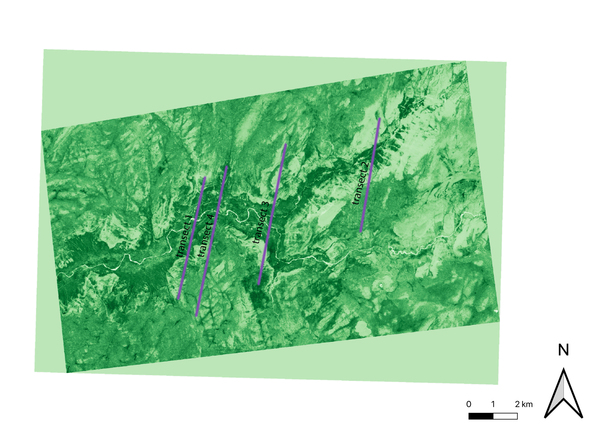
This study examined the relationship between the slope of a terrain and vegetation, measured by the normalized difference vegetation index (NDVI). It was hypothesized that lower slope ranges would be more supportive of vegetation growth than higher slope ranges. Analysis showed that no slope (even as extreme as 85–90°) prohibits the growth of vegetation completely; even the steepest slopes examined contain plant life. Knowing that steep slopes can still support plant life, agriculturalists can begin to explore and start planting additional crops and plants at these extreme slopes.
In this experiment, the authors used C. elegans as a simple model organism to observe the impact of probiotics on the human digestive system. The results of the experiments showed that the C. elegans were, on average, most present in Chobani cultures over other tested yogurts. While not statistically significant, these results still demonstrated that C. elegans might prefer Chobani cultures over other probiotic yogurts, which may also indicate greater gut benefits from Chobani over the other yogurt brands tested.
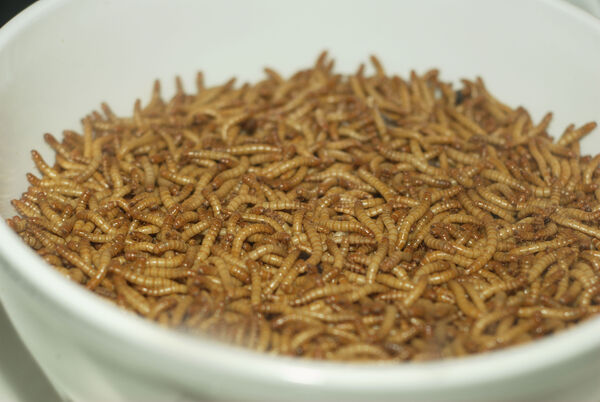
In a world where plastic waste accumulation is threatening both land and sea life, Green et al. investigate the ability of mealworms to breakdown polystyrene, a non-recyclable form of petrochemical-based polymer we use in our daily lives. They confirm that these organisms, can degrade various forms of polystyrene, even after it has been put to use in our daily lives. Although the efficiency of the degradation process still requires improvement, the good news is, the worms are tiny and themselves are biodegradable, so we can use plenty of them without worrying about space and how to get rid of them. This is very promising and certainly good news for the planet.