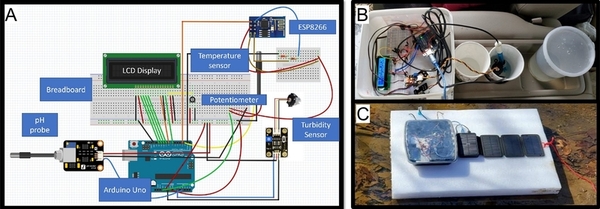
The authors monitored water quality over time looking for influences from construction and deforestation.
Read More...A low-cost, Arduino-based system for real-time abiotic monitoring of a local watershed
The authors monitored water quality over time looking for influences from construction and deforestation.
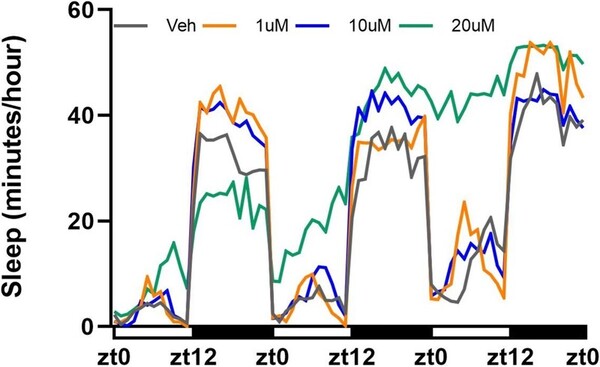
Read More...Dantrolene-induced ER stress alters sleep in Drosophila melanogaster
Upregulation of the Ribosomal Pathway as a Potential Blood-Based Genetic Biomarker for Comorbid Major Depressive Disorder (MDD) and PTSD
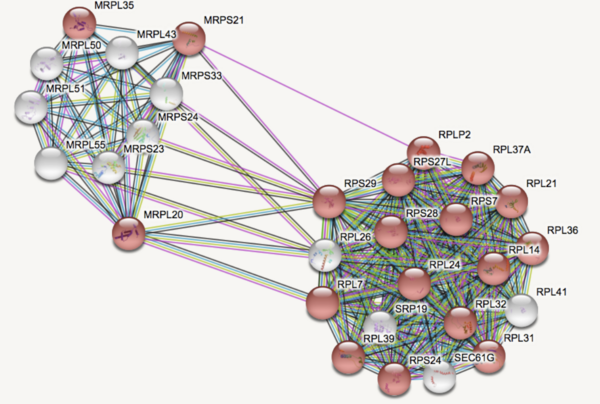
Major Depressive Disorder (MDD), and Post-Traumatic Stress Disorder (PTSD) are two of the fastest growing comorbid diseases in the world. Using publicly available datasets from the National Institute for Biotechnology Information (NCBI), Ravi and Lee conducted a differential gene expression analysis using 184 blood samples from either control individuals or individuals with comorbid MDD and PTSD. As a result, the authors identified 253 highly differentially-expressed genes, with enrichment for proteins in the gene ontology group 'Ribosomal Pathway'. These genes may be used as blood-based biomarkers for susceptibility to MDD or PTSD, and to tailor treatments within a personalized medicine regime.
Read More...The Protective Effects of Panax notoginseng Saponin on the Blood-Brain Barrier via the Nrf2/ARE Pathway in bEnd3 Cells
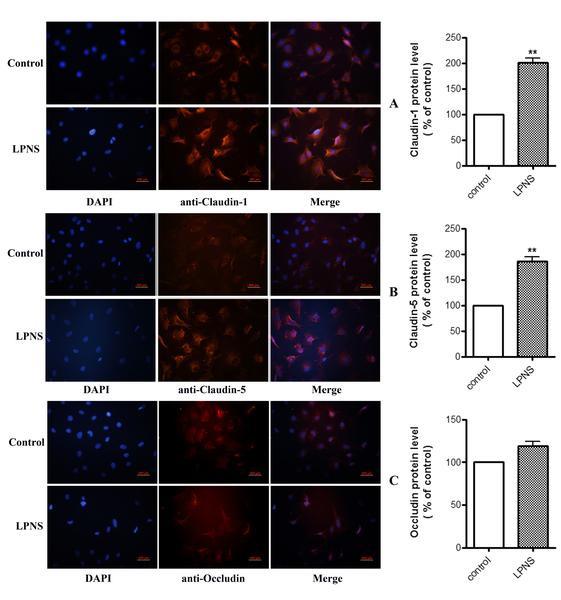
Disruption of the blood-brain barrier (BBB) is related to many neurological disorders, and can be caused by oxidative stress to cerebral microvascular endothelial cells (CMECs) composing the BBB. The authors of the paper investigated the protective effects of the total saponins in the leaves of Panax notoginseng (LPNS) on oxidative-stress-induced damage in a mouse cerebral microvascular endothelial cell line.
Read More...Temperatures of 20°C Produce Increased Net Primary Production in Chlorella sp.
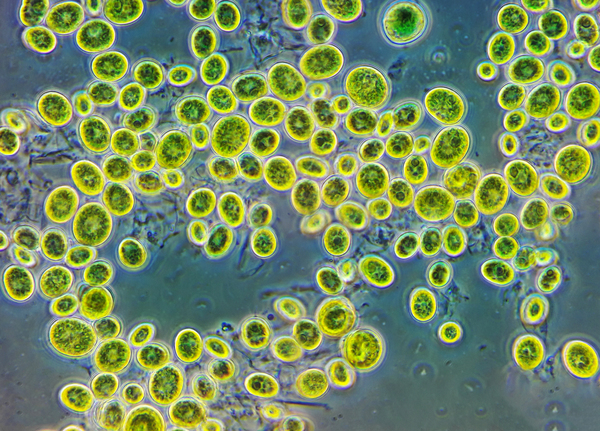
Chlorella sp. are unicellular green algae that use photosynthesis to reduce carbon dioxide into glucose. In this study, authors sought to determine the temperature that Chlorella sp. is maximally efficient at photosynthesis, and therefore removing the most carbon dioxide from the system. This activity could be harnessed to naturally remove carbon dioxide from the environment, fighting the effects of climate change.
Read More...How does light affect the distribution of Euglena sp. and Tetrahymena pyriformis
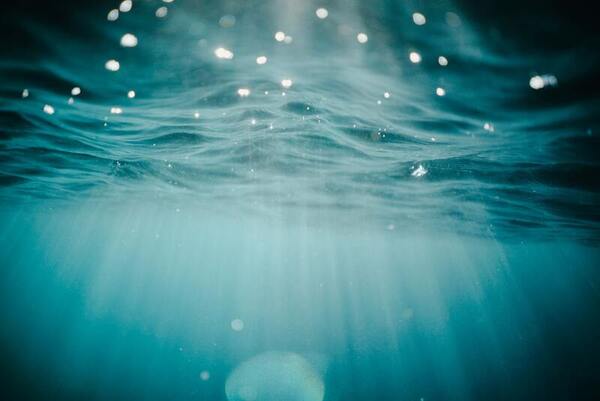
In this article, the authors explored the locomotory movement of Euglena sp. and Tetrahymena pyriformis in response to light. Such research bears relevance to the migration and distribution patterns of both T. pyriformis and Euglena as they differ in their method of finding sustenance in their native environments. With little previous research done on the exploration of a potential response to photostimulation enacted by T. pyriformis, the authors found that T. pyriformis do not bias in distribution towards areas of light - unlike Euglena, which displayed an increased prevalence in areas of light.
Read More...The Inhibitory Effect of Probiotics on the Growth and Biofilm Formation of Salmonella Sp.
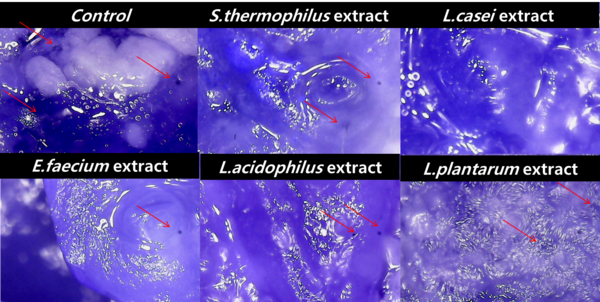
Salmonella is a genus of bacteria responsible for over 90 million cases of intestinal illnesses yearly. Like many bacteria, Salmonella can create a biofilm matrix, which confers stronger resistance against antibiotics. However, there has been relatively little research on the inhibition of Salmonella biofilm formation, which is a crucial factor in its widespread growth. In this study, Lee and Kim quantitatively measure the effectiveness of several common probiotics in inhibiting Salmonella bacterial growth. They found concentration-dependent antibacterial effects varied among the probiotics tested, indicating the possibility of probiotic species-specific mechanisms of Salmonella growth inhibition.
Read More...The Effects of Micro-Algae Characteristics on the Bioremediation Rate of Deepwater Horizon Crude Oil
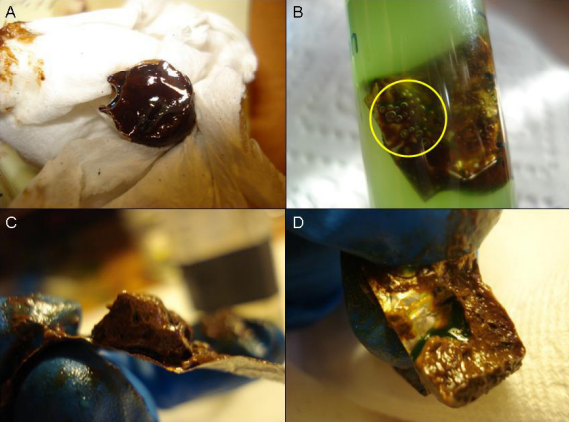
Environmental disasters such as the Deepwater Horizon oil spill can be devastating to ecosystems for long periods of time. Safer, cheaper, and more effective methods of oil clean-up are needed to clean up oil spills in the future. Here, the authors investigate the ability of natural ocean algae to process crude oil into less toxic chemicals. They identify Coccochloris elabens as a particularly promising algae for future bioremediation efforts.
Read More...Performance comparison of indoor polyculture utilizing hydroponic and soil-based systems
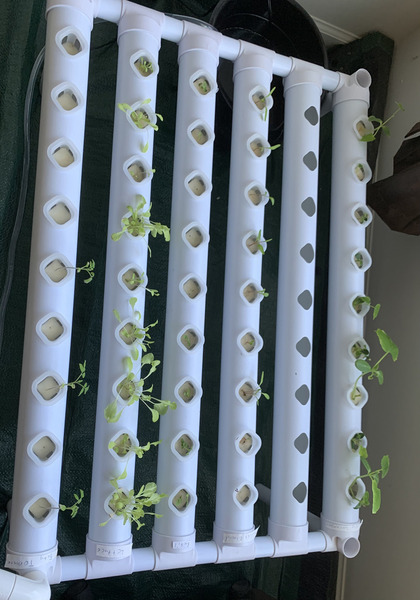
Hydroponics is often promoted as a highly efficient alternative to traditional soil farming, but its effectiveness in small indoor polyculture systems is not well understood. In this study, students compared plant growth and maturity across hydroponic and soil-based indoor polycultures and found that soil grown plants were generally taller and more mature than those grown hydroponically. These results suggest that soil-based methods may outperform hydroponics in certain household polyculture settings.
Read More...Optimizing Arthrospira platensis growth for biofuel production via symbiosis between cyanobacteria strains
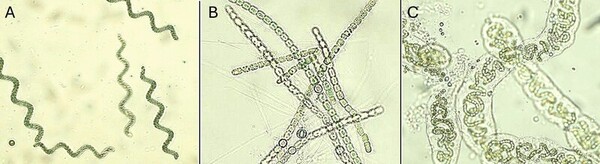
The authors test symbiotic relationships among cyanobacteria species to generate more robust cultures for potential biofuel production.
Read More...