Performance comparison of indoor polyculture utilizing hydroponic and soil-based systems
(1) King Philip Regional High School, (2) Xaverian Brothers High School
https://doi.org/10.59720/24-110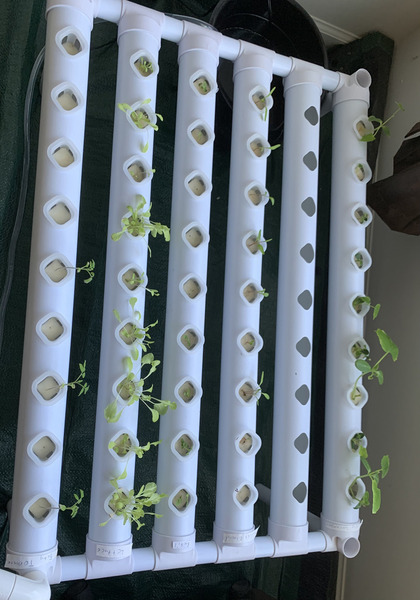
Due to the rapidly expanding human population, the agriculture industry has struggled to provide enough food to meet demand. This issue has prompted increased interest in new ways to make farming more efficient. One promising solution is hydroponic farming, a method of growing plants with a nutrient solution as the medium. In this study we examined hydroponics, and its potential applications in household agriculture. Among its various possible uses, one area that has not been thoroughly researched is hydroponic polyculture. In this study, we compared hydroponic polyculture (HP) with soil-based polyculture (SP). We hypothesized that the HP system would yield taller and more mature plants as hydroponic systems provide more direct nutrient delivery and greater water efficiency, and single‑plant hydroponics have been shown to grow faster than soil-based systems. We planted five types of vegetable plants: pickling cucumber, Swiss chard, basil, cherry tomato, and lettuce. We measured the height of each plant in both systems for 60 days and on the last day we assessed plant maturity, defined as the presence of at least one mature leaf or flower/fruit. In contrast with our prediction, the SP plants grew significantly taller and were more mature than the plants in the HP system. These results suggest that soil-based farming may be more effective than hydroponic farming in the case of polyculture systems.
This article has been tagged with: