Browse Articles

Development of a novel machine learning platform to identify structural trends among NNRTI HIV-1 reverse transcriptase inhibitors

Ashok et al. | Jun 24, 2022

Development of a novel machine learning platform to identify structural trends among NNRTI HIV-1 reverse transcriptase inhibitors

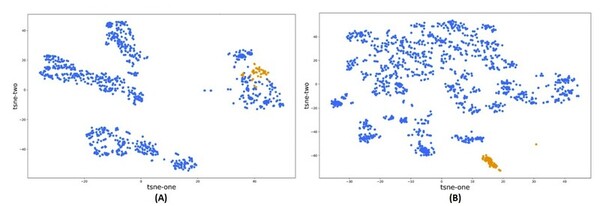
With advancements in machine learning a large data scale, high throughput virtual screening has become a more attractive method for screening drug candidates. This study compared the accuracy of molecular descriptors from two cheminformatics Mordred and PaDEL, software libraries, in characterizing the chemo-structural composition of 53 compounds from the non-nucleoside reverse transcriptase inhibitors (NNRTI) class. The classification model built with the filtered set of descriptors from Mordred was superior to the model using PaDEL descriptors. This approach can accelerate the identification of hit compounds and improve the efficiency of the drug discovery pipeline.

Read More...

The Cilium- and Centrosome-Associated Protein CCDC11 Is Required for Cytokinesis via Midbody Recruitment of the ESCRT- III Membrane Scission Complex Subunit CHMP2A

Ahmed et al. | Mar 14, 2018

The Cilium- and Centrosome-Associated Protein CCDC11 Is Required for Cytokinesis via Midbody Recruitment of the ESCRT- III Membrane Scission Complex Subunit CHMP2A

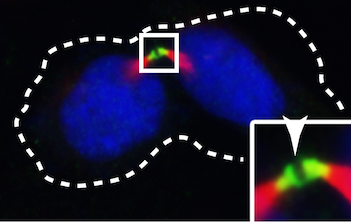
In order for cells to successfully multiply, a number of proteins are needed to correctly coordinate the replication and division process. In this study, students use fluorescence microscopy and molecular methods to study CCDC11, a protein critical in the formation of cilia. Interestingly, they uncover a new role for CCDC11, critical in the cell division across multiple human cell lines.

Read More...

Impact of carbon number and atom number on cc-pVTZ Hartree-Fock Energy and program runtime of alkanes

Pan et al. | Mar 06, 2024

Impact of carbon number and atom number on cc-pVTZ Hartree-Fock Energy and program runtime of alkanes
Image credit: The authors

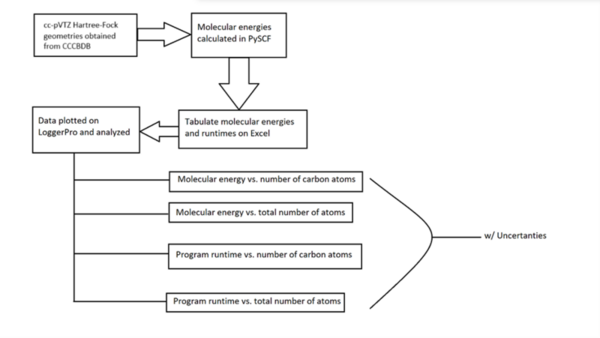
It's time-consuming to complete the calculations that are used to study nuclear reactions and energy. To uncover which computational chemistry tools are useful for this challenge, Pan, Vaiyakarnam, Li, and McMahan investigated whether the Python-based Simulations of Chemistry Framework’s Hartree-Fock (PySCF) method is an efficient and accurate way to assess alkane molecules.

Read More...

The Potential of Fibroblast Growth Factors to Stimulate Hair Growth In Vitro

Cheng et al. | Nov 07, 2021

The Potential of Fibroblast Growth Factors to Stimulate Hair Growth In Vitro

Identifying treatments that can stimulate hair growth use could help those struggling with undesirable hair loss. Here, the authors show that Fibroblast Growth Factors can stimulate the division of cells isolated from the mouse hair follicle. Their results suggest that this family of growth factors might be helpful in stimulating hair growth in living animals as well.

Read More...

Transcriptomic profiling identifies differential gene expression associated with childhood abuse

Li et al. | Jul 23, 2024

Transcriptomic profiling identifies differential gene expression associated with childhood abuse
Image credit: The authors

Childhood abuse has severe and lasting effects throughout an individual's life, and may even have long-term biological effects on individuals who suffer it. To learn more about the effects of abuse in childhood, Li and Yearwood analyze gene expression data to look for genes differentially expressed genes in individuals with a history of childhood abuse.

Read More...

Integrated expression, mutation, and survival analysis of 17 key genes in breast cancer using TCGA-BRCA data

Wang et al. | Aug 06, 2026

Integrated expression, mutation, and survival analysis of 17 key genes in breast cancer using TCGA-BRCA data

This study combines gene expression, mutation profiling, and survival analysis of 17 clinically important genes in breast cancer, utilizing the TCGA-BRCA dataset. Our results show that there are different patterns of oncogene upregulation, different levels of tumor suppressor activity, and complicated survival associations. TP53 was the most frequently mutated gene in this cohort. The results underscore the significance of multidimensional genomic analyses for a comprehensive understanding of breast cancer biology and its therapeutic ramifications.

Read More...