Browse Articles

Sepia bandensis ink inhibits polymerase chain reactions

Novoselov et al. | Sep 21, 2020

<em>Sepia bandensis</em> ink inhibits polymerase chain reactions

While cephalopods play significant roles in both ecosystems and medical research, there is currently no assembled genome. In an attempt to sequence the Sepia bandensis genome, it was found that there was inhibition from the organism during DNA extraction, resulting in PCR failure. In this study, researchers tested the hypothesis that S. bandensis ink inhibits PCR. They then assessed the impact of ink on multiple methods of DNA extraction

Read More...

Evaluating the performance of Q-learning-based AI in auctions

Liu et al. | Nov 09, 2025

Evaluating the performance of Q-learning-based AI in auctions
Image credit: Liu and Liu

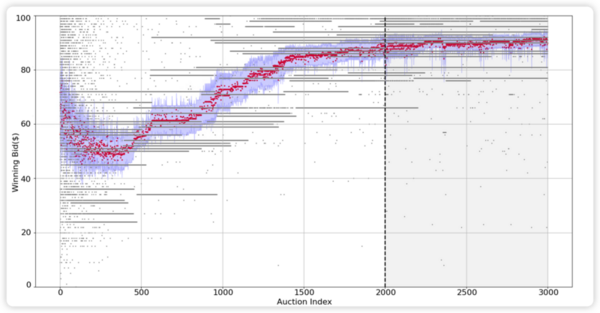
Advertising platforms like Google Ads use AI to drive the algorithms used to maximize advertisers benefits. This study shows that AI does not adjust it strategy based on auction type and highlights the limitations of AI running without explicit guidance.

Read More...

Reinforcement learning in 2-D space with varying gravitational fields

Rousseau et al. | Jun 07, 2025

Reinforcement learning in 2-D space with varying gravitational fields
Image credit: NASA

In this study the authors looked at the ability to navigate planes in space between randomly placed planets. They used machine and reinforcement learning to run simulations and found that they were able to identify optimal paths for travel. In the future these techniques may allow for safer travel in unknown spaces.

Read More...

Survival analysis in cardiovascular epidemiology: nexus between heart disease and mortality

Lachwani et al. | Oct 23, 2024

Survival analysis in cardiovascular epidemiology: nexus between heart disease and mortality

In 2021, over 20 million people died from cardiovascular diseases, highlighting the need for a deeper understanding of factors influencing heart failure outcomes. This study examined multiple variables affecting mortality after heart failure, using random forest models to identify time, serum creatinine, and ejection fraction as key predictors. These findings could contribute to personalized medicine, improving survival rates by tailoring treatment strategies for heart failure patients.

Read More...

Qualitative tracking of human and animation motions reveals differences in their walking gaits

Baily et al. | Oct 04, 2024

Qualitative tracking of human and animation motions reveals differences in their walking gaits

In their attempt to evoke a greater emotional connection with viewers, animators have strived to replicate human movements in their animations. However, animation movements still appear distinct from human movements. With a focus on walking, we hypothesized that animations, unaffected by real external forces (e.g. gravity), would move with a universally distinct, gliding gait that is discernible from humans.

Read More...