Browse Articles

Hybrid Quantum-Classical Generative Adversarial Network for synthesizing chemically feasible molecules

Sikdar et al. | Jan 10, 2023

Hybrid Quantum-Classical Generative Adversarial Network for synthesizing chemically feasible molecules

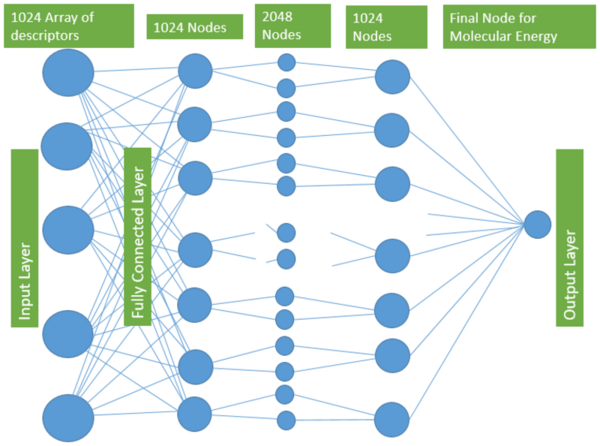
Current drug discovery processes can cost billions of dollars and usually take five to ten years. People have been researching and implementing various computational approaches to search for molecules and compounds from the chemical space, which can be on the order of 1060 molecules. One solution involves deep generative models, which are artificial intelligence models that learn from nonlinear data by modeling the probability distribution of chemical structures and creating similar data points from the trends it identifies. Aiming for faster runtime and greater robustness when analyzing high-dimensional data, we designed and implemented a Hybrid Quantum-Classical Generative Adversarial Network (QGAN) to synthesize molecules.

Read More...

Analysis of the effects of positive ions and boundary layer temperature at various hypersonic speeds on boundary layer density

Selvakumar et al. | Oct 02, 2020

Analysis of the effects of positive ions and boundary layer temperature at various hypersonic speeds on boundary layer density

This study's goal was to identify the Mach numbers for which electrostatic drag and heat transfer manipulation would be most applicable inside the stratosphere. The experiments were conducted using computational fluid dynamics software. The study demonstrated that, on average, higher Mach speeds resulted in a considerably higher potential decrease in density. The study highlights that further research on the surface charge method is warranted to explore higher hypersonic speeds within the stratosphere.

Read More...

Enhanced brain arteries and aneurysms analysis using a CAE-CFD approach

Saravanan et al. | Mar 02, 2025

Enhanced brain arteries and aneurysms analysis using a CAE-CFD approach
Image credit: Vineet Saravanan

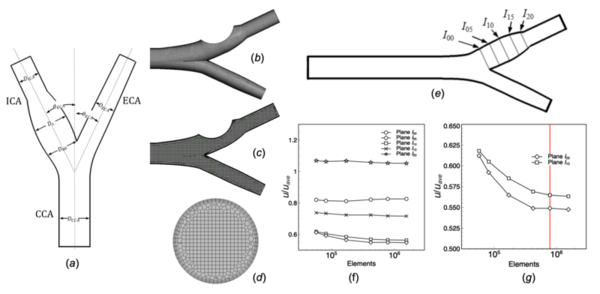
Here, recognizing that brain aneurysms pose a severe threat, often misdiagnosed and leading to high mortality, particularly in younger individuals, the authors explored a novel computer-aided engineering approach. They used magnetic resonance angiography images and computational fluid dynamics, to improve aneurysm detection and risk assessment, aiming for more personalized treatment.

Read More...

A meta-analysis on NIST post-quantum cryptographic primitive finalists

Benny et al. | Sep 21, 2024

A meta-analysis on NIST post-quantum cryptographic primitive finalists
Image credit: Benny et al. 2024

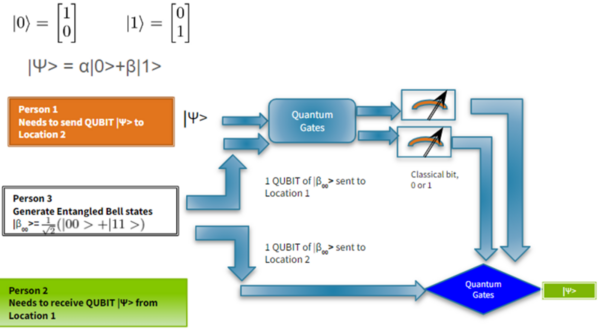
The advent of quantum computing will pose a substantial threat to the security of classical cryptographic methods, which could become vulnerable to quantum-based attacks. In response to this impending challenge, the field of post-quantum cryptography has emerged, aiming to develop algorithms that can withstand the computational power of quantum computers. This study addressed the pressing concern of classical cryptographic methods becoming vulnerable to quantum-based attacks due to the rise of quantum computing. The emergence of post-quantum cryptography has led to the development of new resistant algorithms. Our research focused on four quantum-resistant algorithms endorsed by America’s National Institute of Standards and Technology (NIST) in 2022: CRYSTALS-Kyber, CRYSTALS-Dilithium, FALCON, and SPHINCS+. This study evaluated the security, performance, and comparative attributes of the four algorithms, considering factors such as key size, encryption/decryption speed, and complexity. Comparative analyses against each other and existing quantum-resistant algorithms provided insights into the strengths and weaknesses of each program. This research explored potential applications and future directions in the realm of quantum-resistant cryptography. Our findings concluded that the NIST algorithms were substantially more effective and efficient compared to classical cryptographic algorithms. Ultimately, this work underscored the need to adapt cryptographic techniques in the face of advancing quantum computing capabilities, offering valuable insights for researchers and practitioners in the field. Implementing NIST-endorsed quantum-resistant algorithms substantially reduced the vulnerability of cryptographic systems to quantum-based attacks compared to classical cryptographic methods.

Read More...

Modeling Hartree-Fock approximations of the Schrödinger Equation for multielectron atoms from Helium to Xenon using STO-nG basis sets

Gangal et al. | Oct 05, 2023

Modeling Hartree-Fock approximations of the Schrödinger Equation for multielectron atoms from Helium to Xenon using STO-nG basis sets

The energy of an atom is extremely useful in nuclear physics and reaction mechanism pathway determination but is challenging to compute. This work aimed to synthesize regression models for Pople Gaussian expansions of Slater-type Orbitals (STO-nG) atomic energy vs. atomic number scatter plots to allow for easy approximation of atomic energies without using computational chemistry methods. The data indicated that of the regressions, sinusoidal regressions most aptly modeled the scatter plots.

Read More...

Genomic Signature Analysis for the Strategic Bioremediation of Polycyclic Aromatic Hydrocarbons in Mangrove Ecosystems in the Gulf of Tonkin

Dao et al. | Jun 27, 2021

Genomic Signature Analysis for the Strategic Bioremediation of Polycyclic Aromatic Hydrocarbons in Mangrove Ecosystems in the Gulf of Tonkin

Engineered bacteria that degrade oil are currently being considered as a safe option for the treatment of oil spills. For this approach to be successful, the bacteria must effectively express oil-degrading genes they uptake as part of an external genoming vehicle called a "plasmid". Using a computational approach, the authors investigate plasmid-bacterium compatibility to find pairs that ensure high levels of gene expression.

Read More...

The Cohesiveness of the Oscillating Belousov-Zhabotinsky Reaction

Gottlieb et al. | Dec 18, 2018

The Cohesiveness of the Oscillating Belousov-Zhabotinsky Reaction

In this study the author undertakes a careful characterization of a special type of chemical reaction, called an oscillating Belousov-Zhabotinsky (or B-Z) reaction, which has a number of existing applications in biomedical engineering as well as the potential to be useful in future developments in other fields of science and engineering. Specifically, she uses experimental measurements in combination with computational analysis to investigate whether the reaction is cohesive – that is, whether the oscillations between chemical states will remain consistent or change over time as the reaction progresses. Her results indicate that the reaction is not cohesive, providing an important foundation for the development of future technologies using B-Z reactions.

Read More...

Open string vibrato: does it exist?

Ge et al. | May 01, 2025

Open string vibrato: does it exist?
Image credit: Ge and Zhang 2025

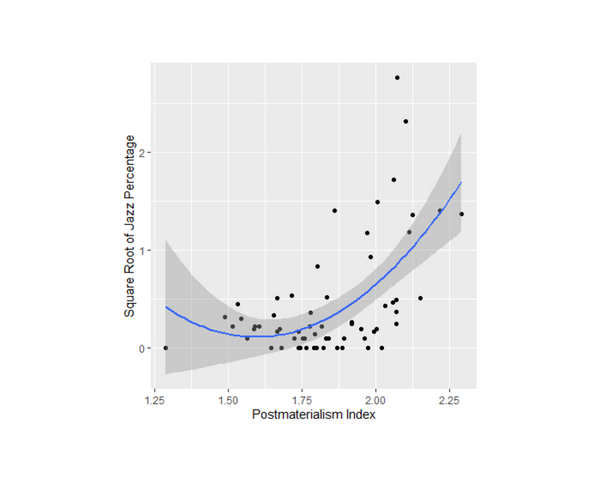
Vibrato, defined as a rapid and subtle oscillation in pitch, is a technique that is commonly used by musicians to add expression and colour to notes. However, on stringed instruments, there are certain notes (open string notes) on which it is impossible to perform the technique. Without vibrato, they can sound angular and unpleasant, especially when juxtaposed against other notes played with vibrato. String players therefore use an alternative to achieve the same vibrato effect on the open string — a technique referred to as “open string vibrato”. While the technique is widely used, it is unknown how much of a physical effect it has on the sound waves produced, if any at all. The purpose of this study is to analyse open string vibrato using a statistical approach to provide evidence to characterize the physical effect of the technique, and then compare it to normal vibrato. We hypothesised that it would have a noticeable and measurable effect on the sound waves produced because of the technique’s widespread usage. To test this, notes, with and without either open string vibrato or normal vibrato, were recorded on the violin. We analyzed the audio recordings using a computational and statistical approach. The results of the study partially agreed with our hypothesis: while the technique has an observable physical effect on the sound waves, the effect is weaker than expected. We concluded that open string vibrato does work, but has quite a subtle effect, and thus should only be used when there is no other option.

Read More...

Homology modeling of clinically-relevant rilpivirine-resistant HIV-RT variants identifies novel rilpivirine analogs with retained binding affinity against NNRTI-resistant HIV mutations

Luk et al. | Jan 24, 2022

Homology modeling of clinically-relevant rilpivirine-resistant HIV-RT variants identifies novel rilpivirine analogs with retained binding affinity against NNRTI-resistant HIV mutations

Human immunodeficiency virus (HIV), which affects tens of millions of individuals worldwide, can lead to acquired immunodeficiency syndrome (AIDS). While there is currently no cure for HIV, the development of small molecule antiretroviral agents has greatly improved the prognosis of infected individuals, especially in developed countries. Here, the authors employ homology modeling and molecular docking towards the identification of novel rilpivirine analogs that retain high binding affinity to clinically relevant rilpivirine-resistant mutations of the HIV reverse transcriptase enzyme.

Read More...