This study assesses the capacity for milkweed species, an important host plant for Monarch butterflies, to grow in desert environments with different water levels.
Read More...Milkweed sustainability in the Sonoran Desert: A. erosa is more water-efficient compared to two other species
This study assesses the capacity for milkweed species, an important host plant for Monarch butterflies, to grow in desert environments with different water levels.
Read More...A study on the stretching behavior of rubber bands
Here, the authors considered the stretching behavior of rubber bands by exposing the rubber bands to increasing loads and measuring their stretch response. They found that a linear stretch response was observed for intermediate loading steps, but this behavior was lost at lower or higher loads, deviating from Hooke's Law. The authors suggest that studies such as these can be used to evaluate other visco-elastic structures.
Read More...Heat conduction: Mathematical modeling and experimental data
In this experiment, the authors modify the heat equation to account for imperfect insulation during heat transfer and compare it to experimental data to determine which is more accurate.
Read More...TNF signaling pathway upregulation as a potential pharmaceutical target for cocaine-addicted individuals
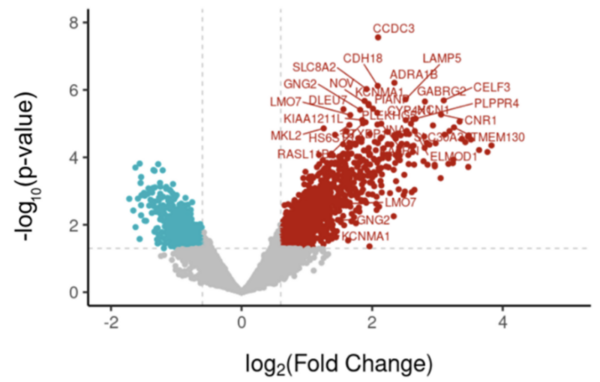
In this article, the authors investigate the RNA expression differences between groups of chronic cocaine abusers and drug-free subjects.
Read More...Examining effects of E. muscae on olfactory function in D. melanogaster
In this article, the authors investigate the effects of fungus E. muscae on fruit fly behavior. More specifically, they investigate whether this fungus affects olfaction. Their findings contribute to a broader set of studies seeking to understand how host's central nervous systems can be affected by infections.
Read More...The effect of microplastics on the speed, mortality rate, and swimming patterns of Daphnia Magna
In this study, the authors investigate the effects that microplastics (which pollute fresh and saltwater ecosystems) have on plankton species Daphnia Magna by measuring their movement and viability.
Read More...From Waste to Wealth: Making Millivolts from Microbes!
In this study, the authors report their successful efforts to increase voltage production in a Microbial Fuel Cell (MFC), which is a system in which microorganisms produce electricity while performing their normal metabolism.
Read More...The effects of early probiotic supplementation on the germination of Arabidopsis thaliana
The use of fertilizers is associated with an increase in soil degradation, which is predicted to lead to a decrease in crop production within the next decade. Thus, it is critical to find solutions to support crop production to sustain the robust global population. In this study, the authors investigate how probiotic bacteria, like Rhizobium leguminosarum, Bacillus subtilis and Pseudomonas fluorescens, can impact the growth of Arabidopsis thaliana when applied to the seeds.They hypothesized that solutions with multiple bacterial species compared to those with only a single bacterial species would promote seed germination more effectively.
Read More...The Effects of Barley Straw (Hordeum vulgare) Extract and Barley Straw Pellets on Algal Growth and Water Quality
Algal overgrowth often threatens to clog irrigation pipes and drinking water lines when left unchecked, as well as releasing possible toxins that threaten plant and human health. It is thus important to find natural, non-harmful agents that can decrease algal growth without threatening the health of plants and humans. In this paper, the authors test the efficacy of barely extract in either liquid or pellet form in decreasing algal growth. While their results were inconclusive, the experimental set-up allows them to investigate a wider range of agents as anti-algal treatments that could potentially be adopted on a wider scale.
Read More...Bacteria and Antibiotic Resistance in School Bathrooms
Since school bathrooms are widely suspected to be unsanitary, we wanted to compare the total amount of bacteria with the amount of bacteria that had ampicillin or streptomycin resistance across different school bathrooms in the Boston area. We hypothesized that because people interact with the faucet, outdoor handle, and indoor handle of the bathroom, based on whether or not they have washed their hands, there would be differences in the quantity of the bacteria presented on these surfaces. Therefore, we predicted certain surfaces of the bathroom would be less sanitary than others.
Read More...