Browse Articles

Innovative fake health news detection: Integrating emotional features into graph neural networks

Wang et al. | Jul 03, 2026

Innovative fake health news detection: Integrating emotional features into graph neural networks
Image credit: Wang and Wang

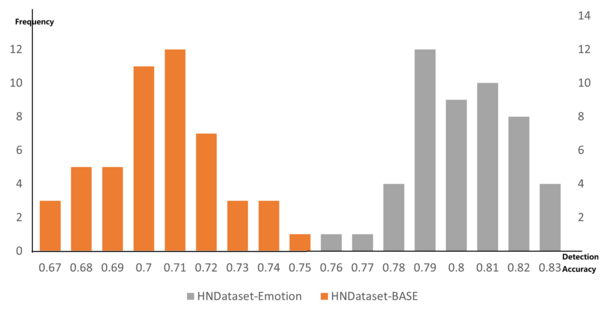
This manuscript tackles a major social issue in the health news sector, with social media being one of the primary sources of information and a prime spot to propagate fake news. The author proposes X-HND , which is a unique architecture that combines emotional and contextual analysis in a Graph Neural Network to accurately detect fake news. This was a multi-step process which involved the creation of a custom health news dataset (HNDataset), and an emotional variant that uses RoBERTa to extract emotion. These dataset were then used to prove the hypothesis that accuracy increases when the custom dataset is used to train the model and that with the integration of emotion capture, the detection accuracy increases further.

Read More...

Linearity of piezoelectric response of electrospun polymer-based (PVDF) fibers with barium titanate nanoparticles

Nichitiu et al. | Feb 13, 2023

Linearity of piezoelectric response of electrospun polymer-based (PVDF) fibers with barium titanate nanoparticles

Here, seeking to develop an understanding of the properties that determine the viability of piezoelectric flexible materials for applications in electro-mechanical sensors, the authors investigated the effects of the inclusion BaTiO3 nanoparticles in electrospun Polyvinyledene Fluoride. They found the voltage generated had a piecewise linear dependence on the applied force at a few temperatures.

Read More...

Assessing Spanish interpretation in community healthcare: a study of patient satisfaction

Yon et al. | Jun 22, 2026

Assessing Spanish interpretation in community healthcare: a study of patient satisfaction
Image credit: Yon and Jones

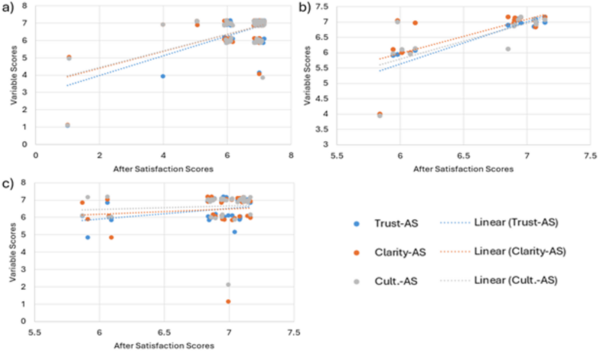
This manuscript explores the use of Spanish language translators in an outpatient clinic in New Jersey. The authors surveyed patients before and after in person, video, and telephone appointments to determine which modality was most acceptable to the patients. The authors found that the three modalities did not differ in patient satisfaction, but that patients were grateful for translations services and that patient trust may be expanded by the use of these services and by focuses of translator soft skills.

Read More...

Mining social media posts: An alternative approach to understanding home health care workers’ experiences

Tang et al. | Jun 15, 2026

Mining social media posts: An alternative approach to understanding home health care workers’ experiences
Image credit: Markus Winkler

This study developed an effective method for extracting valuable information from social media data and employed computer-assisted human coding alongside the AI-powered tool to analyze social media posts. The findings provide a deep understanding of the major challenges that home health care workers are experiencing and offer important implications regarding how to improve home healthcare workers' well-being, and provide suggestions on optimizing the home health care service experience.

Read More...

Determining viability of image processing models for forensic analysis of hair for related individuals

Wang et al. | Feb 04, 2025

Determining viability of image processing models for forensic analysis of hair for related individuals
Image credit: Taylor Smith

Here, the authors used machine learning to analyze microscopic images of hair, quantifying various features to distinguish individuals, even within families where traditional DNA analysis is limited. The Discriminant Analysis (DA) model achieved the highest accuracy (88.89%) in identifying individuals, demonstrating its potential to improve the reliability of hair evidence in forensic investigations.

Read More...

Effects of spices on rice spoilage

Govindaraj et al. | Aug 15, 2022

Effects of spices on rice spoilage

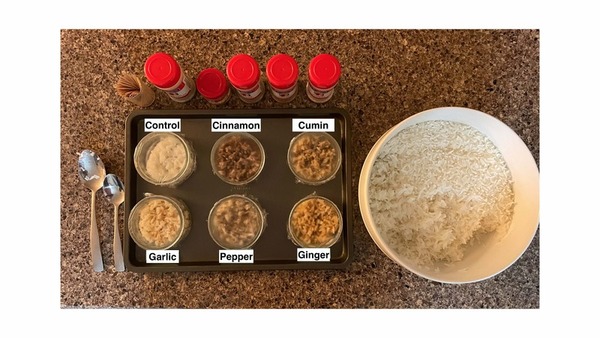
In this work, based on centuries of history where spices have been used and thought to have antimicrobial properties that prolong the shelf life of food, the authors investigated if several spices used in Indian cooking could delay the spoilage of cooked white rice. Based on changed in appearance and smell, as well as growth on agar plates, they found that cinnamon was the most effective in delaying spoilage, followed by cumin, pepper, garlic, and ginger. Their findings suggest the ability to use spices rather than chemical food preservatives to prolong the shelf life of foods.

Read More...