.jpg)
In this study, the authors investigate the effects of the COVID-19 pandemic on South Korean international school students' anxiety, well being and their learning habits.
Read More...A study of South Korean international school students: Impact of COVID-19 on anxiety and learning habits
In this study, the authors investigate the effects of the COVID-19 pandemic on South Korean international school students' anxiety, well being and their learning habits.
Read More...The extent to which storefront alcohol advertising differs by community profile in Michigan

Here, recognizing that alcohol manufacturers may target ethnic minorities and youths with specific forms of advertisements based on previous studies, the authors considered how alcohol storefronts differ depending on the community they are located in. Specifically, they looked at differences between Metro-Dtroit suburban communities of high- and low-incomes. They found that alcohol stores in the low-income areas had more and larger alcohol and malt liquor advertisements per store along with being within 1,000 feet of a school.
Read More...A comparison of the water quality between Chinatown and Bayside: two demographically different regions
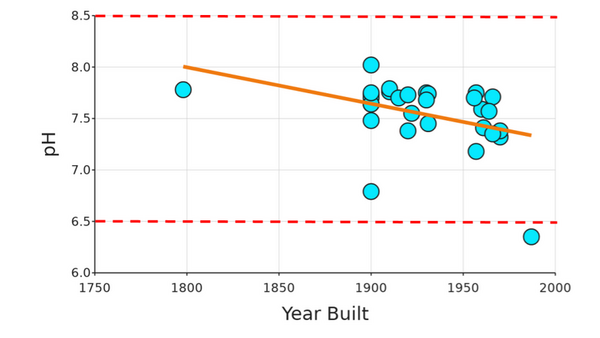
The authors looked at differences in water quality between Chinatown and Bayside. They wanted to look at the racial and economic demographics of each region and how that correlated to access to clean drinking water. Ultimately they did not find any significant differences in water quality, but identified important future directions for this work.
Read More...Socio-economic factor impact on malnutrition in South Indian government school children
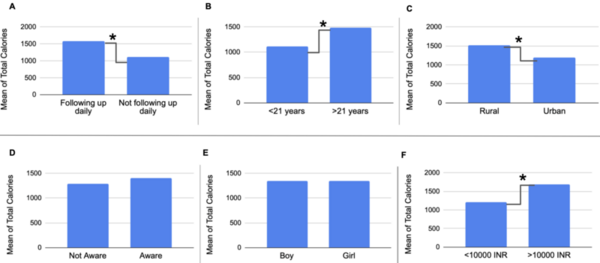
The authors look at malnutrition in children and how socio-economic factors impact this.
Read More...Risk assessment modeling for childhood stunting using automated machine learning and demographic analysis
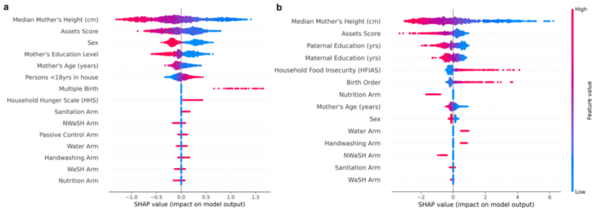
Over the last few decades, childhood stunting has persisted as a major global challenge. This study hypothesized that TPTO (Tree-based Pipeline Optimization Tool), an AutoML (automated machine learning) tool, would outperform all pre-existing machine learning models and reveal the positive impact of economic prosperity, strong familial traits, and resource attainability on reducing stunting risk. Feature correlation plots revealed that maternal height, wealth indicators, and parental education were universally important features for determining stunting outcomes approximately two years after birth. These results help inform future research by highlighting how demographic, familial, and socio-economic conditions influence stunting and providing medical professionals with a deployable risk assessment tool for predicting childhood stunting.
Read More...Pressure and temperature influence the efficacy of metal-organic frameworks for carbon capture and conversion
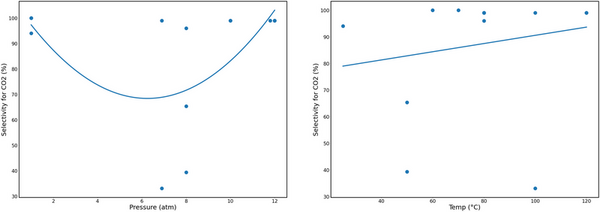
Metal-organic frameworks (MOFs) are promising new nanomaterials for use in the fight against climate change that can efficiently capture and convert CO2 to other useful carbon products. This research used computational models to determine the reaction conditions under which MOFs can more efficiently capture and convert CO2. In a cost-efficient manner, this analysis tested the hypothesis that pressure and temperature affect the efficacy of carbon capture and conversion, and contribute to understanding the optimal conditions for MOF performance to improve the use of MOFs for controlling greenhouse CO2 emissions.
Read More...Spelling Bee: A Study on the Motivation and Learning Strategies Among Elementary and Junior-High Student Competitors
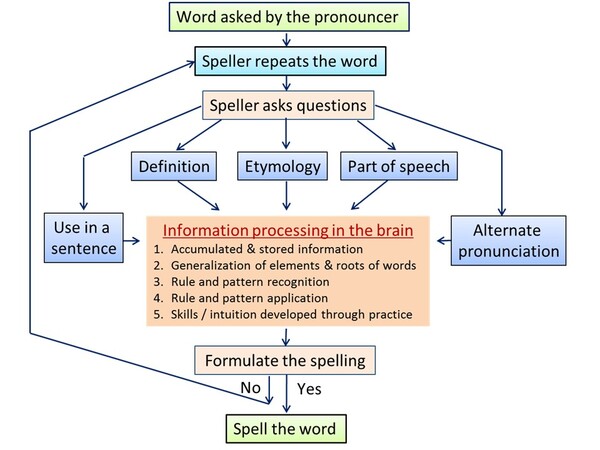
This article investigates the study methodologies, learning strategies, and motives of spelling bee participants. The authors identify several important educational implications of this work.
Read More...Model selection and optimization for poverty prediction on household data from Cambodia

Here the authors sought to use three machine learning models to predict poverty levels in Cambodia based on available household data. They found teat multilayer perceptron outperformed the other models, with an accuracy of 87 %. They suggest that data-driven approaches such as these could be used more effectively target and alleviate poverty.
Read More...