Browse Articles

The effect of the pandemic on the behavior of junior high school students

Kong Grisius et al. | May 01, 2023

The effect of the pandemic on the behavior of junior high school students
Image credit: Chris Montgomery

Here, seeking to understand how the COVID-19 pandemic affected the social interactions of junior high school students, the authors surveyed students, teachers, and parents. Contrary to their initial hypotheses, the authors found positive correlation between increased virtual contact during social isolation and in-person conflict and disregard for social norms after the pandemic. While the authors identified the limitations of their study, they suggest that further research into the effect of online interactions is becoming increasingly important.

Read More...

A study on the stretching behavior of rubber bands

Davuluri et al. | Jan 18, 2022

A study on the stretching behavior of rubber bands

Here, the authors considered the stretching behavior of rubber bands by exposing the rubber bands to increasing loads and measuring their stretch response. They found that a linear stretch response was observed for intermediate loading steps, but this behavior was lost at lower or higher loads, deviating from Hooke's Law. The authors suggest that studies such as these can be used to evaluate other visco-elastic structures.

Read More...

Digestion products of bread and cheese cause addictive behavior in a planaria model

Cochin et al. | Sep 26, 2024

Digestion products of bread and cheese cause addictive behavior in a planaria model

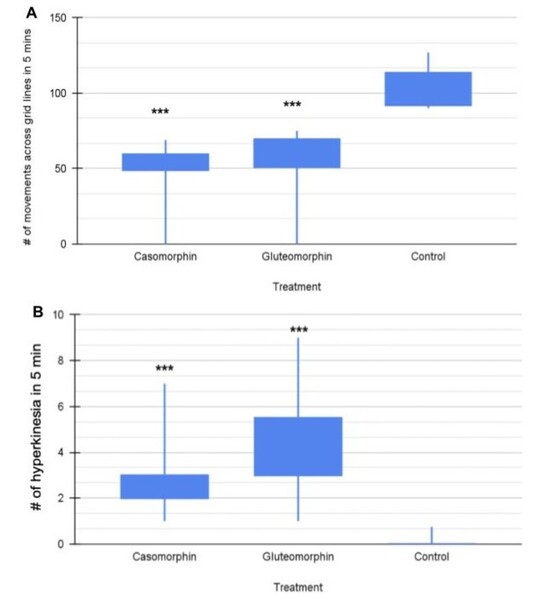
The authors looked at two peptides, gluteomorphin and casomorphin, that are present after the digestion of bread and cheese. As these peptides can bind opioid receptors the authors want to know if they could be addictive in the same way as conventional opioids (i.e., morphine) are known to be. Their results in a planaria model suggest that both of these peptides are addictive.

Read More...

The influence of implicit social pressure on prosocial behavior of adolescents

Carroll et al. | Dec 13, 2021

The influence of implicit social pressure on prosocial behavior of adolescents

In this study the authors sought to understand the influence of implicit social pressure on prosocial behavior (voluntary acts that benefit someone else) in adolescents age 12–19. They considered how participants divided money between themselves and four teammate they did a school project with. Despite being shown examples of how to divide money (social pressure), their results showed that both boys and girls were unaffected by prosocial, neutral, and antisocial pressures.

Read More...

Expression of Anti-Neurodegeneration Genes in Mutant Caenorhabditis elegans Using CRISPR-Cas9 Improves Behavior Associated With Alzheimer’s Disease

Mishra et al. | Sep 14, 2019

Expression of Anti-Neurodegeneration Genes in Mutant <em>Caenorhabditis elegans</em> Using CRISPR-Cas9 Improves Behavior Associated With Alzheimer’s Disease

Alzheimer's disease is one of the leading causes of death in the United States and is characterized by neurodegeneration. Mishra et al. wanted to understand the role of two transport proteins, LRP1 and AQP4, in the neurodegeneration of Alzheimer's disease. They used a model organism for Alzheimer's disease, the nematode C. elegans, and genetic engineering to look at whether they would see a decrease in neurodegeneration if they increased the amount of these two transport proteins. They found that the best improvements were caused by increased expression of both transport proteins, with smaller improvements when just one of the proteins is overly expressed. Their work has important implications for how we understand neurodegeneration in Alzheimer's disease and what we can do to slow or prevent the progression of the disease.

Read More...

The Effects of Altered Microbiome on Caenorhabditis elegans Egg Laying Behavior

Gohari et al. | Aug 12, 2019

The Effects of Altered Microbiome on <em>Caenorhabditis elegans</em> Egg Laying Behavior

Since the discovery that thousands of different bacteria colonize our gut, many of which are important for human wellbeing, understanding the significance of balancing the different species on the human body has been intensely researched. Untangling the complexity of the gut microbiome and establishing the effect of the various strains on human health is a challenge in many circumstances, and the need for simpler systems to improve our basic understanding of microbe-host interactions seems necessary. C. elegans are a well-established laboratory animal that feed on bacteria and can thus serve as a less complex system for studying microbe-host interactions. Here the authors investigate how the choice of bacterial diet affects worm fertility. The same approach could be applied to many different outcomes, and facilitate our understanding of how the microbes colonizing our guts affect various bodily functions.

Read More...

Pichia kudriavzevii Yeast Exposure Increases the Asthmatic Behavior of Alveolar Epithelial Cells In Vitro

Ortega et al. | Jun 07, 2019

<em>Pichia kudriavzevii</em> Yeast Exposure Increases the Asthmatic Behavior of Alveolar Epithelial Cells <em>In Vitro</em>

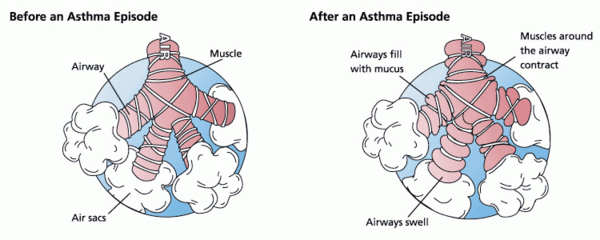
Asthma affects over 334 million people worldwide and is triggered by inhalation of environmental stimuli. The authors of this study characterized the effect of exposure to common spoilage yeast, Pichia kidriavzevii on alveolar epithelial cells. A direct correlation between infection duration and asthmatic status of these cells was found, indicating the potential for this yeast to be an environmental stimulus of asthma and warranting further study.

Read More...

The Effect of the Human MeCP2 gene on Drosophila melanogaster behavior and p53 inhibition as a model for Rett Syndrome

Ganga et al. | Sep 07, 2020

The Effect of the Human <i>MeCP2</i> gene on <i>Drosophila melanogaster</i> behavior and p53 inhibition as a model for Rett Syndrome

In this study, the authors observe if the symptoms of Rett Syndrome, a neurodegenerative disease in humans, are reflected in Drosophila melanogaster. This was achieved by differentiating the behavior and physical aspects of wild-type flies from flies expressing the full-length MeCP2 gene and the mutated MeCP2 gene (R106W). After conducting these experiments, some of the Rett Syndrome symptoms were recapitulated in Drosophila, and a subset of those were partially ameliorated by the introduction of pifithrin-alpha.

Read More...

Extroverts as Materialists: Correlating Personality Traits, Materialism, and Spending Behavior

Jackson et al. | Feb 19, 2017

Extroverts as Materialists: Correlating Personality Traits, Materialism, and Spending Behavior

The authors investigated the relationship between personality traits and adolescent materialism, as well as how materialism relates to spending habits. Results indicate that extroversion was positively correlated with materialism, and that adolescents' purchases were affected by the purchasing behaviors of their friends or peers. Moreover, materialistic youth were more likely than non-materialistic youth to spend money on themselves when given a hypothetical windfall of $500.

Read More...