Browse Articles

Do trumpet players have a greater expiratory capacity than those who do not play a wind instrument?

Homsi et al. | Feb 01, 2022

Do trumpet players have a greater expiratory capacity than those who do not play a wind instrument?

With healthy lung performance being critical to daily function and maintenance of physical health, the authors of this study explored the impact of airflow training from playing a wind instrument on respiratory system function. With careful quantification of peak expiratory flow of individuals who played the trumpet, the authors found no expiratory capacity difference between students who played the trumpet and students who did not play a wind instrument.

Read More...

Artificial Intelligence-Based Smart Solution to Reduce Respiratory Problems Caused by Air Pollution

Bhardwaj et al. | Dec 14, 2021

Artificial Intelligence-Based Smart Solution to Reduce Respiratory Problems Caused by Air Pollution

In this report, Bhardwaj and Sharma tested whether placing specific plants indoors can reduce levels of indoor air pollution that can lead to lung-related illnesses. Using machine learning, they show that plants improved overall indoor air quality and reduced levels of particulate matter. They suggest that plant-based interventions coupled with sensors may be a useful long-term solution to reducing and maintaining indoor air pollution.

Read More...

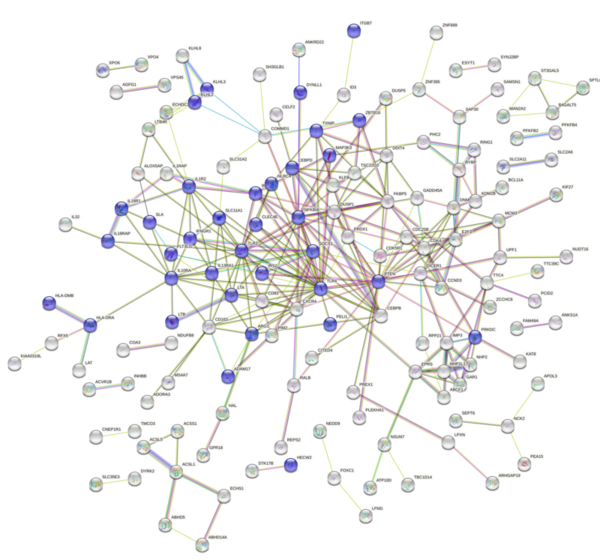
Inhibiting the ERK pathway and the TRPM7 ion channel in gastric and bladder cancer cells

Yang et al. | Oct 14, 2021

Inhibiting the ERK pathway and the TRPM7 ion channel in gastric and bladder cancer cells

In this work the authors investigate new possible treatment methods for gastric and bladder cancers. They specifically targeted the transient receptor potential cation subfamily M member 7 (TRPM7), an ion channel that plays an important role in the survival of both of these cancers, and extracellular regulated kinases (ERKs),which contributes to the carcinogenesis of many cancers including gastric cancer. As a result, the authors consider the effects of Ginsenoside Rd, NS8593, curcumin, and icariin , known to inhibit TRPM7 and ERK. The authors found that these treatments decrease proliferation and induce apoptosis in studies of gastric and bladder cancer cells.

Read More...