Browse Articles

Machine learning for retinopathy prediction: Unveiling the importance of age and HbA1c with XGBoost

Ramachandran et al. | Sep 05, 2024

Machine learning for retinopathy prediction: Unveiling the importance of age and HbA1c with XGBoost

The purpose of our study was to examine the correlation of glycosylated hemoglobin (HbA1c), blood pressure (BP) readings, and lipid levels with retinopathy. Our main hypothesis was that poor glycemic control, as evident by high HbA1c levels, high blood pressure, and abnormal lipid levels, causes an increased risk of retinopathy. We identified the top two features that were most important to the model as age and HbA1c. This indicates that older patients with poor glycemic control are more likely to show presence of retinopathy.

Read More...

Sri Lankan Americans’ views on U.S. racial issues are influenced by pre-migrant ethnic prejudice and identity

Gunawardena et al. | Apr 18, 2022

Sri Lankan Americans’ views on U.S. racial issues are influenced by pre-migrant ethnic prejudice and identity

In this study, the authors examined how Sri Lankan Americans (SLAs) view racial issues in the U.S. The main hypothesis is that SLAs, as a minority in the U.S., are supportive of the Black Lives Matter movement and its political goal, challenging the common notion that SLAs are anti-Black. The study found that a majority of SLAs believe the U.S. has systemic racism, favor BLM, and favor affirmative action. IT also found that Tamil SLAs have more favorable views of BLM and affirmative action than Sinhalese SLAs.

Read More...

Comparing Measurements of Sun-Earth Distance: Shadow Method and Two Pinhole Method Variations

Rajakumar et al. | Feb 21, 2022

Comparing Measurements of Sun-Earth Distance: Shadow Method and Two Pinhole Method Variations

This study compares three methods regarding their accuracy in calculating the distance between the Earth and the Sun. The hypothesis presented was that the shadow method would have the greatest mean accuracy, followed by the tube pinhole method, and finally the plate pinhole method. The results validate the hypothesis; however, further investigation would be helpful in determining effective mitigation of each method’s limitations and the effectiveness of each method in determining the distance of other light-emitting objects distant from the Earth.

Read More...

Impact of Silverado Fire on soil carbon

Choi et al. | Feb 20, 2025

Impact of Silverado Fire on soil carbon

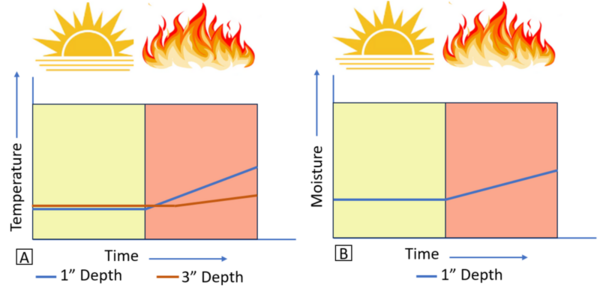
Soil stores three times more carbon than the atmosphere, making small changes in its storage and release crucial for carbon cycling and climate models. This study examined the impact of the 2020 California Silverado Fire on pyrogenic carbon (PyC) deposits using nitrogen and carbon isotopes as proxies. While the results showed significant variability in δ¹⁵N, δ¹³C, total carbon, and total nitrogen across sites, they did not support the hypothesis that wildfire increases δ¹⁵N while keeping δ¹³C constant, emphasizing the need for location-based controls when using δ¹⁵N to track PyC.

Read More...

Forecasting air quality index: A statistical machine learning and deep learning approach

Pasula et al. | Feb 17, 2025

Forecasting air quality index: A statistical machine learning and deep learning approach
Image credit: Amir Hosseini

Here the authors investigated air quality forecasting in India, comparing traditional time series models like SARIMA with deep learning models like LSTM. The research found that SARIMA models, which capture seasonal variations, outperform LSTM models in predicting Air Quality Index (AQI) levels across multiple Indian cities, supporting the hypothesis that simpler models can be more effective for this specific task.

Read More...

The effect of Poisson sprinkling methods on causal sets in 1+1-dimensional flat spacetime

Deshpande et al. | Feb 14, 2025

The effect of Poisson sprinkling methods on causal sets in 1+1-dimensional flat spacetime
Image credit: Deshpande and Pitu et al. 2025

The causal set theory (CST) is a theory of the small-scale structure of spacetime, which provides a discrete approach to describing quantum gravity. Studying the properties of causal sets requires methods for constructing appropriate causal sets. The most commonly used approach is to perform a random sprinkling. However, there are different methods for sprinkling, and it is not clear how each commonly used method affects the results. We hypothesized that the methods would be statistically equivalent, but that some noticeable differences might occur, such as a more uniform distribution for the sub-interval sprinkling method compared to the direct sprinkling and edge bias compensation methods. We aimed to assess this hypothesis by analyzing the results of three different methods of sprinkling. For our analysis, we calculated distributions of the longest path length, interval size, and paths of various lengths for each sprinkling method. We found that the methods were statistically similar. However, one of the methods, sub-interval sprinkling, showed some slight advantages over the other two. These findings can serve as a point of reference for active researchers in the field of causal set theory, and is applicable to other research fields working with similar graphs.

Read More...

Trust in the use of artificial intelligence technology for treatment planning

Srivastava et al. | Sep 18, 2024

Trust in the use of artificial intelligence technology for treatment planning

As AI becomes more integrated into healthcare, public trust in AI-developed treatment plans remains a concern, especially for emotionally charged health decisions. In a study of 81 community college students, AI-created treatment plans received lower trust ratings compared to physician-developed plans, supporting the hypothesis. The study found no significant differences in AI trust levels across demographic factors, suggesting overall skepticism toward AI-driven healthcare.

Read More...

Analysis of biofertilization impacts on Pisum sativum

Holden et al. | May 18, 2023

Analysis of biofertilization impacts on <i>Pisum sativum</i>
Image credit: David Boozer

This study explored the various effects of three different produce-based biofertilizers on pea plant growth, using red apple, pear, strawberry, and control treatments. It was hypothesized that the application of fruit biomatter would increase the growth of pea plants, with the application of strawberry biomatter having the most significant effect due to strawberries containing a higher nutrient content compared to pears and apples. Analysis confirmed the hypothesis. The application of strawberry biomatter could prove to be an effective way to increase plant growth in commercial agriculture.

Read More...

Can the nucleotide content of a DNA sequence predict the sequence accessibility?

Balachandran et al. | Mar 10, 2023

Can the nucleotide content of a DNA sequence predict the sequence accessibility?
Image credit: Warren Umoh

Sequence accessibility is an important factor affecting gene expression. Sequence accessibility or openness impacts the likelihood that a gene is transcribed and translated into a protein and performs functions and manifests traits. There are many potential factors that affect the accessibility of a gene. In this study, our hypothesis was that the content of nucleotides in a genetic sequence predicts its accessibility. Using a machine learning linear regression model, we studied the relationship between nucleotide content and accessibility.

Read More...