Browse Articles

Development of Two New Efficient Means of Wastewater Treatment

Bao et al. | Feb 06, 2014

Development of Two New Efficient Means of Wastewater Treatment

The water we use must be treated and cleaned before we release it back into the environment. Here, the authors investigate two new techniques for purifying dissolved impurities from waste water. Their findings may give rise to more cheaper and more efficient water treatment and help keep the planet greener.

Read More...

The Effect of UV Treatment on the Degradation of Compostable Polylactic Acid

Zhang et al. | Nov 28, 2013

The Effect of UV Treatment on the Degradation of Compostable Polylactic Acid

Polylactic acid (PLA) is a bio-based, compostable plastic that is comparable in cost to petroleum-based plastics. This study aims to evaluate the effects of UV treatment and mechanical chopping on the degradation of PLA. Based on their findings, the authors propose an alternative PLA degradation process that may be more time and energy efficient than current processes.

Read More...

Bacteriophage TLS sensitizes Escherichia coli to antibiotics

Emann et al. | Mar 04, 2026

Bacteriophage TLS sensitizes <i>Escherichia coli</i> to antibiotics

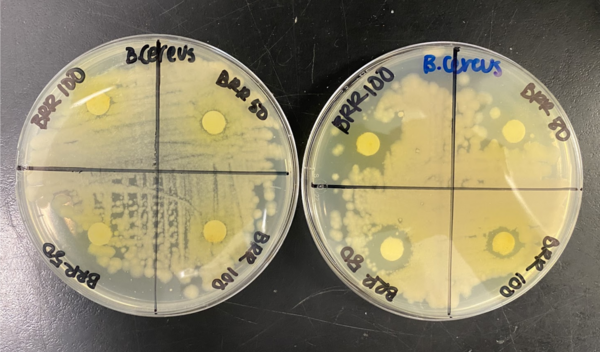
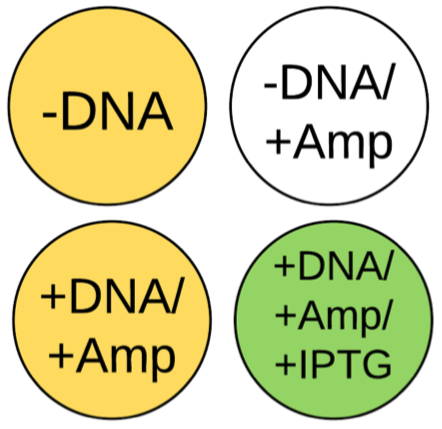
Antibiotic resistance is a growing global health threat, and one strategy to combat it is using bacteriophages to enhance the effectiveness of existing antibiotics. This study tested whether targeting the TolC protein in E. coli with the TLS bacteriophage would increase bacterial sensitivity to antibiotics.

Read More...

Characterizing Quorum Sensing-Induced Bioluminescence in Variable Volumes With Vibrio fischeri Using Computer Processing Methods

Abdel-Azim et al. | Jun 22, 2020

Characterizing Quorum Sensing-Induced Bioluminescence in Variable Volumes With <em>Vibrio fischeri</em> Using Computer Processing Methods

Understanding how bacteria respond to other bacteria could facilitate their ability to initiate and maintain their infectiousness. The phenomenon by which bacteria signal to each other via chemical signals is called quorum sensing, which could be targeted to deter bacterial infection in some cases if better understood. In this article, the authors study how a bacterium called V. fischeri uses quorum sensing to change bioluminescence, an easy readout that facilitates studying quorum sensing in this strain.

Read More...

Effect of the Herbal Formulation HF1 on the Expression of PD-L1 in PC3 cells

Imani et al. | Nov 15, 2019

Effect of the Herbal Formulation HF1 on the Expression of PD-L1 in PC3 cells

In this study, Imani et al. investigate whether a new proprietary herbal formulation, HF1, can inhibit expression of immune suppressor protein PD-L1. PD-L1 is a transmembrane protein that can be expressed by cancer cells to assist in their ability to avoid attacks from the immune system. Work from this study demonstrates that HF1 treatment can reduce expression of PD-L1 in cultured cancer cells, implicating HF1 as a potential new cancer therapy.

Read More...