Browse Articles

The effect of neuroinflammation and oxidative stress on the recovery time of seizures

Kantipudi et al. | Jul 31, 2023

The effect of neuroinflammation and oxidative stress on the recovery time of seizures

Neuroinflammation and oxidative stress are both known to play a role in the occurrence and severity of seizures. This study tested effects of oxidative stress from seizures by evaluating the longevity, egg-laying, and electroshock resilience of C. elegans. Results revealed that oxidative stress and neuroinflammation diminish longevity and reproductivity while also increasing recovery time after seizures in C. elegans. This research can help lead to future studies and may also lead to finding new therapeutics for epilepsy.

Read More...

Effects of Photoperiod Alterations on Stress Response in Daphnia magna

Kelly et al. | Mar 10, 2022

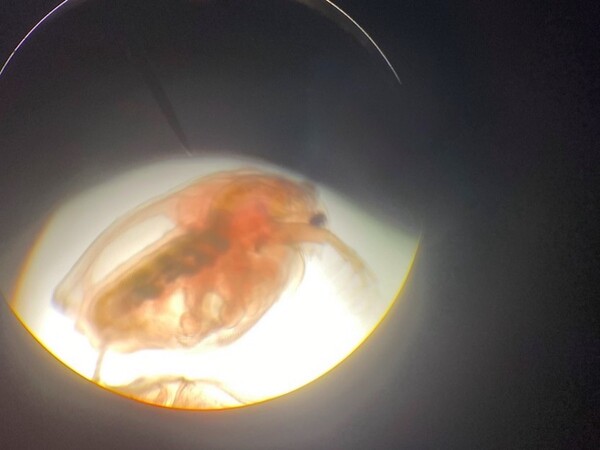
Effects of Photoperiod Alterations on Stress Response in <em>Daphnia magna</em>

Here, seeking to better understand the effects of altered day-night cycles, the authors considered the effects of an altered photoperiod on Daphnia magna. By tracking possible stress responses, including mean heart rate, brood size, and male-to-female ratio they found that a shorter photoperiod resulted in altered mean heart rates and brood size. The authors suggest that based on these observations, it is important to consider the effects of photoperiod alterations and the stress responses of other organisms.

Read More...

The effects of stress on the bacterial community associated with the sea anemone Diadumene lineata

Cahill et al. | Feb 15, 2021

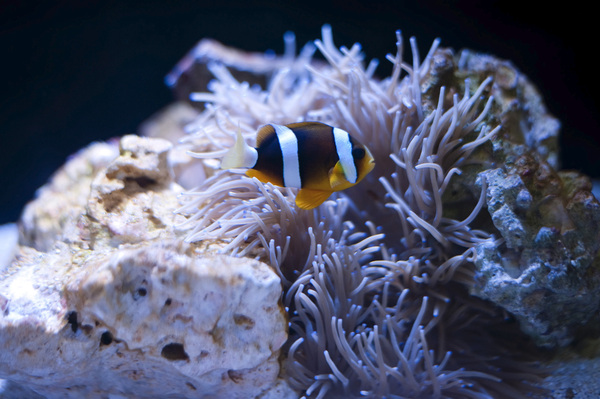
The effects of stress on the bacterial community associated with the sea anemone Diadumene lineata

In healthy ecosystems, organisms interact in a relationship that helps maintain one another's existence. Stress can disrupt this interaction, compromising the survival of some of the members of such relationships. Here, the authors investigate the effect of stress on the interaction between anemones and their microbiome. Their study suggests that stress changes the composition of the surface microbiome of the anemone D. lineata, which is accompanied by an increase in mucus secretion. Future research into the composition of this stress-induced mucus might reveal useful antimicrobial properties.

Read More...

Characterizing the association between hippocampal reactive astrogliosis, anhedonia-like behaviors, and neurogenesis in a monkey model of stress and antidepressant treatment

Kim et al. | Aug 25, 2022

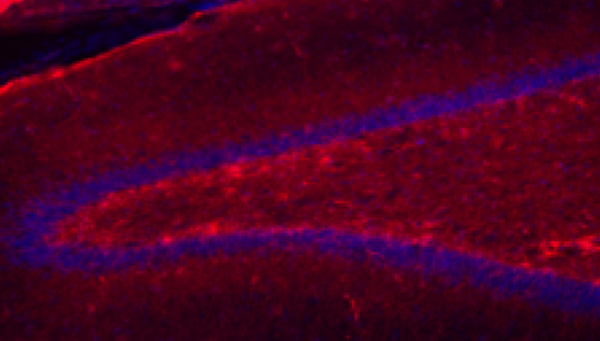
Characterizing the association between hippocampal reactive astrogliosis, anhedonia-like behaviors, and neurogenesis in a monkey model of stress and antidepressant treatment

This study examined the effects of stress and selective serotonin reuptake inhibitors (SSRIs) on a measure of astrocyte reactivity in nonhuman primate (NHP) models of stress. Results showed that chronic separation stress in NHPs leads to increased signs of astrogliosis in the NHP hippocampus. The findings were consistent with the hypotheses that hippocampal astrogliosis is an important mechanism in stress-induced cognitive and behavioral deficits.

Read More...

Evaluation of Tea Extract as an Inhibitor of Oxidative Stress in Prostate Cells

Zhang et al. | Jan 22, 2019

Evaluation of Tea Extract as an Inhibitor of Oxidative Stress in Prostate Cells

One important factor that contributes to human cancers is accumulated damage to cells' DNA due to the oxidative stress caused by free radicals. In this study, the authors investigate the effects of several different tea leaf extracts on oxidative stress in cultured human prostate cells to see if antioxidants in the tea leaves could help protect cells from this type of DNA damage. They found that all four types of tea extract (as well as direct application of the antioxidant EGCG) improved the outcomes for the cultured cells, with white tea extract having the strongest effect. This research suggests that tea extracts and the antioxidants that they contain may have applications in the treatment of the many diseases associated with cellular DNA damage, including cancer.

Read More...

Astragalus membranaceus Root Concentration and Exposure Time: Role in Heat Stress Diminution in C. elegans

Chen et al. | Oct 17, 2018

Astragalus membranaceus Root Concentration and Exposure Time: Role in Heat Stress Diminution in <em>C. elegans</em>

In this study, the authors investigated the biological mechanism underlying the actions of a traditional medicinal plant, Astragalus membranaceus. Using C. elegans as an experimental model, they tested the effects of AM root on heat stress responses. Their results suggest that AM root extract may enhance the activity of endogenous pathways that mediate cellular responses to heat stress.

Read More...