Browse Articles

Machine Learning Algorithm Using Logistic Regression and an Artificial Neural Network (ANN) for Early Stage Detection of Parkinson’s Disease

Kar et al. | Oct 10, 2020

Machine Learning Algorithm Using Logistic Regression and an Artificial Neural Network (ANN) for Early Stage Detection of Parkinson’s Disease

Despite the prevalence of PD, diagnosing PD is expensive, requires specialized testing, and is often inaccurate. Moreover, diagnosis is often made late in the disease course when treatments are less effective. Using existing voice data from patients with PD and healthy controls, the authors created and trained two different algorithms: one using logistic regression and another employing an artificial neural network (ANN).

Read More...


A comparative analysis of machine learning approaches for prediction of breast cancer

Nag et al. | May 11, 2021

A comparative analysis of machine learning approaches for prediction of breast cancer

Machine learning and deep learning techniques can be used to predict the early onset of breast cancer. The main objective of this analysis was to determine whether machine learning algorithms can be used to predict the onset of breast cancer with more than 90% accuracy. Based on research with supervised machine learning algorithms, Gaussian Naïve Bayes, K Nearest Algorithm, Random Forest, and Logistic Regression were considered because they offer a wide variety of classification methods and also provide high accuracy and performance. We hypothesized that all these algorithms would provide accurate results, and Random Forest and Logistic Regression would provide better accuracy and performance than Naïve Bayes and K Nearest Neighbor.

Read More...

Development of a novel machine learning platform to identify structural trends among NNRTI HIV-1 reverse transcriptase inhibitors

Ashok et al. | Jun 24, 2022

Development of a novel machine learning platform to identify structural trends among NNRTI HIV-1 reverse transcriptase inhibitors

With advancements in machine learning a large data scale, high throughput virtual screening has become a more attractive method for screening drug candidates. This study compared the accuracy of molecular descriptors from two cheminformatics Mordred and PaDEL, software libraries, in characterizing the chemo-structural composition of 53 compounds from the non-nucleoside reverse transcriptase inhibitors (NNRTI) class. The classification model built with the filtered set of descriptors from Mordred was superior to the model using PaDEL descriptors. This approach can accelerate the identification of hit compounds and improve the efficiency of the drug discovery pipeline.

Read More...

Machine learning-based enzyme engineering of PETase for improved efficiency in plastic degradation

Gupta et al. | Jan 31, 2023

 Machine learning-based enzyme engineering of PETase for improved efficiency in plastic degradation
Image credit: Markus Spiske

Here, recognizing the recognizing the growing threat of non-biodegradable plastic waste, the authors investigated the ability to use a modified enzyme identified in bacteria to decompose polyethylene terephthalate (PET). They used simulations to screen and identify an optimized enzyme based on machine learning models. Ultimately, they identified a potential mutant PETases capable of decomposing PET with improved thermal stability.

Read More...

Utilizing meteorological data and machine learning to predict and reduce the spread of California wildfires

Bilwar et al. | Jan 15, 2024

Utilizing meteorological data and machine learning to predict and reduce the spread of California wildfires
Image credit: Pixabay

This study hypothesized that a machine learning model could accurately predict the severity of California wildfires and determine the most influential meteorological factors. It utilized a custom dataset with information from the World Weather Online API and a Kaggle dataset of wildfires in California from 2013-2020. The developed algorithms classified fires into seven categories with promising accuracy (around 55 percent). They found that higher temperatures, lower humidity, lower dew point, higher wind gusts, and higher wind speeds are the most significant contributors to the spread of a wildfire. This tool could vastly improve the efficiency and preparedness of firefighters as they deal with wildfires.

Read More...

A novel approach for predicting Alzheimer’s disease using machine learning on DNA methylation in blood

Adami et al. | Sep 20, 2023

A novel approach for predicting Alzheimer’s disease using machine learning on DNA methylation in blood
Image credit: National Cancer Institute

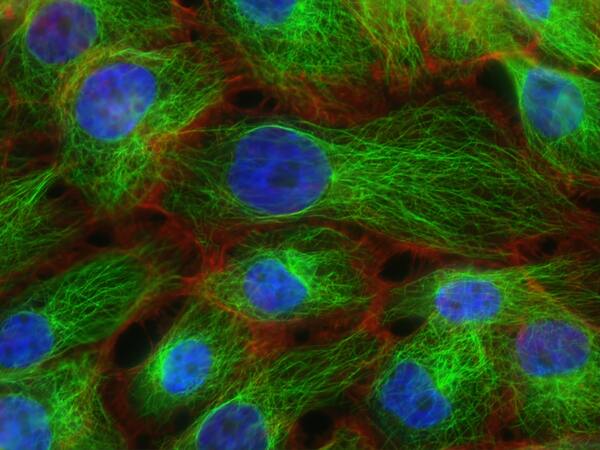
Here, recognizing the difficulty associated with tracking the progression of dementia, the authors used machine learning models to predict between the presence of cognitive normalcy, mild cognitive impairment, and Alzheimer's Disease, based on blood DNA methylation levels, sex, and age. With four machine learning models and two dataset dimensionality reduction methods they achieved an accuracy of 53.33%.

Read More...