Browse Articles

Estimation of cytokines in PHA-activated mononuclear cells isolated from human peripheral and cord blood

Subbiah et al. | Mar 09, 2022

Estimation of cytokines in PHA-activated mononuclear cells isolated from human peripheral and cord blood

In this study, the authors investigated the time-dependent cytokine secretion ability of phyto-hemagglutinin (PHA)-activated T cells derived from human peripheral (PB) and cord blood (CB). They hypothesized that the anti-inflammatory cytokine, IL-10, and pro-inflammatory cytokine, TNFα, levels would be higher in PHA-activated T cells obtained from PB as compared to the levels obtained from CB and would decrease over time. Upon PHA-activation, the IL-10 levels were relatively high while the TNFα levels decreased, making these findings applicable in therapeutic treatments e.g., rheumatoid arthritis, psoriasis, and organ transplantation.

Read More...

Wound healing properties of mesenchymal conditioned media: Analysis of PDGF, VEGF and IL-8 concentrations

Prasad et al. | Dec 15, 2021

Wound healing properties of mesenchymal conditioned media: Analysis of PDGF, VEGF and IL-8 concentrations

Regenerative medicine has become a mainstay in recent times, and employing stem cells to treat several degenerative, inflammatory conditions has resulted in very promising outcomes. These forms of cell-based therapies are novel approaches to existing treatment modalities. In this study, the authors compared the concentrations of the cytokines PDGF, IL-8, and VEGF between conditioned and spent media of mesenchymal stem cells (MSCs) to evaluate their potential therapeutic properties for wound healing in inflammatory conditions. They hypothesized that conditioned media contains higher concentrations of wound healing cytokines compared to spent media. The authors found that while IL-8 and VEGF were present in highest concentrations in conditioned media, PDGF was present in maximal amounts in spent media.

Read More...

In vitro Comparison of Anticancer and Immunomodulatory Activities of Resveratrol and its Oligomers

Zhang et al. | Sep 02, 2020

<em>In vitro</em> Comparison of Anticancer and Immunomodulatory Activities of Resveratrol and its Oligomers

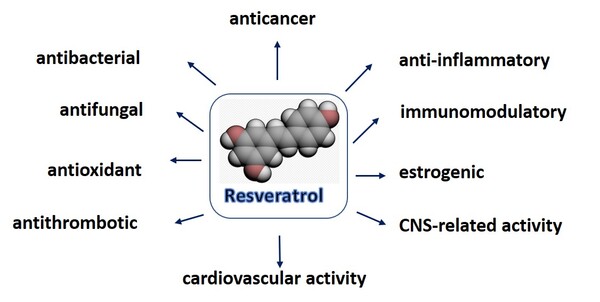
Resveratrol is a type of stillbenoid, a phenolic compound produced in plants, that is known for its anti-inflammatory and anticancer effects. Many oligomers of resveratrol have recently been isolated their bioactivities remain unknown. Here, authors compared the bioactivities of resveratrol with natural dimers (ε-viniferin and gnetin H) and trimers (suffruticosol B and C). Results provide preliminary evidence that resveratrol oligomers could be potential preventive or therapeutic agents for cancers and other immune-related diseases

Read More...

Honey Bee Pollen in Allergic Rhinitis Healing

Bjelajac et al. | Jun 24, 2020

Honey Bee Pollen in Allergic Rhinitis Healing

The most common atopic disease of the upper respiratory tract is allergic rhinitis. It is defined as a chronic inflammatory condition of nasal mucosa due to the effects of one or more allergens and is usually a long-term problem. The purpose of our study was to test the efficiency of apitherapy in allergic rhinitis healing by the application of honey bee pollen. Apitherapy is a branch of alternative medicine that uses honey bee products. Honey bee pollen can act as an allergen and cause new allergy attacks for those who suffer from allergic rhinitis. Conversely, we hoped to prove that smaller ingestion of honey bee pollen on a daily basis would desensitize participants to pollen and thus reduce the severity of allergic rhinitis.

Read More...

Cytokine Treatment for Myocarditis May Directly Impact Cardiomyocytes Negatively

Kasner et al. | Apr 26, 2019

Cytokine Treatment for Myocarditis May Directly Impact Cardiomyocytes Negatively

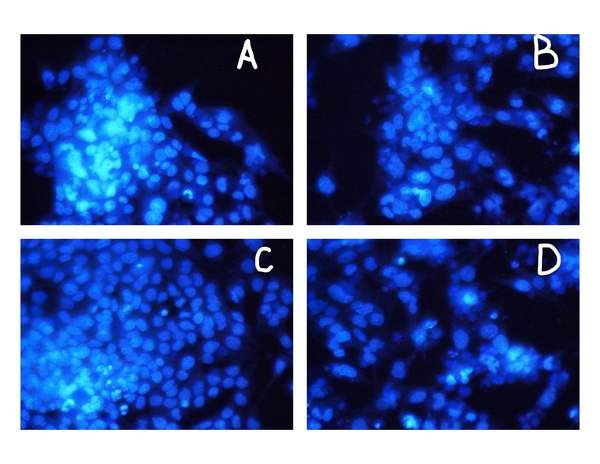
The purpose of our study was to determine if direct administration of CXCL1/KC to cardiomyocytes causes negative changes to cell density or proliferation. This molecule has been shown to reduce inflammation in certain instances. Homocysteine models the direct effect of an inflammatory agent on cardiomyocytes. Our question was whether these molecules directly impact cell density through an interaction with the cell proliferation process. We hypothesized that cells treated with CXCL1/KC would maintain the same cell density as untreated cells. In contrast, cells treated with Homocysteine or both Homocysteine and CXCL1/KC, were expected to have a higher cell density that than that of untreated cells.

Read More...

Quantitative NMR spectroscopy reveals solvent effects in the photochemical degradation of thymoquinone

Mandava et al. | Dec 16, 2023

Quantitative NMR spectroscopy reveals solvent effects in the photochemical degradation of thymoquinone

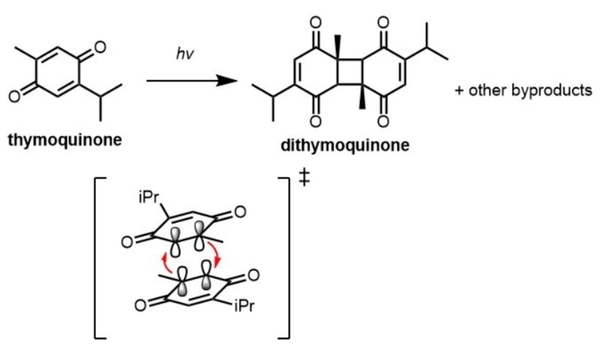
Thymoquinone is a compound of great therapeutic potential and scientific interest. However, its clinical administration and synthetic modifications are greatly limited by its instability in the presence of light. This study employed quantitative 1H nuclear magnetic resonance (NMR) spectroscopy to identify the effect of solvation on the degradation of thymoquinone under ultraviolet light (UV). It found that the rate of degradation is highly solvent dependent occurs maximally in chloroform.

Read More...

The effect of neuroinflammation and oxidative stress on the recovery time of seizures

Kantipudi et al. | Jul 31, 2023

The effect of neuroinflammation and oxidative stress on the recovery time of seizures

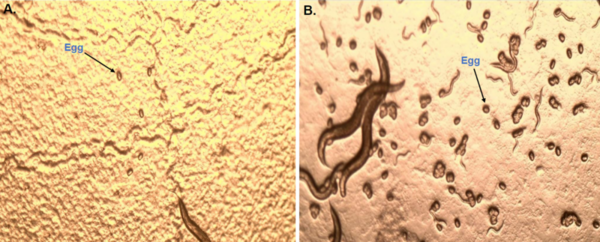
Neuroinflammation and oxidative stress are both known to play a role in the occurrence and severity of seizures. This study tested effects of oxidative stress from seizures by evaluating the longevity, egg-laying, and electroshock resilience of C. elegans. Results revealed that oxidative stress and neuroinflammation diminish longevity and reproductivity while also increasing recovery time after seizures in C. elegans. This research can help lead to future studies and may also lead to finding new therapeutics for epilepsy.

Read More...

Interleukin family (IL-2 and IL-1β) as predictive biomarkers in Indian cancer patients: A proof of concept study

Parthasarathy et al. | Apr 03, 2023

Interleukin family (IL-2 and IL-1β) as predictive biomarkers in Indian cancer patients: A proof of concept study
Image credit: National Cancer Institute

Here, recognizing that the immune response to cancer results in biomarkers that can be used to assess the immune status of cancer patients, the authors investigated the concentrations of key cytokines (TH1 and TH2 cytokines) in healthy controls and cancer patients. They identified significant changes in resting and activated cytokine profiles, suggesting that data of biomarkers such as these could serve as a starting point for further treatment with regard to a patient's specific immune profile.

Read More...