
Detecting cervical spondylosis using deep learning
Read More...The effects of image manipulation on classification of cervical spondylosis X-ray images using deep learning
Optimizing AI image detection using a Convolutional Neural Network model with Fast Fourier Transform
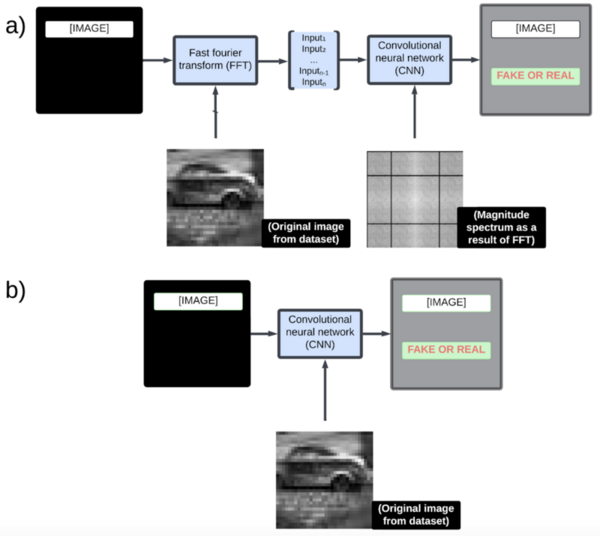
Recent advances in generative AI have made it increasingly hard to distinguish real images from AI-generated ones. Traditional detection models using CNNs or U-net architectures lack precision because they overlook key spatial and frequency domain details. This study introduced a hybrid model combining Convolutional Neural Networks (CNN) with Fast Fourier Transform (FFT) to better capture subtle edge and texture patterns.
Read More...Determining viability of image processing models for forensic analysis of hair for related individuals

Here, the authors used machine learning to analyze microscopic images of hair, quantifying various features to distinguish individuals, even within families where traditional DNA analysis is limited. The Discriminant Analysis (DA) model achieved the highest accuracy (88.89%) in identifying individuals, demonstrating its potential to improve the reliability of hair evidence in forensic investigations.
Read More...Evaluating TensorFlow image classification in classifying proton collision images for particle colliders
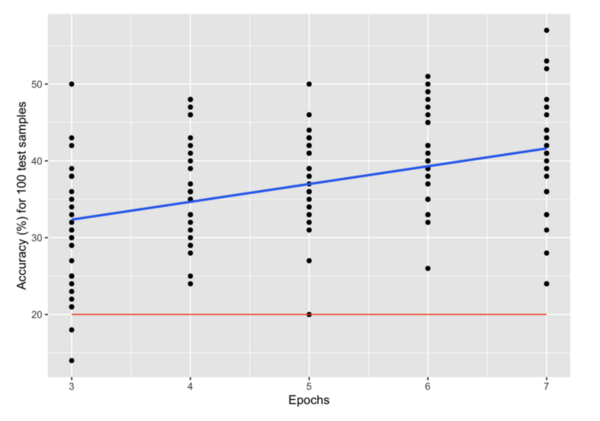
In this study the authors looked at developing a more efficient particle collision classification method with the goal of being able to more efficiently analyze particle trajectories from large-scale particle collisions without loss of accuracy.
Read More...The relationship between multilingualism and visual imagery: Investigating aphantasia using the VVIQ
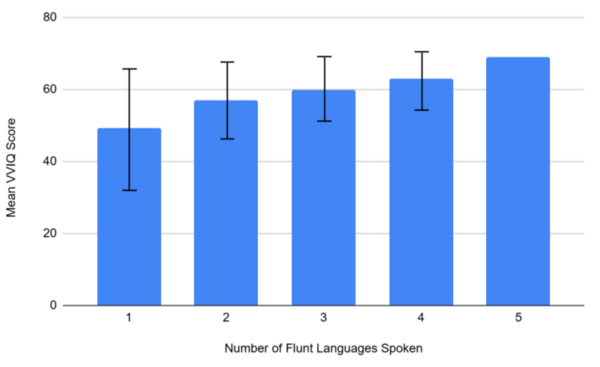
The authors looked at the correlation between being able to speak more than one language (multilingualism) and visual imagery. They found multilingual individuals had higher visual imagery as measured by the VVIQ.
Read More...Predicting college retention rates from Google Street View images of campuses
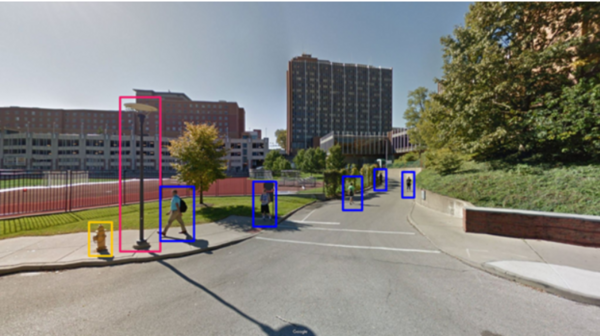
Every year, around 40% of undergraduate students in the United States discontinue their studies, resulting in a loss of valuable education for students and a loss of money for colleges. Even so, colleges across the nation struggle to discover the underlying causes of these high dropout rates. In this paper, the authors discuss the use of machine learning to find correlations between the built environment factors and the retention rates of colleges. They hypothesized that one way for colleges to improve their retention rates could be to improve the physical characteristics of their campus to be more pleasing. The authors used image classification techniques to look at images of colleges and correlate certain features like colors, cars, and people to higher or lower retention rates. With three possible options of high, medium, and low retention rates, the probability that their models reached the right conclusion if they simply chose randomly was 33%. After finding that this 33%, or 0.33 mark, always fell outside of the 99% confidence intervals built around their models’ accuracies, the authors concluded that their machine learning techniques can be used to find correlations between certain environmental factors and retention rates.
Read More...Chemoreception in Aurelia aurita studied by AI-enhanced image analysis

The authors studied the chemoreception of moon jellyfish in response to food, and developed an AI tool to identify track and quantify the pulsation of swimming jellyfish.
Read More...Convolutional neural network-based analysis of pediatric chest X-ray images for pneumonia detection
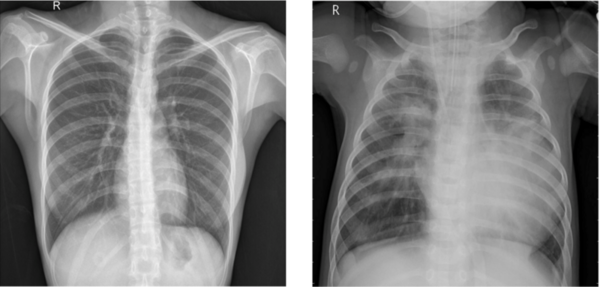
The authors test various machine learning models to improve the accuracy and efficiency of pneumonia diagnosis from X-ray images.
Read More...Calculating the dynamic viscosity of a fluid using image processing of a falling ball
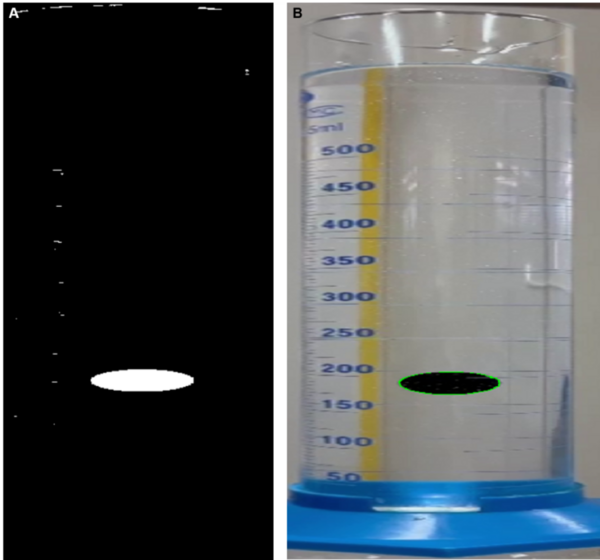
The authors measure changes in the viscosity of glycerol with increasing temperature using the falling ball approach.
Read More...Evaluating machine learning algorithms to classify forest tree species through satellite imagery

Here, seeking to identify an optimal method to classify tree species through remote sensing, the authors used a few machine learning algorithms to classify forest tree species through multispectral satellite imagery. They found the Random Forest algorithm to most accurately classify tree species, with the potential to improve model training and inference based on the inclusion of other tree properties.
Read More...