Browse Articles

The Effects of Atmospheric Attenuation on Cosmic Ray Muons: How is Surface Level Cosmic Ray Muon Flux Affected by Atmospheric Attenuation?

Sun et al. | Sep 11, 2021

The Effects of Atmospheric Attenuation on Cosmic Ray Muons: How is Surface Level Cosmic Ray Muon Flux Affected by Atmospheric Attenuation?

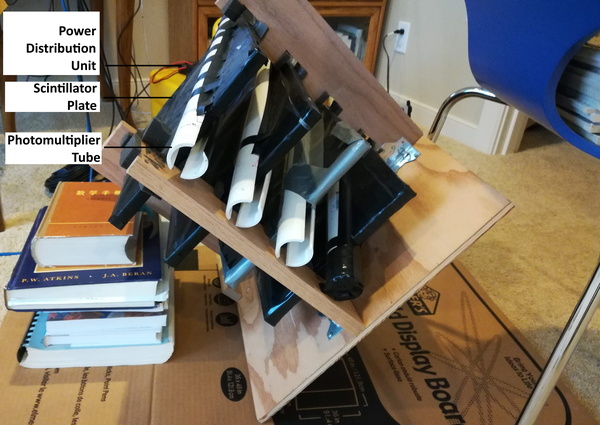
Cosmic rays are high-energy astronomical particles originating from various sources across the universe. Here, The authors sought to understand how surface-level cosmic-ray muon flux is affected by atmospheric attenuation by measuring the variation in relative muon-flux rate relative to zenith angle, testing the hypothesis that muons follow an exponential attenuation model. The attenuation model predicts an attenuation length of 6.3 km. This result implies that only a maximum of 24% of muons can reach the Earth’s surface, due to both decay and atmospheric interactions.

Read More...

Determination of Optimal Relevant Joint Angles for Vertical Jump Height Across Teenagers with Differing Amounts of Jumping Experience

Bahng et al. | May 09, 2021

Determination of Optimal Relevant Joint Angles for Vertical Jump Height Across Teenagers with Differing Amounts of Jumping Experience

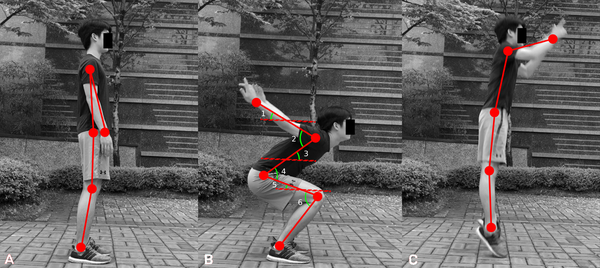
Reaching one’s maximum jump height requires optimizing one’s jump techniques. In order to find this optimal jump technique, three high school participants with varying vertical jump (VJ) abilities recorded videos of themselves with varying degrees of maximum/minimum shoulder, knee, and hip angles—with or without respect to the horizontal—at the isometric phase of a regular countermovement (CM) VJ or countermovement jump (CMJ). Results showed that the shoulder angle without respect to the horizontal (SA), knee angle with respect to the horizontal (KAH), and the hip angle with respect to the horizontal (HAH) possessed a more consistent correlation with VJ height across the subjects compared to the same respective angles with opposite relations to the horizontal.

Read More...

PID and fuzzy logic optimization of the pitch control of wind turbines

Zhou et al. | Jan 28, 2025

PID and fuzzy logic optimization of the pitch control of wind turbines
Image credit: The authors

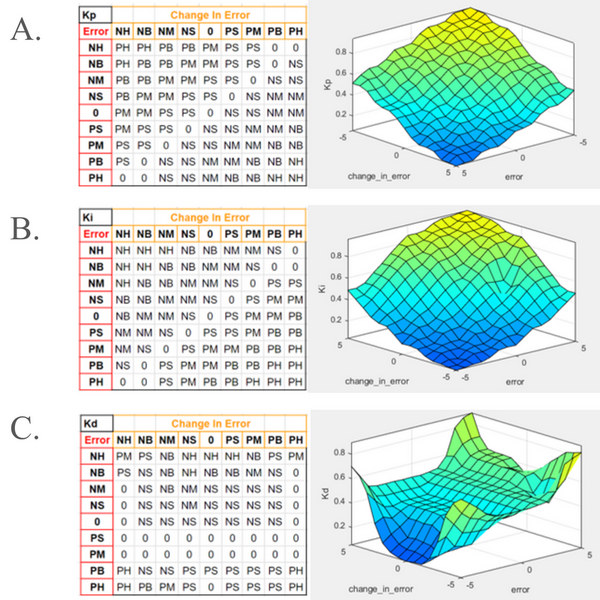
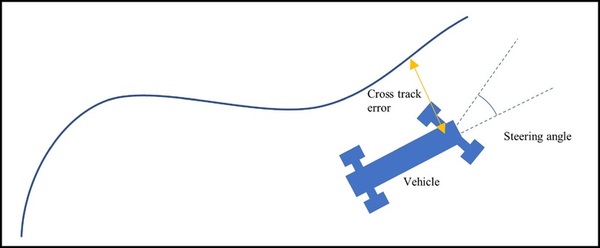
Wind turbines are a valuable source of renewable energy, but face challenges related to unpredictable wind speed. The turbine must be able to control its angle to catch enough wind to generate electricity, while avoiding excess wind that may damage the turbine. Zhou and Wang explore different types of smart turbine controllers to see which appears optimal for electricity generation.

Read More...

Development of novel biodegradable bioplastics for packaging film using mango peels

Wang et al. | Apr 06, 2025

Development of novel biodegradable bioplastics for packaging film using mango peels
Image credit: JACQUELINE BRANDWAYN

Here the authors explored the development of biodegradable bioplastic films derived from mango peels as a sustainable solution to plastic pollution and greenhouse gas emissions from fruit waste. They optimized the film's mechanical properties and water resistance through adjusting processing conditions and incorporating plasticizers and a hydrophobic coating, ultimately demonstrating its potential as a bacteriostatic and biodegradable alternative to conventional plastic food wrap.

Read More...

Locating sources of a high energy cosmic ray extensive air shower using HiSPARC data

Aziz et al. | Oct 24, 2023

Locating sources of a high energy cosmic ray extensive air shower using HiSPARC data

Using the data provided by the University of Twente High School Project on Astrophysics Research with Cosmics (HiSPARC), an analysis of locations for possible high-energy cosmic ray air showers was conducted. An example includes an analysis conducted of the high-energy rain shower recorded in January 2014 and the use of Stellarium™ to discern its location.

Read More...

Changing the surface properties of the backside of a silicon wafer to repel oil and prevent particle binding

Choi et al. | Feb 14, 2025

Changing the surface properties of the backside of a silicon wafer to repel oil and prevent particle binding

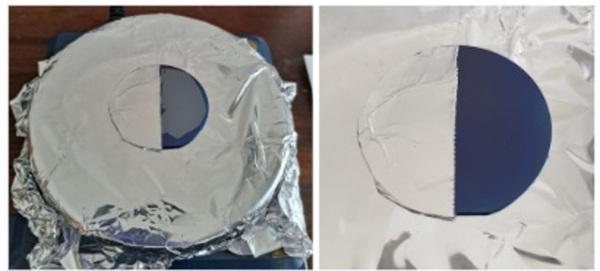
Wafers, essential in microchip production, can develop issues like leveling problems and wafer slip due to the formation of silanol bonds on their backside, which attract silica particles and oil. Authors tested addressing this issue with a coating of [acetoxy(polyethyleneoxy)propyl]triethoxysilane (APTS) applied to the wafer’s backside, preventing particle binding and oil adherence.

Read More...

An Analysis of the Mathematical Accuracy of Perspective in Paintings

Grewal et al. | Dec 13, 2019

An Analysis of the Mathematical Accuracy of Perspective in Paintings

Here the authors investigate whether there are mathematical inaccuracies of perspective in artists' paintings that are undetectable with our naked eyes. Using the cross-ratio method, they find that there are three significant errors in various famous paintings which increase as the structures in the paintings recede from the viewer.

Read More...

The optical possibilities of gelatin

Parikh et al. | Mar 28, 2024

The optical possibilities of gelatin
Image credit: Lensabl

Here the authors investigated the optical possibilities of gelatin and acrylic in regards to potential implementations at soft contact lenses. They fabricated lenses of different shapes and evaluated the refraction of laser light finding that gelatin needed to be thickened or increased in curvature to account for its lower refractive index compared to plastics, or used in a mixture to strengthen the lens.

Read More...