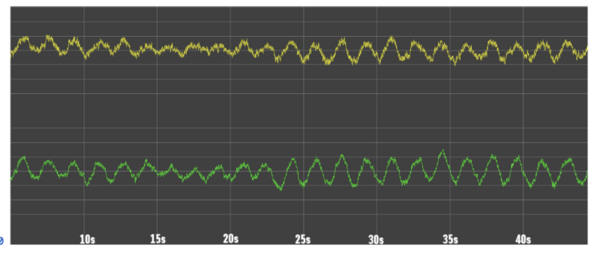
The authors use machine learning to analyze electroencephalogram data and identify slowing patterns that can indicate undetected disorders like epilepsy or dementia
Read More...Temporal characterization of electroencephalogram slowing activity types
The authors use machine learning to analyze electroencephalogram data and identify slowing patterns that can indicate undetected disorders like epilepsy or dementia
Read More...Uncovering the hidden trafficking trade with geographic data and natural language processing

The authors use machine learning to develop an evidence-based detection tool for identifying human trafficking.
Read More...Indole-3 carbinol on lipid accumulation in Caenorhabditis elegans as a novel therapeutic for Type II Diabetes
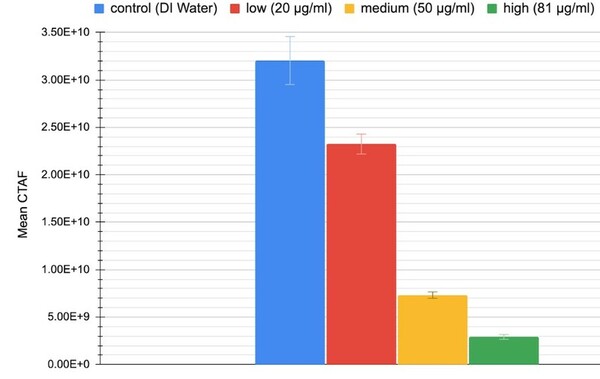
In this study the authors look at the use of Indole 3 Carbinol as a treatment for Type II Diabetes finding that it may be an effective treatment.
Read More...Effect of heme vs. non-heme iron supplements on gut microbiome fitness

Here, based on identification of iron deficiencies of a majority of people around the world, the authors sought to understand how the two main forms of dietary iron, heme and non-heme, affect the bacteria found in the human gut. by using a cell plate study, they found that bacterial growth increased with increasing concentration os either form of iron, up until the point where the high iron content resulted in cytotoxicity. They suggest this evidence points to the potential dangers of overconsumption of iron.
Read More...Identification of a core set of model agnostic mRNA associated with nonalcoholic steatohepatitis (NASH)
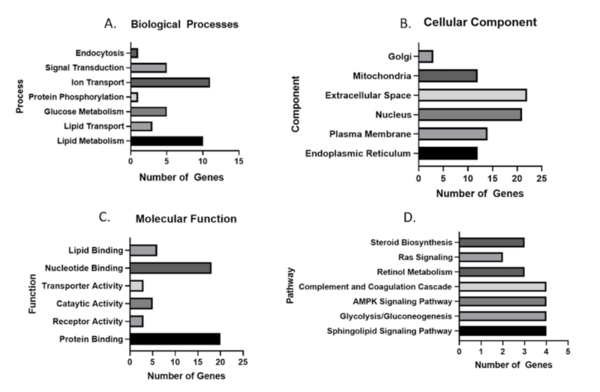
In this study, the authors analyze gene expression datasets to determine if there is a core set of genes dysregulated during nonalcoholic steatohepatitis.
Read More...Impact of salinity and phosphorus on growth of Phaseolus Vulgaris inoculated with Arbuscular Mycorrhizal Fungi

Here, recognizing a declining supply of rock phosphate, as well as its role in crop fertilization, the authors investigated a fungus that forms a symbiotic relationship with many crops. They found that symbiosis between the fungus and common bean plant increased the affinity of the plant towards absorbing nutrients as evidenced by lower root-to-shoot ratios in beans planted in soil with various concentrations of phosphorous and salinity.
Read More...A novel bioreactor system to purify contaminated runoff water
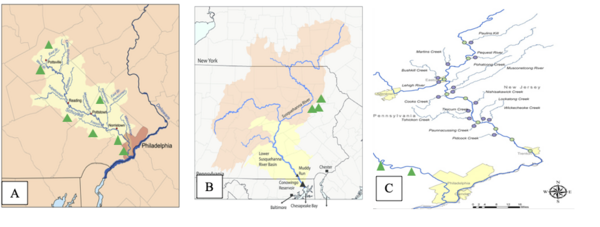
In this study, the authors engineer a cost-effective and bio-friendly water purification system using limestone, denitrifying bacteria, and sulfate-reducing bacteria. They evaluated its efficacy with samples from Eastern PA industrial sites.
Read More...Testing Different Polymers and Boron Nitride Nanotube Properties in Fabrication of Ion-selective Membranes
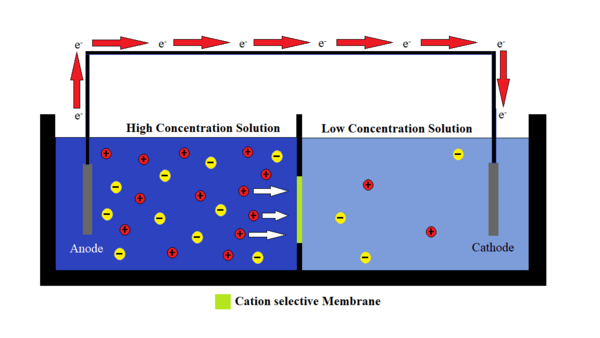
One largely untapped source of clean energy is the use of osmotic gradients where freshwater and saltwater are mixed, for example at estuaries. To harness such energy, charge-selective membranes are needed to separate the anions and cations in saltwater, establishing an electric potential like a battery. The objective of this study was twofold: to investigate the creation of the polymer matrix and test the properties of boron nitride nanotubes, as both are essential in the creation of an ion-selective membrane. Out of three polymer samples tested in this study, the mixture known as Soltech 704 showed the best resistance to etching, as well as the highest UV cure rate.
Read More...FCRL3 Gene Association with Asthma and Allergic Rhinitis

This study sought to determine if there is an association between the single nucleotide polymorphism rs7528684 of the Fc receptor-like-3 (FCRL3) gene and asthma or allergic rhinitis (AR). Based on previous studies in an Asian population, we hypothesized that participants with an AA genotype of FCRL3 would be more likely to have asthma and/or allergic rhinitis. To test the hypothesis, surveys were administered to participants, and genotyping was performed on spit samples via PCR, restriction digest, and gel electrophoresis.
Read More...Peptidomimetics Targeting the Polo-box Domain of Polo-like Kinase 1
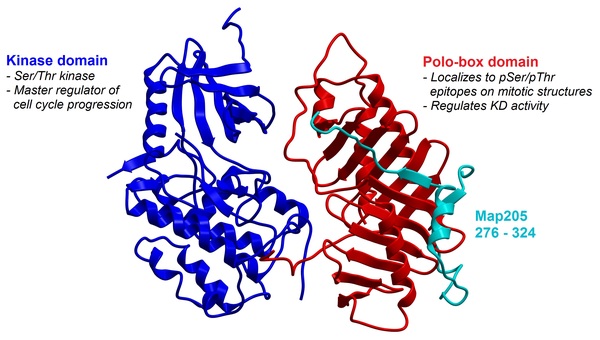
Polo-like kinase 1 (Plk1) is a master regulator of mitosis, initiating key steps of cell cycle regulation, and its overexpression is associated with certain types of cancer. In this study, the authors carefully designed peptides that were able to bind to Plk1 at a location that is important for its proper localization and function. Future studies could further develop these peptides to selectively target Plk1 in cancer cells and induce mitotic arrest.
Read More...