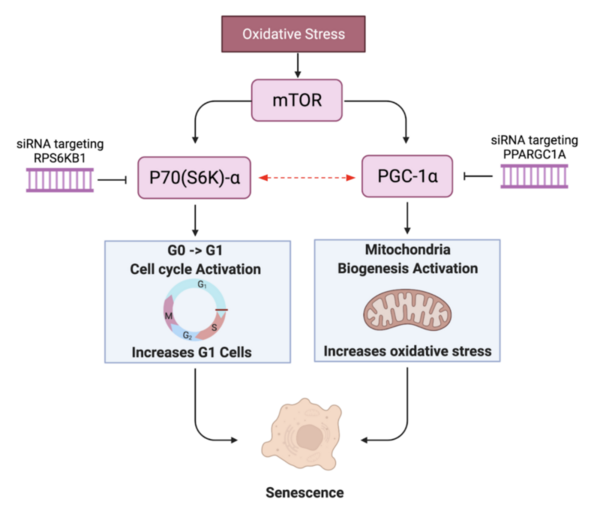
Cellular senescence plays a key role in aging cells and is attributed to a number of disease and pathology. These authors find that genetic editing of both RPS6KB1 and PPARGC1A revitalizes a human skin fibroblast cell line.
Read More...Innovative Treatment for Reducing Senescence and Revitalizing Aging Cells through Gene Silencing
Cellular senescence plays a key role in aging cells and is attributed to a number of disease and pathology. These authors find that genetic editing of both RPS6KB1 and PPARGC1A revitalizes a human skin fibroblast cell line.
Read More...Indoor near-field target detection characteristics under radio and radar joint operation at 2.4 GHz ISM band
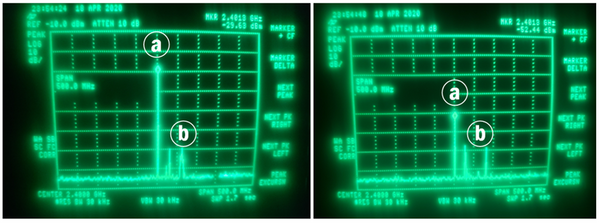
In our modern age, the burgeoning use of radios and radars has resulted in competition for electromagnetic spectrum resources. With recent research highlighting solutions to radio and radar mutual interference, there is a desperate need for a cost-effective configuration that permits a radar-radio joint system. In this study, the authors have set out to determine the feasibility of using single-tone continuous-wave radars in a radar-joint system. With this system, they aim to facilitate cost-effective near-field target detection by way of the popularized 2.4-GHz industrial, scientific, and medical (ISM) band.
Read More...A new therapy against MDR bacteria by in silico virtual screening of Pseudomonas aeruginosa LpxC inhibitors
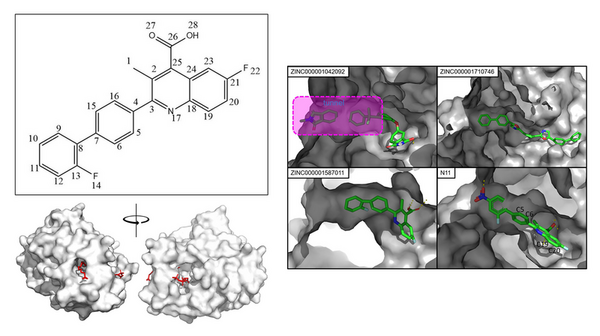
Here, seeking to address the growing threat of multidrug-resistant bacteria (MDR). the authors used in silico virtual screening to target MDR Pseudomonas aeruginosa. They considered a key protein in its biosynthesis and virtually screened 20,000 candidates and 30 derivatives of brequinar. In the end, they identified a possible candidate with the highest degree of potential to inhibit the pathogen's lipid A synthesis.
Read More...Determining surface tension of various liquids and shear modulus of paper using crumpling effect
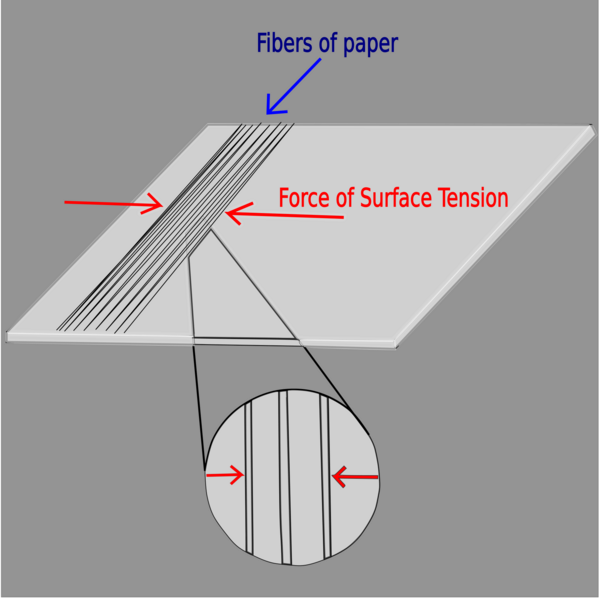
In this article, the authors investigate the shear modulus of different types of paper in the setting of the crumpling effect.
Read More...Racemic serine is less soluble than pure enantiomers due to stronger intermolecular hydrogen bonds
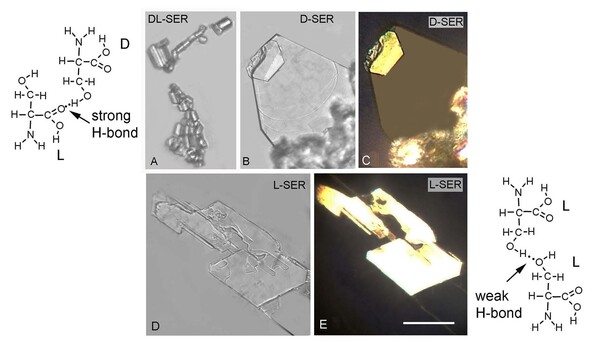
Seeking to develop a better understanding of the chemical and physical properties of amino acids that compose proteins, here the authors investigated the unusual relative insolubility of racemic mixtures of D- and L-serine compared to the solubility of pure D- or L-serine. The authors used a combination of microscopy and temperature measurements alongside previous X-ray diffraction studies to conclude that racemic DL-serine crystals consist of comparatively stronger hydrogen bond interactions compared to crystals of pure enantiomers. These stronger interactions were found to result in the unique release of heat during the crystallization of racemic mixtures.
Read More...Constructing an equally weighted stock portfolio based on systematic risk (beta)

In this article, the authors investigate whether stock selection across various sectors is efficient enough to outperform an overall market. Stocks from 2006 to 2020 were selected across sectors to calculate beta values using the Capital Asset Pricing Model.
Read More...A Quantitative Assessment of Time, Frequency, and Time-frequency Algorithms for Automated Seizure Detection and Monitoring
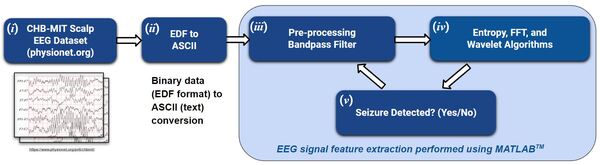
Each year, over 100,000 patients die from Sudden Unexpected Death in Epilepsy (SUDEP). A reliable seizure warning system can help patients stay safe. This work presents a comprehensive, comparative analysis of three different signal processing algorithms for automated seizure/ictal detection. The experimental results show that the proposed methods can be effective for accurate automated seizure detection and monitoring in clinical care.
Read More...Analysis of reduction potentials to determine the most efficient metals for electrochemical cell alternatives
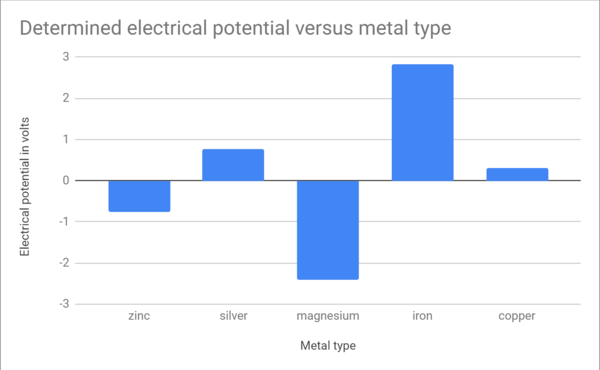
In this study, the authors investigate what metals make the most efficient electrochemical cells, which are batteries that use the difference in electrical potential to generate electricity. Calculations predicted that a cell made of iron and magnesium would have the highest efficiency. Construction of an electrochemical cell of iron and magnesium produced voltages close to the theoretical voltage predicted. These findings are important as work continues towards making batteries with the highest storage efficiency possible.
Read More...Integration of iron oxide nanoparticles into high-density polyethylene for sustainable cup coatings
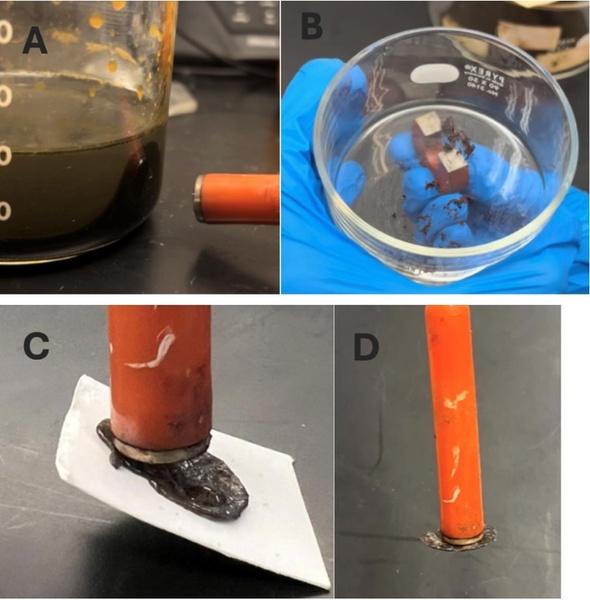
Here the authors propose integrating magnetic iron (II) oxide nanoparticles into the high-density polyethylene linings of disposable paper cups to create a waterproof, magnetically responsive composite liner. Their findings demonstrate that these nanoparticles successfully bond with the plastic layer without disrupting its structural integrity, offering a viable method to improve plastic recovery through magnetic recycling and mitigate global microplastic pollution.
Read More...Innovative use of recycled textile fibers in building materials: A circular economy approach
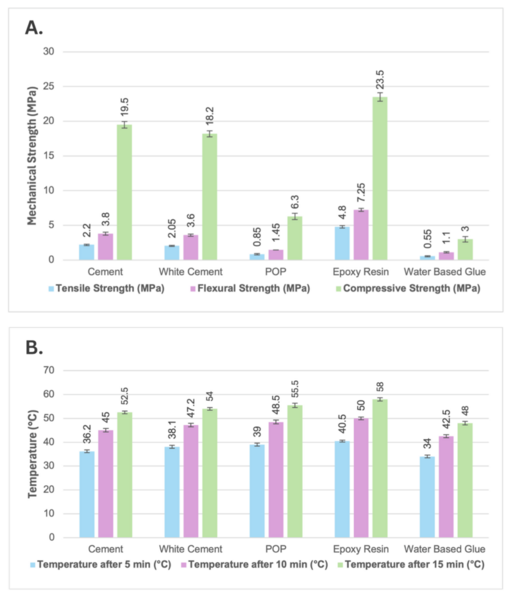
Textile waste from the fashion industry is a major environmental pollutant, but recycling waste into novel building material is a strategy to reduce the negative effects. This manuscript characterized five different binders that can be used to repurpose textile waste into bricks for construction purposes. Water-based glue, cement, white cement, plaster of Paris, and epoxy resin were mixed with shredded textile waste, and the mechanical characteristics and thermal insulation of each brick type were measured. Bricks with increased mechanical strength had the poorest thermal resistance, and the contrasting properties would suit different building purposes. This work provides a first step in generating recycled textile bricks for construction in a circular economy framework.
Read More...