Browse Articles

A new hybrid cold storage material

Zhang et al. | Jun 05, 2022

A new hybrid cold storage material

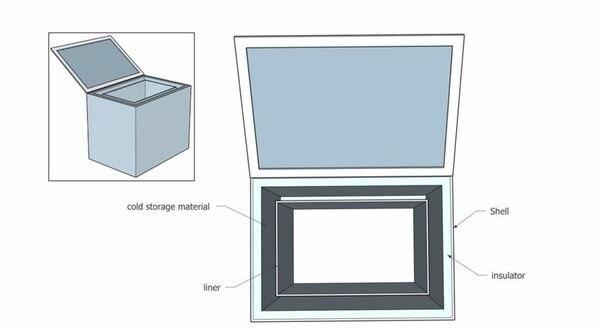
With low-temperature transportation being critical for the progress of research and medical services by preserving biological samples and vaccines, the optimization of cold storage materials is more critical now than ever. The exclusive use of dry ice has its limitations. Notably, it proves insufficient for cold storage during long-range transportation necessary for the delivery of specimens to rural areas. In this article, the authors have proposed a new means of cold storage through the combination of dry ice and ethanol. Upon thorough analysis, the authors have determined their new method as considerably better than the use of pure dry ice across many characteristics, including cold storage capacity, longevity of material, and financial and environmental feasibility.

Read More...
Characterizing Quorum Sensing-Induced Bioluminescence in Variable Volumes With Vibrio fischeri Using Computer Processing Methods

Abdel-Azim et al. | Jun 22, 2020

Characterizing Quorum Sensing-Induced Bioluminescence in Variable Volumes With <em>Vibrio fischeri</em> Using Computer Processing Methods

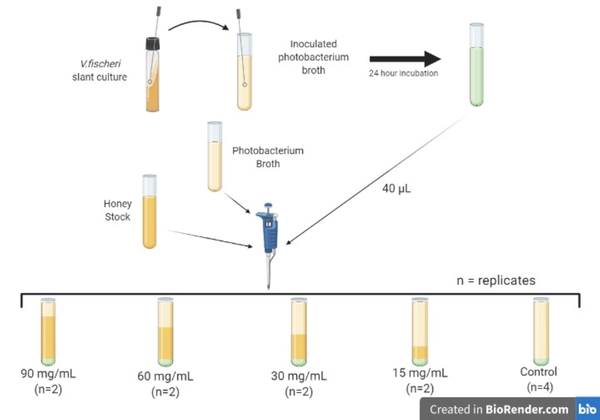
Understanding how bacteria respond to other bacteria could facilitate their ability to initiate and maintain their infectiousness. The phenomenon by which bacteria signal to each other via chemical signals is called quorum sensing, which could be targeted to deter bacterial infection in some cases if better understood. In this article, the authors study how a bacterium called V. fischeri uses quorum sensing to change bioluminescence, an easy readout that facilitates studying quorum sensing in this strain.

Read More...

The characterization of quorum sensing trajectories of Vibrio fischeri using longitudinal data analytics

Abdel-Azim et al. | Dec 16, 2023

The characterization of quorum sensing trajectories of <i>Vibrio fischeri</i> using longitudinal data analytics

Quorum sensing (QS) is the process in which bacteria recognize and respond to the surrounding cell density, and it can be inhibited by certain antimicrobial substances. This study showed that illumination intensity data is insufficient for evaluating QS activity without proper statistical modeling. It concluded that modeling illumination intensity through time provides a more accurate evaluation of QS activity than conventional cross-sectional analysis.

Read More...