Browse Articles

The optimization of high-protein duckweed cultivation in eutrophicated water with mutualistic bacteria

Akkarajeerawat et al. | Mar 18, 2025

The optimization of high-protein duckweed cultivation in eutrophicated water with mutualistic bacteria

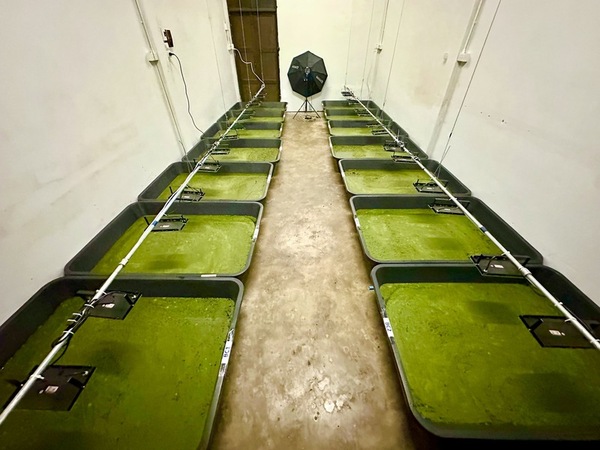
he rapid growth of the human population is driving food crises in Thailand and Southeast Asia, while contributing to global food insecurity and a larger carbon footprint. One potential solution is cultivating duckweed (Wolffia globosa) for consumption, as it grows quickly and can provide an alternative protein source. This research explored two methods to optimize duckweed cultivation: using phosphorus- and nitrogen-rich growing media and plant growth-promoting bacteria (PGPB).

Read More...

Investigating Lemna minor and microorganisms for the phytoremediation of nanosilver and microplastics

Iyer et al. | Apr 01, 2024

Investigating <i>Lemna minor</i> and microorganisms for the phytoremediation of nanosilver and microplastics

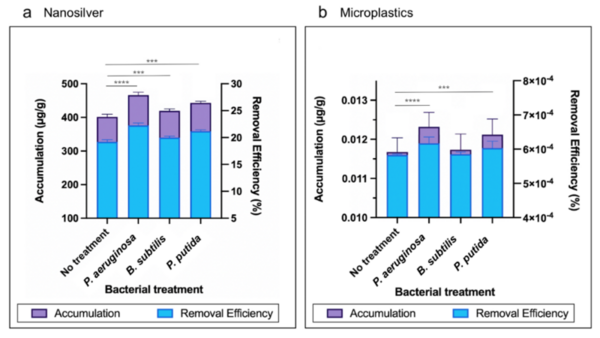
The authors looked at phytoremediation, the process by which plants are used to remove pollutants from our environment, and the ability of Lemna minor to perform phytoremediation in various simulated polluted environments. The authors found that L. minor could remove pollutants from the environment and that the addition of bacteria increased this removal.

Read More...

Rhizosphere metagenome analysis and wet-lab approach to derive optimal strategy for lead remediation in situ

Bhat et al. | Jul 18, 2023

Rhizosphere metagenome analysis and wet-lab approach to derive optimal strategy for lead remediation <i>in situ</i>
Image credit: Karolina Grabowska

The Environmental Protection Agency (EPA) reports a significant number of heavy metal-contaminated sites across the United States. To address this public health concern, rhizoremediation using microbes has emerged as a promising solution. Here, a combination of soil microbes were inoculated in the rhizosphere in soil contaminated with 500 parts per million (ppm) of lead. Results showed rhizoremediation is an effective bioremediation strategy and may increase crop productivity by converting nonarable lands into arable lands.

Read More...

Evaluating cinnamaldehyde as an antibacterial agent in a produce wash for leafy greens

Drennan et al. | Oct 28, 2021

Evaluating cinnamaldehyde as an antibacterial agent in a produce wash for leafy greens

Recognizing a growing demand for organic produce, the authors sought to investigate plant-based antibiotic solutions to meet growing consumer demand for safe produce and also meet microbial standards of the USDA. The authors investigated the use of cinnamaldehyde as an antibacterial again E. coli, finding that lettuce treated with cinnamaldehyde displayed significantly lower colony-forming units of E. coli when compared to lettuce treated with chlorine bleach.

Read More...

Investigating auxin import and export proteins in Chlorella vulgaris

Wang et al. | Apr 19, 2025

Investigating auxin import and export proteins in <i>Chlorella vulgaris</i>

This study explores auxin signaling in Chlorella vulgaris, a green alga with potential for sustainable biofuel and food production. Evidence from protoplast swelling experiments suggests that C. vulgaris secretes auxin and possesses auxin import proteins, highlighting previously uncharacterized signaling pathways. These findings could support more efficient cultivation and resource extraction strategies.

Read More...

Detection and Control of Spoilage Fungi in Refrigerated Vegetables and Fruits

Chari et al. | May 16, 2021

Detection and Control of Spoilage Fungi in Refrigerated Vegetables and Fruits

Food spoilage leads to a significant loss in agricultural produce each year. Here, the authors investigate whether certain essential oils can protect against fungus-mediated spoilage of fruits and vegetables. Their results suggest that the compounds they tested might indeed inhibit fungal growth, at various temperatures, a promising result that could reduce food wasting.

Read More...

Effect Of SMC On The Growth Of Bean, Cherry Tomato And Roma Tomato Plant

Rao et al. | Sep 12, 2020

Effect Of SMC On The Growth Of Bean, Cherry Tomato And Roma Tomato Plant

Mushroom compost, also called Spent Mushroom Substrate or Spent Mushroom Compost (SMC), is suitable for a variety of plants. Previous research has found that the application of SMC will increase plant growth. However, it is unclear which exact proportions of SMC and soil will maximize tomato and bean plant growth. We showed that the hypothesized growth media with 30% SMC optimizes seed germination, plant height, number of leaves, and survival rate compared to other combinations of growth media. Our research suggests that SMC is a useful alternative for conventional fertilizers.

Read More...

Effects of plant-derived smoke water on germination and growth in stressed plants

Ge et al. | Apr 08, 2026

Effects of plant-derived smoke water on germination and growth in stressed plants

Here the authors investigated the potential of plant-derived smoke water to mitigate the negative impacts of abiotic stressors, such as heat, salinity, and water fluctuations, on the germination and growth of various agricultural crops. Their findings suggest that smoke water, specifically from buckwheat, pea, and radish, significantly improves plant resilience against drought and excessive water stress, offering a viable strategy to bolster food security in the face of climate change.

Read More...