Browse Articles

LawCrypt: Secret Sharing for Attorney-Client Data in a Multi-Provider Cloud Architecture

Zhang et al. | Jul 19, 2020

LawCrypt: Secret Sharing for Attorney-Client Data in a Multi-Provider Cloud Architecture

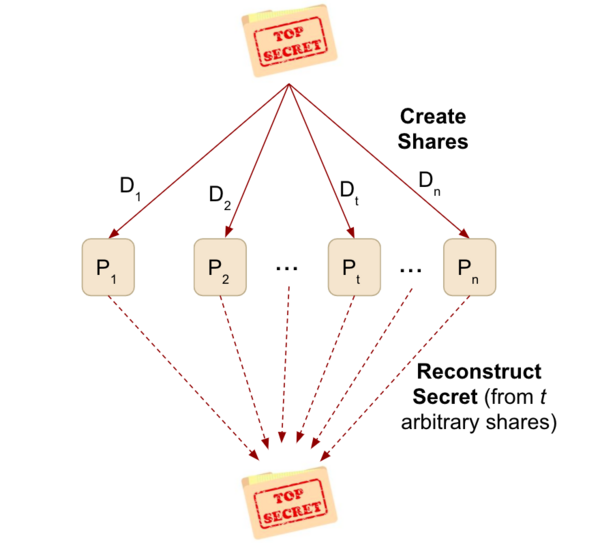
In this study, the authors develop an architecture to implement in a cloud-based database used by law firms to ensure confidentiality, availability, and integrity of attorney documents while maintaining greater efficiency than traditional encryption algorithms. They assessed whether the architecture satisfies necessary criteria and tested the overall file sizes the architecture could process. The authors found that their system was able to handle larger file sizes and fit engineering criteria. This study presents a valuable new tool that can be used to ensure law firms have adequate security as they shift to using cloud-based storage systems for their files.

Read More...

Investigating KNOX Gene Expression in Aquilegia Petal Spur Development

Hossain et al. | Feb 03, 2014

Investigating KNOX Gene Expression in Aquilegia Petal Spur Development

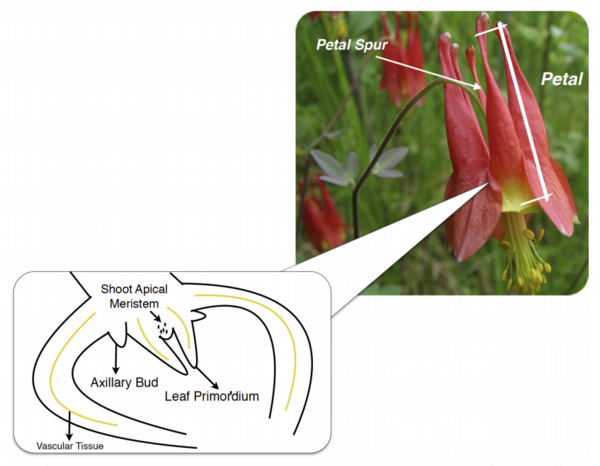
Plants, and all other multi-cellular organisms, develop through the coordinated action of many sets of genes. The authors here investigate the genes, in a class named KNOX, potentially responsible for organizing a certain part of Aquilegia (columbine) flowers called petal spurs. Through the technique Reverse Transcription-Polymerase Chain Reaction (RT-PCR), they find that certain KNOX genes are expressed non-uniformly in petal spurs, suggesting that they may be involved, perhaps in a cell-specific manner. This research will help guide future efforts toward understanding how many beautiful flowers develop their unique shapes.

Read More...
Enhancing the quantum efficiency of a silicon solar cell using one dimensional thin film interferometry

Ahuja et al. | May 03, 2024

Enhancing the quantum efficiency of a silicon solar cell using one dimensional thin film interferometry
Image credit: American Public Power Association

Here, recognizing the need to improve the efficiency of the conversion of solar energy to electrical energy, the authors used MATLAB to mathematically simulate a multi-layered thin film with an without an antireflective coating. They found that the use of alternating ZnO-SiO2 multilayers enhanced the transmission of light into the solar cell, increasing its efficiency and reducing the reflectivity of the Si-Air interface.

Read More...

Enhancing activity of antibiotics against Staphylococcus aureus with Shuang-Huang-Lian

Liu et al. | Sep 29, 2022

Enhancing activity of antibiotics against Staphylococcus aureus with Shuang-Huang-Lian

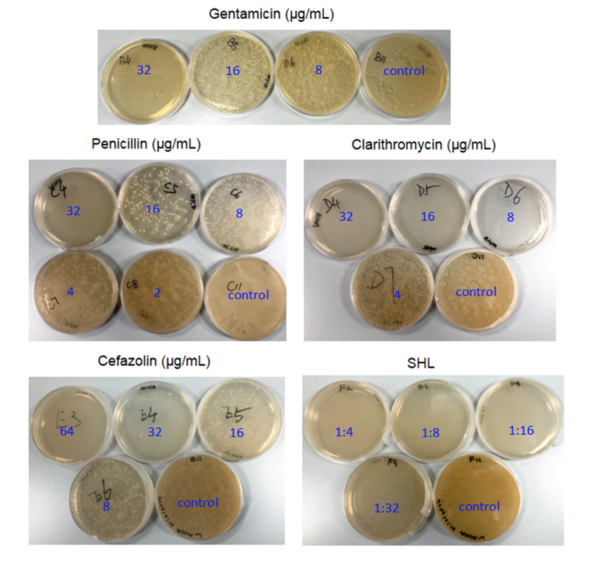
Staphylococcus aureus is a major pathogen in both hospitals and the community and can cause systemic infections such as pneumonia. Multi-drug resistant strains, such as Methicillin-resistant S. aureus (MRSA) are particularly worrisome. In order to reduce the development of bacterial resistance, we hypothesized that two selected traditional Chinese medicines, Shuang-Huang-Lian (SHL) and Lan-Qin, would be effective against S. aureus. The results showed that SHL had a synergistic effect with gentamicin as well as additive effects with penicillin and cefazolin against S. aureus compared with using antibiotics alone.

Read More...

Using DNA Barcodes to Evaluate Ecosystem Health in the SWRCMS Reserve

Horton et al. | Sep 27, 2018

Using DNA Barcodes to Evaluate Ecosystem Health in the SWRCMS Reserve

Although the United States maintains millions of square kilometers of nature reserves to protect the biodiversity of the specimens living there, little is known about how confining these species within designated protected lands influences the genetic variation required for a healthy population. In this study, the authors sequenced genetic barcodes of insects from a recently established nature reserve, the Southwestern Riverside County Multi-Species Reserve (SWRCMSR), and a non-protected area, the Mt. San Jacinto College (MSJC) Menifee campus, to compare the genetic variation between the two populations. Their results demonstrated that the midge fly population from the SWRCMSR had fewer unique DNA barcode sequence changes than the MSJC population, indicating that the comparatively younger nature reserve's population had likely not yet established its own unique genetic drift changes.

Read More...

Machine learning predictions of additively manufactured alloy crack susceptibilities

Gowda et al. | Nov 12, 2024

Machine learning predictions of additively manufactured alloy crack susceptibilities

Additive manufacturing (AM) is transforming the production of complex metal parts, but challenges like internal cracking can arise, particularly in critical sectors such as aerospace and automotive. Traditional methods to assess cracking susceptibility are costly and time-consuming, prompting the use of machine learning (ML) for more efficient predictions. This study developed a multi-model ML pipeline that predicts solidification cracking susceptibility (SCS) more accurately by considering secondary alloy properties alongside composition, with Random Forest models showing the best performance, highlighting a promising direction for future research into SCS quantification.

Read More...

Using two-stage deep learning to assist the visually impaired with currency differentiation

Nachnani et al. | Jun 02, 2024

Using two-stage deep learning to assist the visually impaired with currency differentiation
Image credit: Omer Shahzad

Here, recognizing the difficulty that visually impaired people may have differentiating United States currency, the authors sought to use artificial intelligence (AI) models to identify US currencies. With a one-stage AI they reported a test accuracy of 89%, finding that multi-level deep learning models did not provide any significant advantage over a single-level AI.

Read More...

The role of xpa-1 and him-1 in UV protection of Caenorhabditis elegans

Tung et al. | Feb 25, 2022

The role of <em>xpa-1</em> and <em>him-1</em> in UV protection of <em>Caenorhabditis elegans</em>

Caenorhabditis elegans xpa-1 and him-1 are orthologs of human XPA and human SMC1A, respectively. Mutations in the XPA are correlated with Xeroderma pigmentosum, a condition that induces hypersensitivity to ultraviolet (UV) radiation. Alternatively, SMC1A mutations may lead to Cornelia de Lange Syndrome, a multi-organ disorder that makes patients more sensitive to UVinduced DNA damage. Both C. elegans genes have been found to be involved in protection against UV radiation, but their combined effects have not been tested when they are both knocked down. The authors hypothesized that because these genes are involved in separate pathways, the simultaneous knockdown of both of these genes using RNA interference (RNAi) in C. elegans will cause them to become more sensitive to UV radiation than either of them knocked down individually. UV protection was measured via the percent survival of C. elegans post 365 nm and 5.4x10⁻¹⁹ joules of UV radiation. The double xpa-1/him-1 RNAi knockdown showed a significantly reduced percent survival after 15 and 30 minutes of UV radiation relative to wild-type and xpa-1 and him-1 single knockdowns. These measurements were consistent with their hypothesis and demonstrated that xpa-1 and him-1 genes play distinct roles in resistance against UV stress in C. elegans. This result raises the possibility that the xpa-1/him-1 double knockdown could be useful as an animal model for studying the human disease Xeroderma pigmentosum and Cornelia de Lange Syndrome.

Read More...

RNAi-based Gene Therapy Targeting ZGPAT Promotes EGF-dependent Wound Healing

Lee et al. | Nov 15, 2021

RNAi-based Gene Therapy Targeting ZGPAT Promotes EGF-dependent Wound Healing

Wound-healing involves a sequence of events, such as inflammation, proliferation, and migration of different cell types like fibroblasts. Zinc Finger CCCH-type with G-Patch Domain Containing Protein (ZGPAT), encodes a protein that has its main role as a transcription repressor by binding to a specific DNA sequence. The aim of the study was to find out whether inhibiting ZGPAT will expedite the wound healing process by accelerating cell migration. This treatment strategy can provide a key to the development of wound healing strategies in medicine and cellular biology.

Read More...