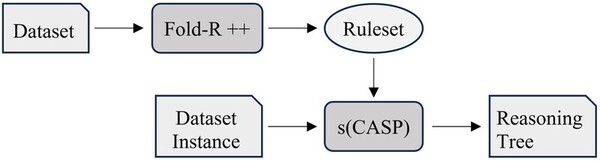
The authors compare current machine learning algorithms with a new Explainable AI algorithm that produces a human-comprehensible decision tree alongside predictions.
Read More...Explainable AI tools provide meaningful insight into rationale for prediction in machine learning models
The authors compare current machine learning algorithms with a new Explainable AI algorithm that produces a human-comprehensible decision tree alongside predictions.
Read More...It's better than me: Investigating the psychological risks of AI on self-esteem
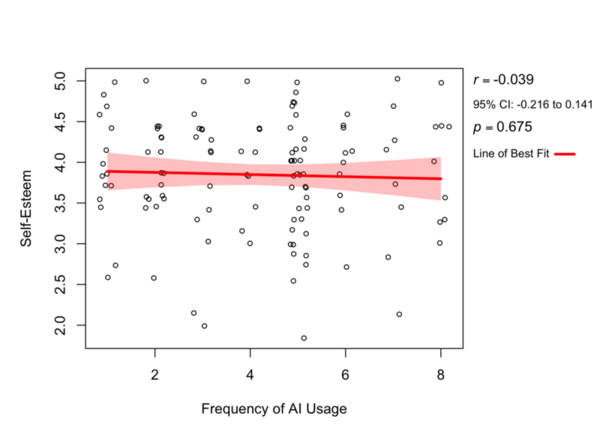
Here the authors investigated whether frequent use of generative AI tools triggers upward social comparison and negatively impacts users' performance self-esteem. Based on a survey of 121 adults, they found no significant relationship between AI usage and self-esteem, concluding that current chatbot interactions do not pose the same psychological threat as peer-based comparisons.
Read More...Levering machine learning to distinguish between optimal and suboptimal basketball shooting forms
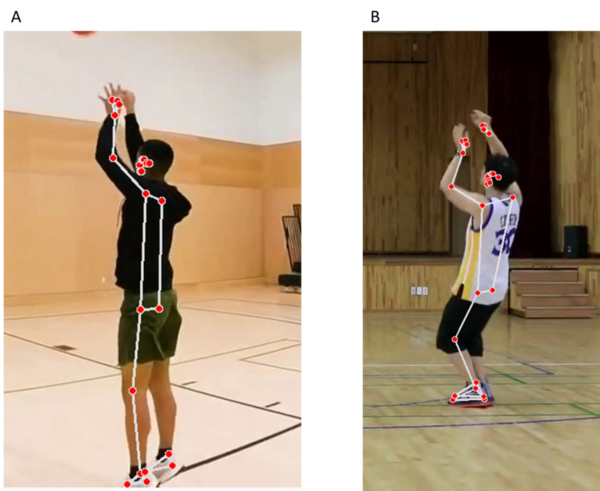
The authors looked at different ways to build computational resources that would analyze shooting form for basketball players.
Read More...Validating DTAPs with large language models: A novel approach to drug repurposing

Here, the authors investigated the integration of large language models (LLMs) with drug target affinity predictors (DTAPs) to improve drug repurposing, demonstrating a significant increase in prediction accuracy, particularly with GPT-4, for psychotropic drugs and the sigma-1 receptor. This novel approach offers to potentially accelerate and reduce the cost of drug discovery by efficiently identifying new therapeutic uses for existing drugs.
Read More...Evaluating the impact of prompting styles on LLM accuracy for AIME math questions
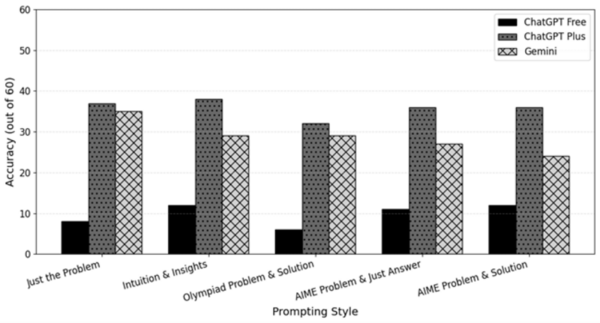
Large language models are increasingly used to solve math problems, but their ability to handle multi-step reasoning remains uncertain. In this study, students tested whether different prompting styles could improve LLM accuracy on challenging AIME math questions and found that detailed step-by-step solutions did not significantly outperform simpler prompts. These results suggest that improving LLM mathematical reasoning may require deeper model-level advances rather than changes in prompting style alone.
Read More...Chemoreception in Aurelia aurita studied by AI-enhanced image analysis

The authors studied the chemoreception of moon jellyfish in response to food, and developed an AI tool to identify track and quantify the pulsation of swimming jellyfish.
Read More...Mining social media posts: An alternative approach to understanding home health care workers’ experiences

This study developed an effective method for extracting valuable information from social media data and employed computer-assisted human coding alongside the AI-powered tool to analyze social media posts. The findings provide a deep understanding of the major challenges that home health care workers are experiencing and offer important implications regarding how to improve home healthcare workers' well-being, and provide suggestions on optimizing the home health care service experience.
Read More...Optimizing AI image detection using a Convolutional Neural Network model with Fast Fourier Transform
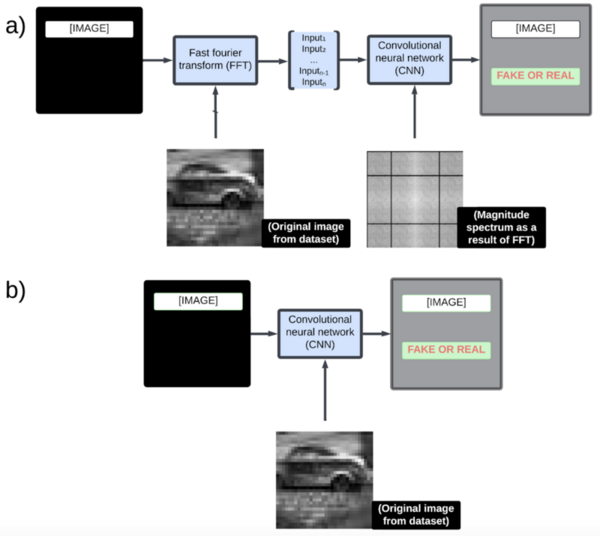
Recent advances in generative AI have made it increasingly hard to distinguish real images from AI-generated ones. Traditional detection models using CNNs or U-net architectures lack precision because they overlook key spatial and frequency domain details. This study introduced a hybrid model combining Convolutional Neural Networks (CNN) with Fast Fourier Transform (FFT) to better capture subtle edge and texture patterns.
Read More...Training neural networks on text data to model human emotional understanding
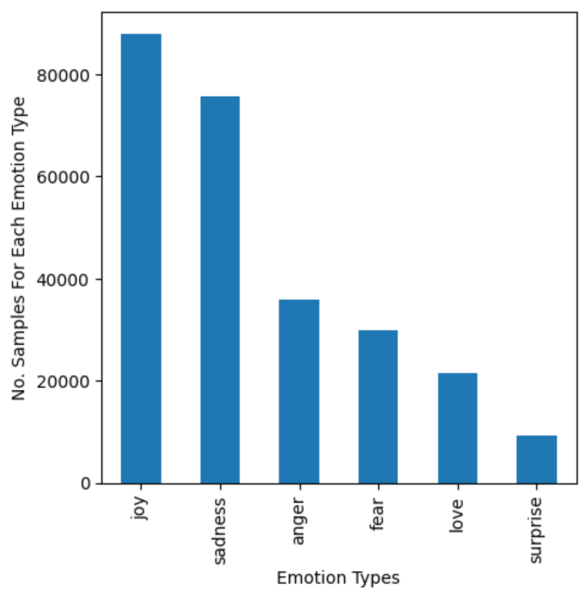
The authors train a neural network to detect text-based emotions including joy, sadness, anger, fear, love, and surprise.
Read More...Investigating the connection between free word association and demographics

Utilization of neural network to analyze Free Word Association to predict accurately age, gender, first language, and current country.
Read More...