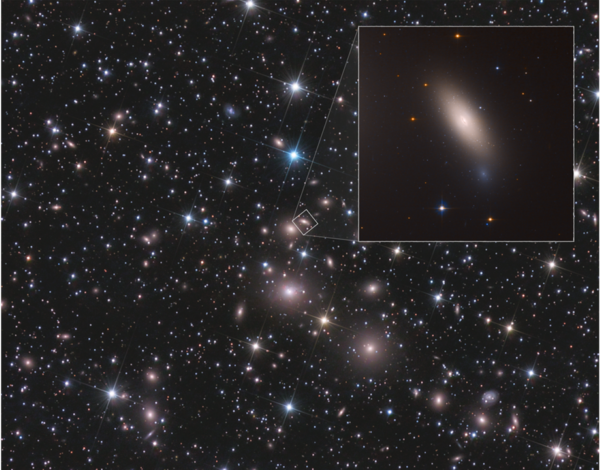
The authors re-examine the galactic kinematics of relic galaxy NGC 1277, recently identified as dark matter deficient, by reproducing its rotation curve with data from the George and Cynthia Mitchell Spectrograph.
Read More...Examination of the rotation curve for the dark matter deficient relic galaxy NGC 1277
The authors re-examine the galactic kinematics of relic galaxy NGC 1277, recently identified as dark matter deficient, by reproducing its rotation curve with data from the George and Cynthia Mitchell Spectrograph.
Read More...Human comprehension of 4-dimensional rotation
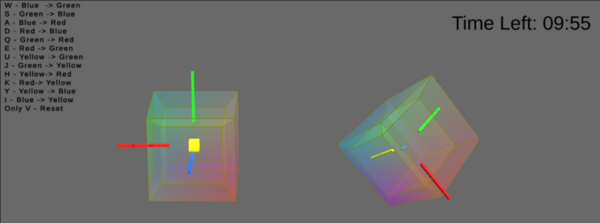
The authors looked at the ability subjects to rotation a 4D cube and how the ability to practice cube rotation impact their ability to understand 4D space.
Read More...The Cosmic Microwave Background: Galactic Foregrounds and Faraday Rotation
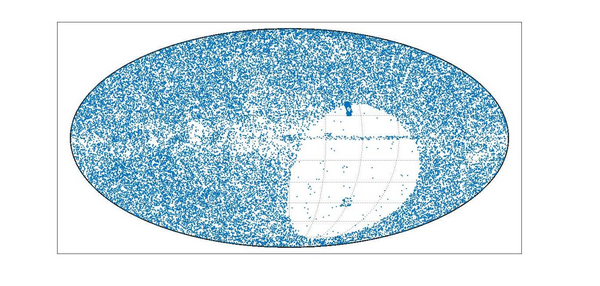
The cosmic microwave background (CMB) is faint electromagnetic radiation left over from early stages in the formation of the universe. In order to analyze the CMB, scientists need to remove from electromagnetic data foreground radiation that contaminates CMB datasets. In this study, students utilize extensive updated datasets to analyze the correlation between CMB maps and Faraday RM and WMAP sky maps.
Read More...Artificial intelligence face-tracking for a semi-virtual reality gaming experience

The authors studied the impact of AI face-tracking technology on the immersiveness of videogames as an alternative to virtual reality gaming.
Read More...Rubik’s cube: What separates the fastest solvers from the rest?
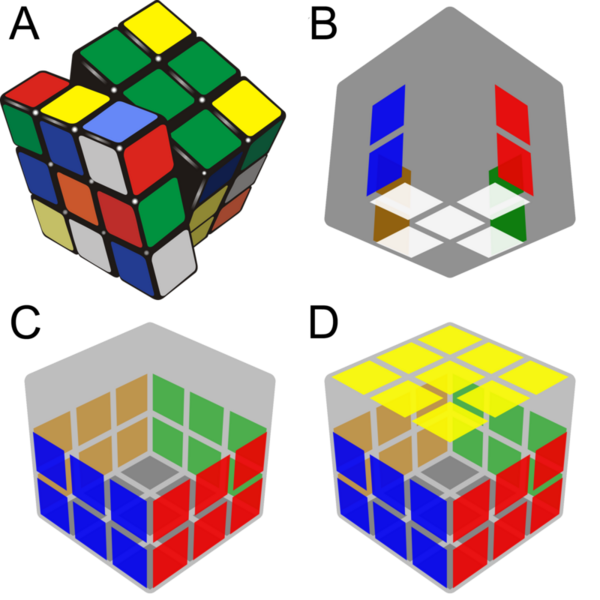
In this study, the authors assess the factors that allow some speedcubers to solve Rubik's Cubes faster than others.
Read More...Starts and Stops of Rhythmic and Discrete Movements: Modulation in the Excitability of the Corticomotor Tract During Transition to a Different Type of Movement
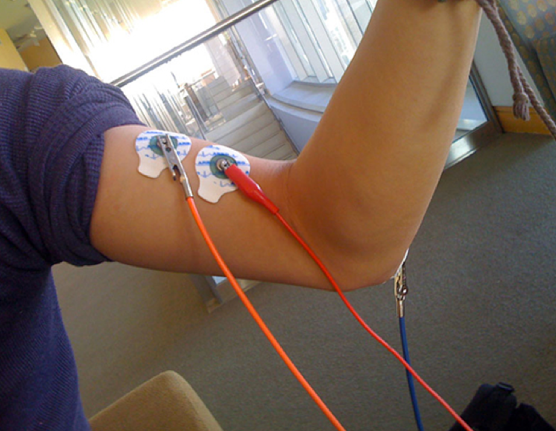
Control of voluntary and involuntary movements is one of the most important aspects of human neurological function, but the mechanisms of motor control are not completely understood. In this study, the authors use transcranial magnetic stimulation (TMS) to stimulate a portion of the motor cortex while subjects performed either discrete (e.g. throwing) or rhythmic (e.g. walking) movements. By recording electrical activity in the muscles during this process, the authors showed that motor evoked potentials (MEPs) measured in the muscles during TMS stimulation are larger in amplitude for discrete movements than for rhythmic movements. Interestingly, they also found that MEPs during transitions between rhythmic and discrete movements were nearly identical and larger in amplitude than those recorded during either rhythmic or discrete movements. This research provides important insights into the mechanisms of neurological control of movement and will serve as the foundation for future studies to learn more about temporal variability in neural activity during different movement types.
Read More...