Browse Articles

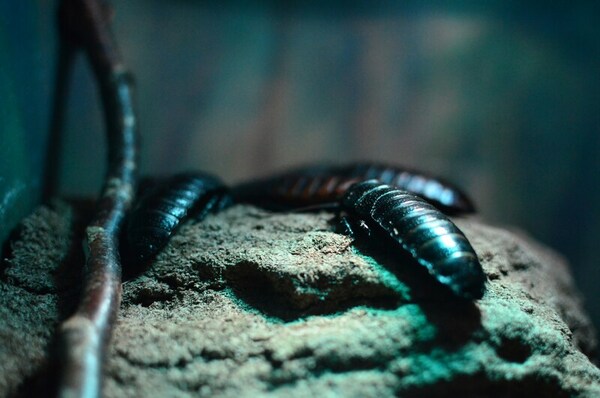
Paralyzing effects of CO2 and hypothermia on Madagascar hissing and dubia cockroaches

Gapon et al. | Dec 08, 2024

Paralyzing effects of CO<sub>2</sub> and hypothermia on Madagascar hissing and dubia cockroaches
Image credit: Jesper Aggergaard

Here the authors sought to find a more ethical and efficient way to temporary paralyze a cockroach by comparing the results of two methods. By comparing immobilization through immersion in cold water and exposure to a 100 % CO2 environment, they found that cockroaches could be immobilized and recovered significantly faster when exposed to CO2.

Read More...

Algorithmic barriers: Investigating student perceptions of AI bias in subjective “culture fit” hiring

Mahatara et al. | May 25, 2026

Algorithmic barriers: Investigating student perceptions of AI bias in subjective “culture fit” hiring
Image credit: JonTyson

This study investigated perceptions of the emerging workforce toward the use of artificial intelligence in hiring, specifically for assessing subjective "culture fit." Through a mixed-methods survey of 150 high school and early-college students in Nepal, we found a significant disconnect between organizational adoption of AI and the profound skepticism of young job candidates, who express deep concerns about fairness, transparency, and the potential for AI to perpetuate systemic discrimination.

Read More...

Specific Transcription Factors Distinguish Umbilical Cord Mesenchymal Stem Cells From Fibroblasts

Park et al. | Aug 16, 2019

Specific Transcription Factors Distinguish Umbilical Cord Mesenchymal Stem Cells From Fibroblasts

Stem cells are at the forefront of research in regenerative medicine and cell therapy. Two essential properties of stem cells are self-renewal and potency, having the ability to specialize into different types of cells. Here, Park and Jeong took advantage of previously identified stem cell transcription factors associated with potency to differentiate umbilical cord mesenchymal stem cells (US-MSCs) from morphologically similar fibroblasts. Western blot analysis of the transcription factors Klf4, Nanog, and Sox2 revealed their expression was unique to US-MSCs providing insight for future methods of differentiating between these cell lines.

Read More...