Browse Articles

The effect of Poisson sprinkling methods on causal sets in 1+1-dimensional flat spacetime

Deshpande et al. | Feb 14, 2025

The effect of Poisson sprinkling methods on causal sets in 1+1-dimensional flat spacetime
Image credit: Deshpande and Pitu et al. 2025

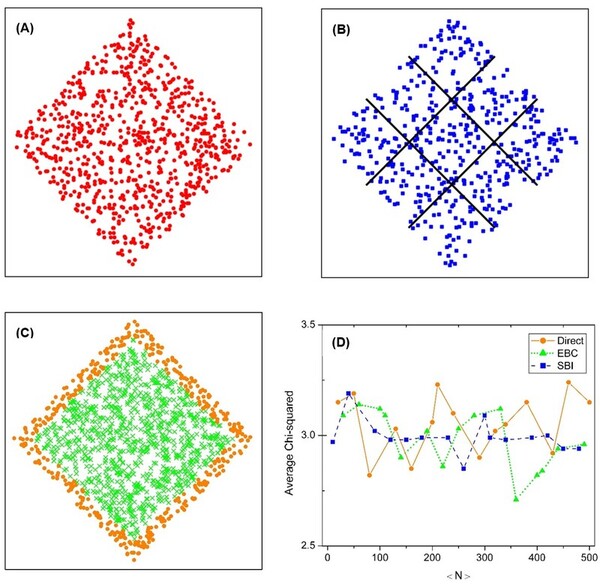
The causal set theory (CST) is a theory of the small-scale structure of spacetime, which provides a discrete approach to describing quantum gravity. Studying the properties of causal sets requires methods for constructing appropriate causal sets. The most commonly used approach is to perform a random sprinkling. However, there are different methods for sprinkling, and it is not clear how each commonly used method affects the results. We hypothesized that the methods would be statistically equivalent, but that some noticeable differences might occur, such as a more uniform distribution for the sub-interval sprinkling method compared to the direct sprinkling and edge bias compensation methods. We aimed to assess this hypothesis by analyzing the results of three different methods of sprinkling. For our analysis, we calculated distributions of the longest path length, interval size, and paths of various lengths for each sprinkling method. We found that the methods were statistically similar. However, one of the methods, sub-interval sprinkling, showed some slight advantages over the other two. These findings can serve as a point of reference for active researchers in the field of causal set theory, and is applicable to other research fields working with similar graphs.

Read More...

Refinement of Single Nucleotide Polymorphisms of Atopic Dermatitis related Filaggrin through R packages

Naravane et al. | Oct 12, 2022

Refinement of Single Nucleotide Polymorphisms of Atopic Dermatitis related Filaggrin through R packages

In the United States, there are currently 17.8 million affected by atopic dermatitis (AD), commonly known as eczema. It is characterized by itching and skin inflammation. AD patients are at higher risk for infections, depression, cancer, and suicide. Genetics, environment, and stress are some of the causes of the disease. With the rise of personalized medicine and the acceptance of gene-editing technologies, AD-related variations need to be identified for treatment. Genome-wide association studies (GWAS) have associated the Filaggrin (FLG) gene with AD but have not identified specific problematic single nucleotide polymorphisms (SNPs). This research aimed to refine known SNPs of FLG for gene editing technologies to establish a causal link between specific SNPs and the diseases and to target the polymorphisms. The research utilized R and its Bioconductor packages to refine data from the National Center for Biotechnology Information's (NCBI's) Variation Viewer. The algorithm filtered the dataset by coding regions and conserved domains. The algorithm also removed synonymous variations and treated non-synonymous, frameshift, and nonsense separately. The non-synonymous variations were refined and ordered by the BLOSUM62 substitution matrix. Overall, the analysis removed 96.65% of data, which was redundant or not the focus of the research and ordered the remaining relevant data by impact. The code for the project can also be repurposed as a tool for other diseases. The research can help solve GWAS's imprecise identification challenge. This research is the first step in providing the refined databases required for gene-editing treatment.

Read More...

Mendelian randomization reveals shared genetic landscape in autism spectrum disorder and Alzheimer's disease

Lee et al. | Nov 04, 2024

Mendelian randomization reveals shared genetic landscape in autism spectrum disorder and Alzheimer's disease

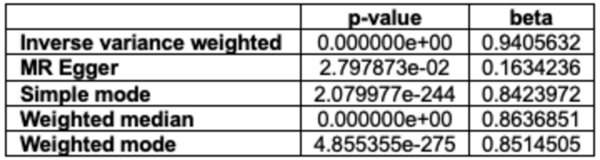
Autism Spectrum Disorder (ASD) and Alzheimer's Disease (AD) are distinct conditions, but research suggests a link, as individuals with ASD are 2.5 times more likely to develop AD. A study employing genome-wide association studies and Mendelian randomization revealed shared genetic factors, particularly in synaptic regulation pathways, that may increase the risk of AD in those with ASD. These findings provide insights into the genetic underpinnings connecting the two disorders.

Read More...

Investigation of unknown causes of uveal melanoma uncovers seven recurrent genetic mutations

Nanda et al. | Aug 25, 2022

Investigation of unknown causes of uveal melanoma uncovers seven recurrent genetic mutations

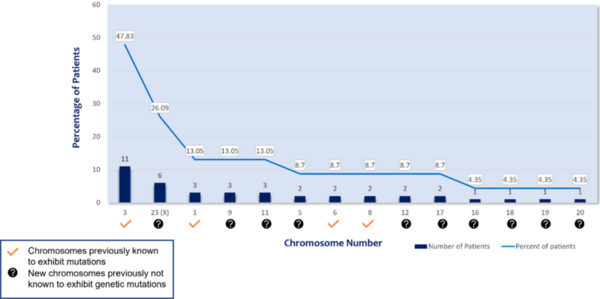
Uveal melanoma (UM) is a rare subtype of melanoma but the most frequent primary cancer of the eye in adults. The goal of this study was to research the genetic causes of UM through a comprehensive frequency analysis of base-pair mismatches in patient genomes. Results showed a total of 130 genetic mutations, including seven recurrent mutations, with most mutations occurring in chromosomes 3 and X. Recurrent mutations varied from 8.7% to 17.39% occurrence in the UM patient sample, with all mutations identified as missense. These findings suggest that UM is a recessive heterogeneous disease with selective homozygous mutations. Notably, this study has potential wider significance because the seven genes targeted by recurrent mutations are also involved in other cancers.

Read More...

Green Tea Extract as an Environmentally Friendly Antibacterial Agent Against Pseudomonas syringae pv. tomato on Plants

Lo et al. | Oct 27, 2015

Green Tea Extract as an Environmentally Friendly Antibacterial Agent Against <i>Pseudomonas syringae pv. tomato </i>on Plants

Plant pathogens can cause significant crop loss each year, but controlling them with bactericides or antibiotics can be costly and may be harmful to the environment. Green tea naturally contains polyphenols, which have been shown to have some antimicrobial properties. In this study, the authors show that green tea extract can inhibit growth of the plant pathogen Pseudomonas syringae pv. tomato and may be useful as an alternative bactericide for crops.

Read More...

Income mobility and government spending in the United States

Datta et al. | Nov 04, 2023

Income mobility and government spending in the United States
Image credit: CDC via Unsplash

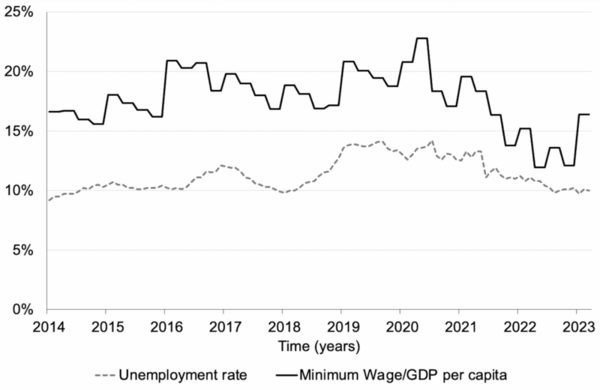
Recent research suggests that the "American Dream" of income mobility may be becoming increasingly hard to obtain. Datta and Schmitz explore the role of government spending in socioeconomic opportunity by determining which state government spending components are associated with increased income mobility.

Read More...

Deciphering correlation and causation in risk factors for heart disease with Mendelian randomization

Singh et al. | Feb 08, 2023

Deciphering correlation and causation in risk factors for heart disease with Mendelian randomization
Image credit: Robina Weermeijer

Here, seeking to identify the risk of coronary artery disease (CAD), a major cause of cardiovascular disease, the authors used Mendelian randomization. With this method they identified several traits such as blood pressure readings, LDL cholesterol and BMI as significant risk factors. While other traits were not found to be significant risk factors.

Read More...