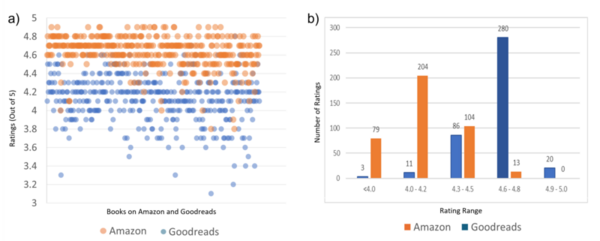
Online review platforms often provide different reviews on the same product, potentially confusing consumers. In this study, we found that the number of raters on Amazon is lower for the same book, while ratings on Amazon were higher than those on Goodreads. Furthermore, these differences in ratings and rater counts were larger for fiction books than for non‑fiction books.
Researchers query whether reading comprehension is the same, worse, or better when using e-books as compared with standard paper texts. This study evaluated this question in the elementary school population. Our hypothesis was that information would be retained equally whether read from paper or from an electronic device. Each participant read four stories, alternating between electronic and paper media types. After each reading, the participants completed a five-question test covering the information read. The study participants correctly answered 167 out of 200 comprehension questions when reading from an electronic device. These same participants correctly answered 145 out of 200 comprehension questions when reading from paper. At a significance level of p < 0.05, the results showed that there was a statistically significant difference in reading comprehension between the two media, demonstrating better comprehension when using electronic media. The unexpected results of this study demonstrate a shift in children’s performance and desirability of using electronic media as a reading source.
In this article, the authors identify the characteristics that make a book a best-seller. Knowing what, besides content, predicts the success of a book can help publishers maximize the success of their print products.
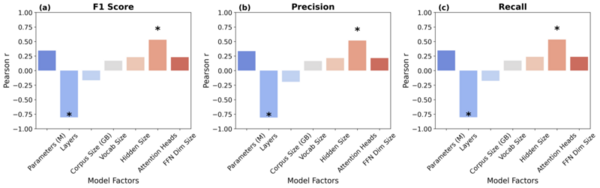
This study evaluates the potential of natural language processing (NLP) models in an emotion-driven bibliotherapy framework to improve mental health challenges.
Ashley Moulton & Joseph Rasmus investigate 9 controversial categories of intelligence as predicted by Multiple Intelligence Theory, originally proposed in the mid-1980s. By collecting data from 56 participants, they record that there may not actually be a correlation between these categorical types when it comes to workplace atmosphere and project efficiency.
Although there has been great progress in the field of Natural language processing (NLP) over the last few years, particularly with the development of attention-based models, less research has contributed towards modeling keystroke log data. State of the art methods handle textual data directly and while this has produced excellent results, the time complexity and resource usage are quite high for such methods. Additionally, these methods fail to incorporate the actual writing process when assessing text and instead solely focus on the content. Therefore, we proposed a framework for modeling textual data using keystroke-based features. Such methods pay attention to how a document or response was written, rather than the final text that was produced. These features are vastly different from the kind of features extracted from raw text but reveal information that is otherwise hidden. We hypothesized that pairing efficient machine learning techniques with keystroke log information should produce results comparable to transformer techniques, models which pay more or less attention to the different components of a text sequence in a far quicker time. Transformer-based methods dominate the field of NLP currently due to the strong understanding they display of natural language. We showed that models trained on keystroke log data are capable of effectively evaluating the quality of writing and do it in a significantly shorter amount of time compared to traditional methods. This is significant as it provides a necessary fast and cheap alternative to increasingly larger and slower LLMs.
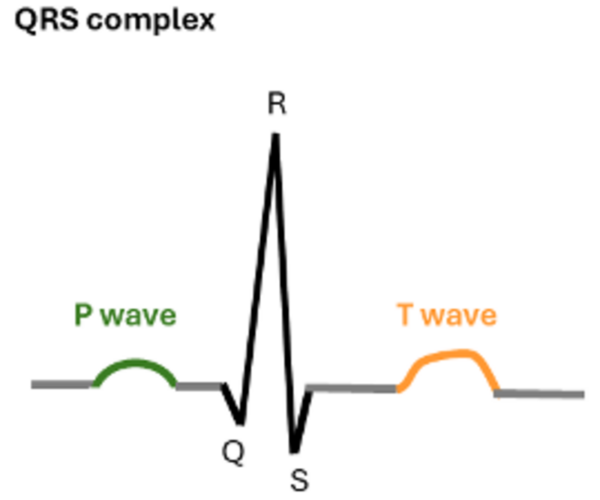
Arrhythmias vary in type and treatment, and ECGs are used to detect them, though human interpretation can be inconsistent. The researchers tested four tree-based algorithms (gradient boosting, random forest, decision tree, and extra trees) on ECG data from over 10,000 patients.
Black goji berries have attracted interest for their high levels of anthocyanin pigment, which believed to have health-boosting effects. Yu and Zhu research a method for measuring goji berry quality by detecting anthocyanin content under different conditions.
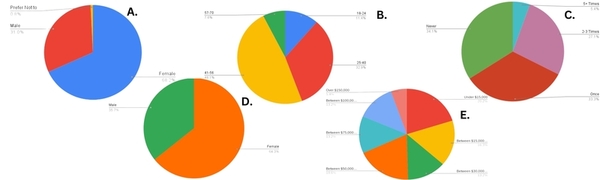
The luxury market has grown through digital marketing, with many brands benefiting from exclusivity, which limits product availability. While exclusivity boosts sales, it may negatively affect consumers' mental health. This study of 129 respondents explored the main motivation for purchasing luxury goods and connection to mental health.
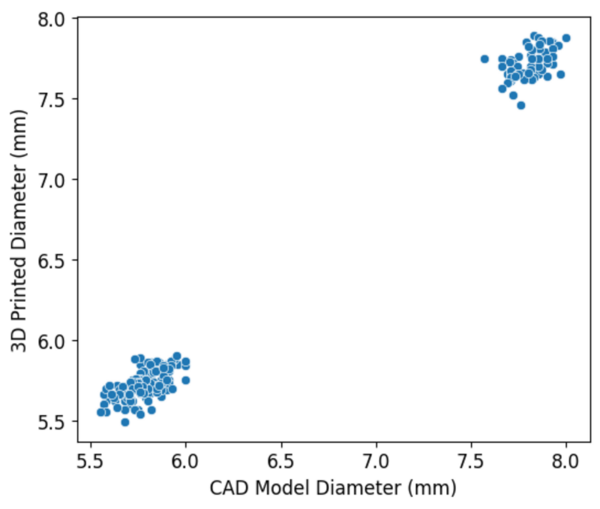
This study explores how to predict and minimize distortion in 3D printed parts, particularly when using affordable PLA filament. The researchers developed a model using a gradient boosting regressor trained on 3D printing data, aiming to predict the necessary CAD dimensions to counteract print distortion.